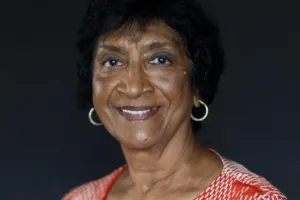
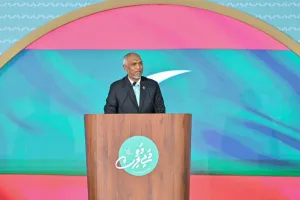
Mohamed Ibrahim (Kudoo) is the MP for Galolhu North. This is an English translation of his original Dhivehi comment piece.
Adhadhu did not make serious allegations against President Mohamed Muizzu. These accusations were made by a former employee of the President's Office. Adhadhu only served as the platform through which she chose to share her story with the Maldivian public. Adhadhu produced a documentary on the matter, fully aware of the character of the man leading the country and the draconian legal provisions designed to suppress the media. They determined that the importance of revealing the truth about the President outweighed the personal risks involved.
The month of silence following the documentary's release has now proven to be the calm before the storm. In a fit of rage, the President directed police to raid the Adhadhu newsroom and seize their property. This marks only the second time in Maldivian history that a government has raided a media office and confiscated its assets; the first occurred during the 30-year regime of former President Maumoon Abdul Gayoom.
The woman makes serious allegations in the documentary. She claims that after she applied for a job, she was taken to the President’s private office within the President's Office, where he held her hand under the guise of a greeting and refused to let go. This constitutes harassment under Section 38(a)(5) of the Prevention of Sexual Harassment Act. He allegedly told her he had always "liked" her. On her second day at the office, he reportedly hugged her without her consent. All of this occurred before she was officially employed. In reality, the President was signaling that her employment was contingent upon her submission to these advances—an act of sexual harassment defined under Section 4 of the same Act and further clarified in Section 38(a)(8).
Beyond the legal violations lies a profound breach of moral boundaries. After providing employment to a single mother, he began a campaign to win her over. He failed to consider his status as a husband and a father of three, and he disregarded the dignity of his office as the President of the Republic. The pretext he used to gain trust was a promise of marriage as a second wife. It was for this very purpose—to secure trust—that he inquired after an infant who would have become his stepchild. This was his campaign. We know that Muizzu is a man capable of weaving any web of lies to gain public confidence during campaigns.
Once that trust was secured, he proceeded with his true intentions. This took place on the L-shaped sofa and the presidential desk within the President’s Office. The young woman consented only because of his promise to take her as a second wife. However, once Muizzu’s personal desires were fulfilled, he cast aside his vows and promises.
These are not my words, nor are they accusations from Adhadhu. This account comes directly from the young woman who fell victim to Muizzu. The fact that the authorities identified a specific individual and summoned her to the police for a statement suggests that Muizzu knows exactly who she is. He would only know her identity if something had indeed transpired. As the saying goes, there is no smoke without fire.
When such disgraceful conduct is seen from the Head of State, people will talk. This doesn't seem to be an isolated incident. This time, however, he encountered a courageous young woman who chose to share her story with the Maldivian people and expose the true nature of the President.
Infuriated by these revelations, charges have been brought against two journalists. This legal action is an attempt to silence the entire Maldivian population. It is clear that the Criminal Court’s order was issued to protect a particular individual, demonstrating a blatant bias. For reporting on this gag order, Adhadhu journalist Leevan was convicted, fined, and sentenced to 10 days in prison. Shahzan was sentenced to 15 days in prison simply for asking a question at the President’s Office. The question Shahzan posed did not even pertain to the information presented in the documentary. It is highly questionable for the Head of State to phone a 22-year-old woman more than fifty times in the middle of the night. A President does not contact an individual with such frequency unless there is a matter of grave national security. Naturally, journalists will ask questions to uncover the truth behind such behavior.
Watching the police, the Prosecutor General, and the courts align to defend Muizzu is deeply disheartening for the Maldivian people. This is not how the state structure is organized under the Constitution and the law. When people see this system being dismantled, they will speak out. They will discuss the underlying causes. If those causes lead back to an L-shaped sofa, the public should not be blamed for pointing it out.
I will not comply with the gag order issued by the Criminal Court. I call upon every Maldivian citizen to defy it. We must make it our mission to do everything in our power to secure the release of the journalists punished under this order.