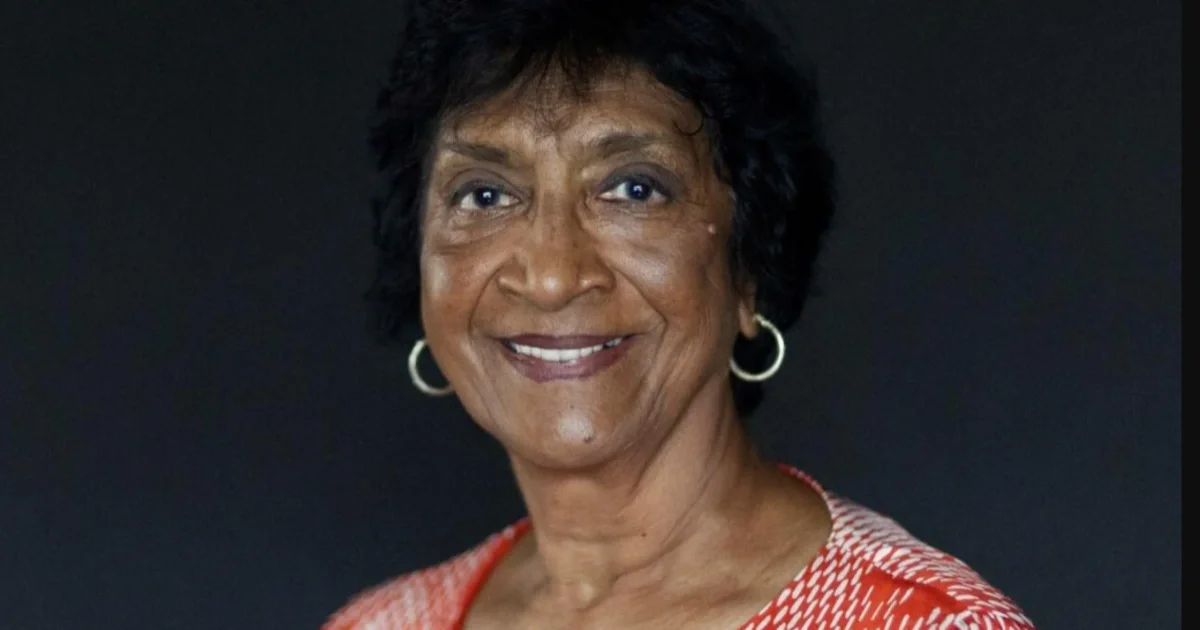
Fifteen years ago, in November 2011, the Maldives received its first-ever visit from a United Nations High Commissioner for Human Rights. Navi Pillay, who recently won the Nobel Peace Prize "for her efforts to promote peace and international law", arrived in the country following an official invitation from the government of the time.
While she praised the Maldives' transition toward a democratic system during her visit, her departure was marked by a firestorm of controversy surrounding her remarks on religious issues and the practice of flogging. Just a month later, these comments became a primary catalyst for a major protest in the capital, Malé.
An Invitation and a Historic First
Navi Pillay arrived in Malé on November 22, 2011, for a three-day official visit that concluded on the 24th. The Ministry of Foreign Affairs stated at the time that the visit, conducted at the government's invitation, symbolised the progress the Maldives was making in the field of human rights. It marked the first time a sitting UN High Commissioner for Human Rights had visited the archipelago.
A South African jurist of Tamil descent, Pillay had served as the President of the International Criminal Tribunal for Rwanda for eight years prior to assuming her UN post.
During her stay, she met with President Mohamed Nasheed, senior cabinet ministers, opposition figures, judges, and lawyers, as well as representatives from civil society and drug rehabilitation centres.
The official agenda prioritised two key areas: Nasheed’s proposal to establish a human rights mechanism within the SAARC region, and discussions on the necessity of an independent judiciary to strengthen the Maldivian democratic framework. However, neither of these topics would define the legacy of her visit.
The Address to Parliament
The defining moment of the trip occurred on November 24, when Pillay addressed the People’s Majlis. According to reports by Minivan News, she began her speech with high praise for the Maldives, describing its peaceful democratic transition as a model for the entire Asia-Pacific region.
Referencing the "Arab Spring," she argued that the rights guaranteed in Islam and international human rights standards are fundamentally aligned. She noted that the Maldives had embarked on a journey to build a modern democracy rooted in Islamic principles.
However, she then pivoted to areas she believed required urgent reform. She condemned the practice of flogging women for extramarital sex, describing it as a form of violence against women that has no place in a democratic system.
Pillay called for a national debate to end flogging, asserting that such a move was essential to protect the rights of women and girls and to sustain the country’s democratic transition.
The Press Conference
At a press conference that afternoon, Pillay’s rhetoric sharpened. As reported by VOA, she urged the government and the judiciary to declare a moratorium on flogging until the practice could be abolished entirely.
Minivan News reported that she described flogging as a "cruel and degrading" punishment that violates the dignity of women. She remarked that despite having visited many Muslim-majority countries, she had found no support for such practices elsewhere, except in the Maldives and one other country that practices stoning.
Furthermore, she characterised the constitutional requirement that every Maldivian citizen must be a Muslim as discriminatory, calling for a renewed debate on that specific provision.
When a local journalist questioned how such views could be reconciled with a state mandated to protect Islam, Pillay responded that much of the Maldivian Constitution already aligned with international human rights, and that these rights were not inherently in conflict with Islam.
However, Minivan News later noted that her remarks were reported by various media outlets in a manner that fueled public confusion and anger.
Beyond flogging, she highlighted several other concerns:
- Migrant Workers: Noting that foreigners make up a third of the population—many of whom are victims of human trafficking—she urged the Maldives to sign the UN Convention on the Rights of Migrant Workers and to regularise the status of approximately 60,000 undocumented individuals.
- Religious Freedom: She described the government’s closure of journalist Ismail Khilath Rasheed’s website as a "matter of concern" and expressed alarm over the rise of religious extremism in the country.
The Backlash
Within hours, Pillay’s comments drew condemnation from across the political and religious spectrum. The then-Minister of Islamic Affairs, Dr Abdul Majeed Abdul Bari, asserted that "the fundamental principles of Islam cannot be changed." He emphasised that flogging is prescribed in the Quran and noted that the Constitution identifies Islam as the source of all laws in the Maldives.
The Adhaalath Party argued that Sharia principles are not subject to public debate. They alleged that Pillay’s remarks were part of a government plot to weaken Islam, drawing parallels to the controversial SAARC monuments erected in Addu City. While the opposition DRP called on the government not to allow such debates, it was noted that the party’s leader was the first to greet Pillay after her parliamentary address.
On the Friday following her speech, Minivan News reported that crowds gathered outside the UN office in Malé, calling for Pillay’s arrest. Protesters carried placards demanding that the UN leave the Maldives and calling for Pillay herself to be flogged.
The issue soon escalated into a major political confrontation. Religious NGOs and opposition parties, including former President Maumoon Abdul Gayoom’s PPM, organised a massive "Defend Islam" protest on December 23.
One of the five core demands of the protest was for Nasheed to condemn Pillay’s remarks or issue an apology. While thousands gathered in Malé, Nasheed’s MDP held a counter-rally in support of "moderate Islam," according to Minivan News.
The Nasheed administration refused to apologise. The President’s Press Secretary stated that the President would not respond unless parliamentary leadership provided a valid reason to reject Pillay’s comments. He also pointed out that Gayoom had previously made similar remarks regarding flogging.
At an MDP gathering, Nasheed lamented that the Maldives had squandered an opportunity to showcase the greatness of Sharia, accusing the opposition of weaponising religion. However, the government eventually conceded to other opposition demands, including the removal of the SAARC monuments in Addu.
The Aftermath
The Maldivian political landscape shifted rapidly following the visit. In February 2012, Nasheed resigned under circumstances that remain a subject of intense debate. A subsequent U.S. State Department report on religious freedom, summarised by Minivan News, suggested that the change in government led to increased pressure to adhere to more hardline religious interpretations.
Pillay’s plea for a moratorium on flogging went unheeded. Roughly a year after her visit, a Maldivian court sentenced a 16-year-old girl to 100 lashes for extramarital sex. A child rights organisation reported that the sentence was to be carried out once the girl reached adulthood.
In later UN reviews, Maldivian officials defended flogging as a component of Islamic Sharia. Meanwhile, Pillay and organisations like Amnesty International continued to call for its abolition.
Despite the friction, the relationship between the UN and the Maldives did not collapse. When Pillay’s term ended in June 2014, the Maldivian delegation to the UN Human Rights Council thanked her for her six years of service. The Maldives, then serving its second term on the Council, described Pillay as someone who had worked closely with the country.
Navi Pillay’s visit left the Maldives with a question rather than a settled policy. In Parliament, she had argued that the Maldives should not lose the chance to become a democracy that respects both Islamic principles and human rights. However, the reception she received highlighted the depth of the internal divide. The visit ultimately demonstrated how quickly the words of a foreign official can be transformed into a potent weapon in a domestic political struggle.