By strengthening defence and cybersecurity ties with Pakistan, the Maldives must look beyond the immediate benefits of cooperation to consider the wider implications for regional stability, national security and economic prosperity.
The Maldives is a small nation with an exceptionally large strategic footprint. Situated along vital Indian Ocean sea lanes, with an extensive maritime domain and an economy heavily dependent on international tourism, our country sits at the intersection of major geopolitical interests.
For a nation of our size, foreign policy is not simply about cultivating friendships or signing agreements. It is about protecting sovereignty, safeguarding our economic future and ensuring that the rivalries of larger powers do not become our burden.
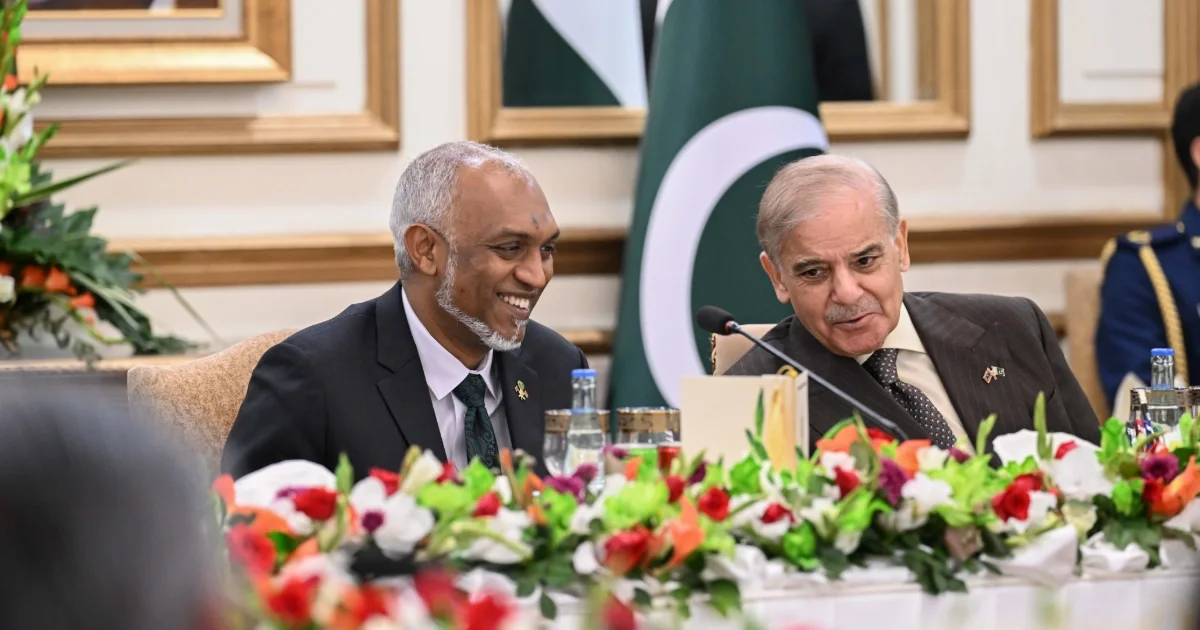
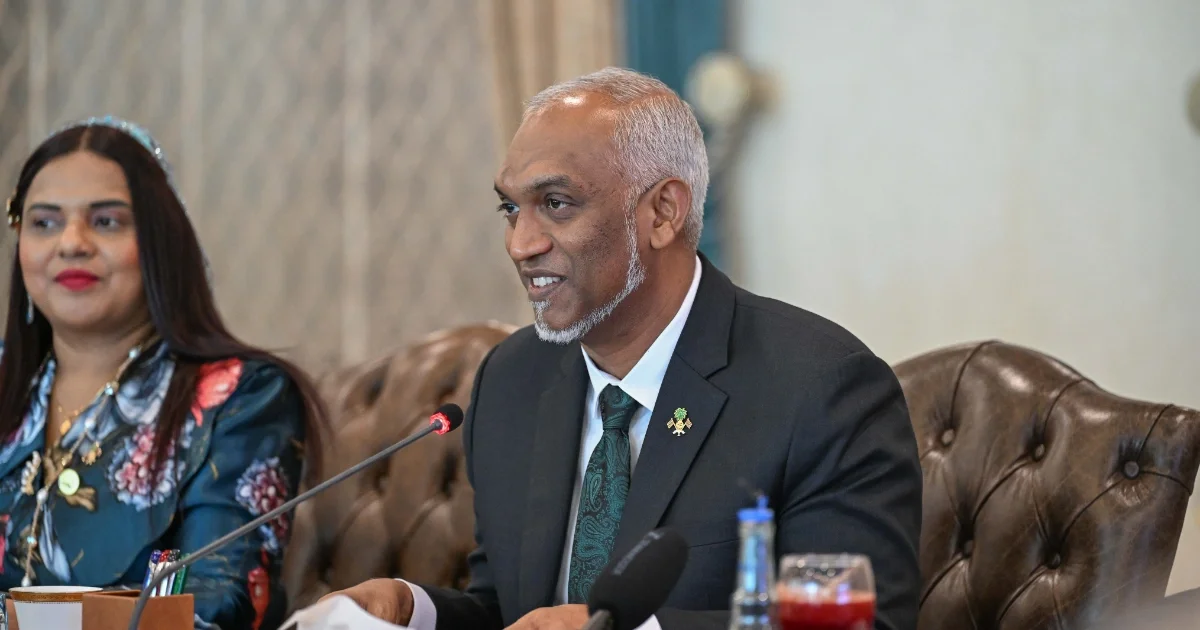
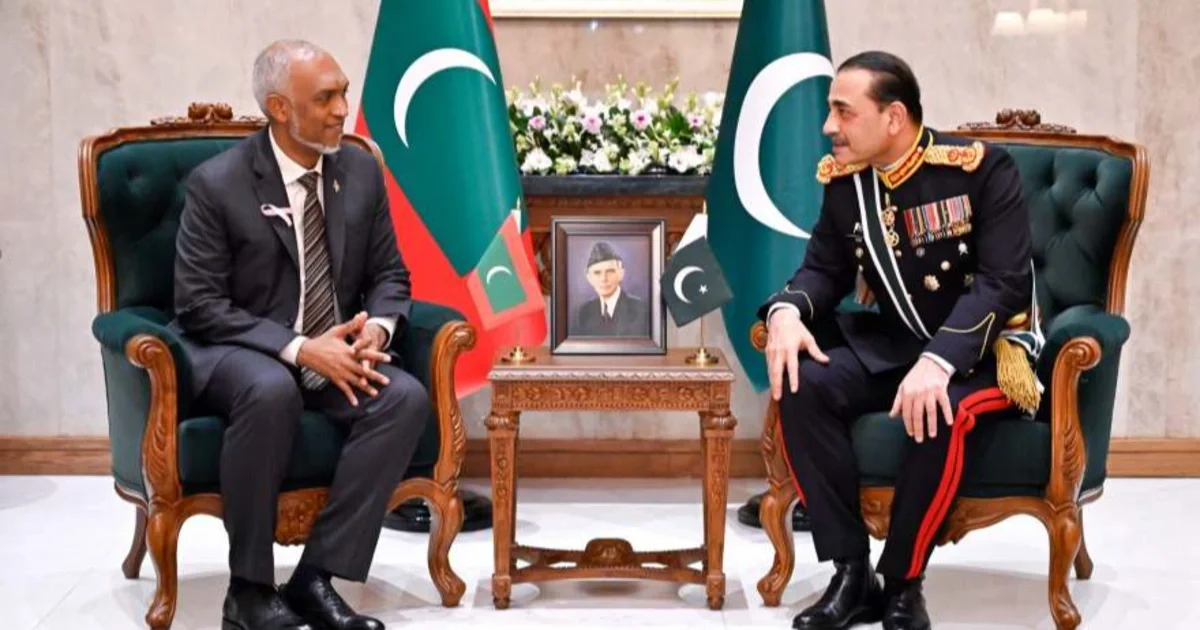
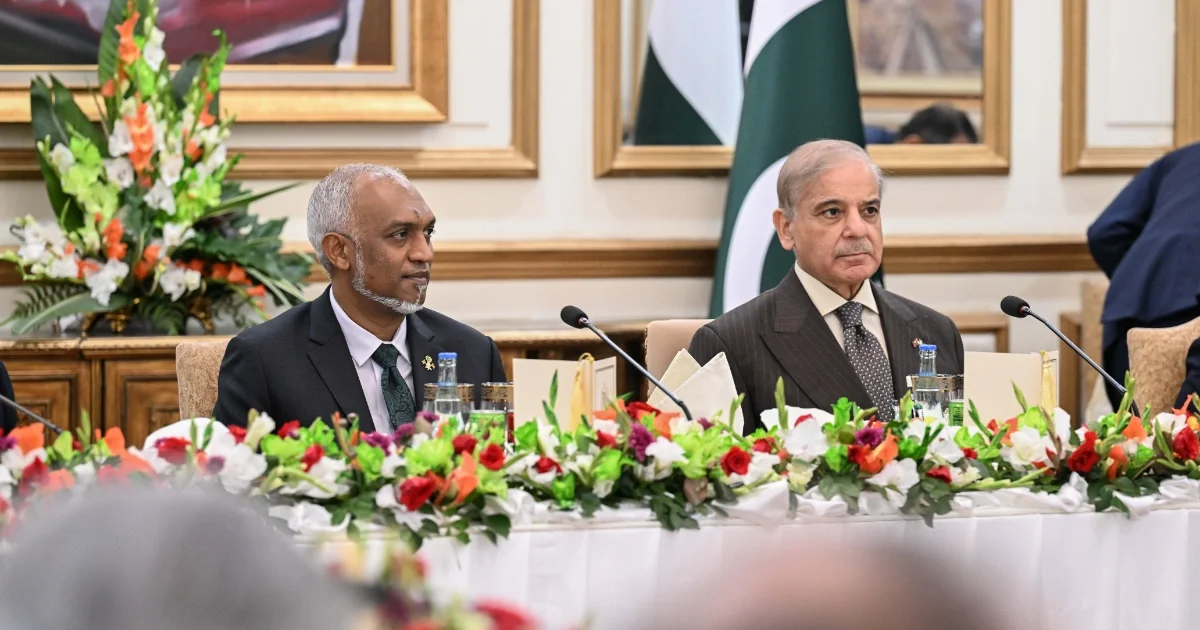
President Dr Mohamed Muizzu’s state visit to Pakistan from 20 to 22 October 2026, which resulted in the exchange of 20 memoranda of understanding (MoUs), deserves careful scrutiny. The visit marked 60 years of diplomatic relations between the two countries. Cooperation in healthcare, education, trade, agriculture and tourism offers genuine opportunities. However, the agreements on defence, maritime security and cybersecurity raise important questions about the Maldives’ strategic direction amid persistent tensions between India and Pakistan.
The question is not whether the Maldives should maintain relations with Pakistan. It should. The question is whether the Government has adequately assessed the long-term implications of these commitments for our national interests.
Defence cooperation: at what strategic cost?
Maritime security is fundamental to the Maldives. Our geography demands the capacity to monitor our exclusive economic zone, combat trafficking and illegal fishing, protect critical infrastructure and respond to emergencies. International cooperation in training, technology and information-sharing can strengthen these capabilities.
But defence partnerships are never entirely separate from geopolitics.
Military training, intelligence-sharing, equipment procurement and technical support can create dependencies that endure long after agreements are signed. Their implications depend on the capabilities involved, the safeguards established and the degree of operational reliance they create.
The Government should therefore disclose the scope of the defence and maritime security agreements, including their financial implications, operational commitments and provisions for review and termination. Do they involve intelligence-sharing or access to sensitive maritime information? What safeguards protect the Maldives from obligations that could constrain its choices during a regional crisis?
These are not arguments against cooperation with Pakistan. They are questions that responsible governments must answer when entering into security arrangements with potentially far-reaching consequences.
The value of a defence partnership must be measured not only by what it delivers today, but also by the strategic freedom it preserves for tomorrow.
Kashmir: when silence becomes diplomatically significant
During the joint press engagement in Pakistan, Prime Minister Shehbaz Sharif referred to Pakistan’s position on Jammu and Kashmir and its concerns over the Indus Waters Treaty. President Muizzu did not publicly comment on these remarks, according to reporting by Atoll Times.
Diplomatic silence should not automatically be interpreted as agreement. Nor should a leader be expected to respond publicly to every contentious statement made during a joint appearance. Nevertheless, when a sensitive bilateral dispute involving a major neighbour is raised at a high-profile diplomatic event, the absence of a public response can carry significance.
India is our closest neighbour and an indispensable partner in security, economic development and regional stability. Its assistance during critical moments in our history—including the attempted coup of November 1988, the 2004 Indian Ocean tsunami, the Malé water crisis of 2014 and the COVID-19 pandemic—demonstrates the practical importance of this relationship.
Pakistan, too, is a longstanding partner with which we have legitimate interests in maintaining constructive relations.
These relationships are not mutually exclusive. The Maldives has every right to engage independently with both countries. But our diplomacy must be sufficiently clear and consistent to prevent our engagements from being interpreted as endorsements of positions we have not adopted.
Our foreign policy should not be shaped by the assumptions of others, nor should our diplomatic standing be used to advance the strategic interests of one partner at the expense of another.
Cybersecurity: a technical agreement with strategic consequences
The MoU covering information technology, cybersecurity, artificial intelligence and digital skills presents opportunities to strengthen Maldivian technological capacity. We need trained specialists, resilient government systems and stronger defences for public records, financial transactions, communications and critical infrastructure.
Yet cybersecurity cooperation can create lasting dependencies.
Depending on how an agreement is implemented, technical assistance may involve access to sensitive information, digital systems or infrastructure. There is no publicly established evidence that the Pakistan agreement grants access to Maldivian government data. Nevertheless, the detailed safeguards governing data handling, system access and operational responsibilities warrant scrutiny.
Who controls sensitive data? Where will it be stored? Which institutions will have access to it? How will the Government ensure that foreign technical support does not compromise our independence or create enduring reliance on external systems?
The Government should establish enforceable safeguards covering data sovereignty, access permissions, information-sharing, independent audits and critical infrastructure protection. These standards must apply equally to every foreign partner.
The objective should be to strengthen Maldivian technological capacity and resilience—not to replace one form of vulnerability with another.
Walking on eggshells: the challenge of strategic autonomy
The Maldives faces a delicate diplomatic balancing act. Pakistan is a longstanding partner and fellow member of the South Asian Association for Regional Cooperation (SAARC). India is our closest neighbour and a vital partner in maritime security, trade, regional connectivity and emergency response.
The Maldives should not have to choose between them. But neither can we afford to overlook decisions that might make such a choice more difficult during a future crisis.
Individual agreements, public statements and diplomatic gestures can be interpreted as evidence of wider strategic alignment, even when that is not the intention. If tensions between India and Pakistan escalate, the Maldives could face pressure over its diplomatic positions, security partnerships, intelligence relationships or the use of its facilities and capabilities.
The prudent course is to establish clear boundaries before a crisis emerges.
Our foreign policy should be grounded in strategic autonomy, respect for sovereignty and the peaceful resolution of disputes. We should avoid commitments that compromise our freedom of action or create expectations that we will support one party in a conflict with another.
Strategic autonomy is not measured by the number of countries with which we sign agreements. It is measured by our ability to make independent decisions, protect our national interests and maintain constructive relations when our partners disagree.
The risk of becoming a theatre of strategic competition
Competition between states is not confined to conventional military confrontation. It can involve intelligence activities, cyber operations, political influence and attempts to secure access to sensitive information or strategic infrastructure.
There is no publicly established evidence that the recently exchanged MoUs are intended to facilitate proxy operations. Nevertheless, the potential consequences of unchecked strategic competition deserve serious consideration.
For a small island nation, pressure to accommodate competing security interests could strain diplomatic relationships, undermine public confidence and compromise national decision-making.
The Government must ensure that security agreements have clear legal safeguards, appropriate oversight and firm limits on foreign access to Maldivian territory, sensitive information and critical infrastructure. Parliament and relevant national-security institutions must have sufficient information to scrutinise their implications for sovereignty.
Our defence partnerships must strengthen our ability to protect our waters, people and institutions. They must never create opportunities for external powers to use our country to advance strategic objectives that place our national interests at risk.
The economic cost of regional instability
There is another dimension to this debate: the vulnerability of our economy.
Tourism is the backbone of the Maldivian economy. The Maldives recorded approximately 2.25 million tourist arrivals in 2025, according to official statistics. The sector generates foreign exchange, supports employment and sustains businesses across the country.
Our resorts, guesthouses, airlines, restaurants, transport operators and small businesses depend on a fundamental condition: visitors must feel safe travelling to the Maldives, and international travel must remain practical and affordable.
Regional conflict can threaten both conditions. Instability may disrupt travel routes, increase aviation and insurance costs, unsettle financial markets and weaken consumer confidence. The consequences can extend far beyond the countries directly involved.
Any deterioration in the Maldives’ security environment—or any perception that our country is becoming entangled in regional rivalries—could compound these vulnerabilities.
A sustained decline in visitor numbers would mean lower resort occupancy, reduced earnings for small businesses, potential job losses and pressure on government revenue. Falling foreign-exchange earnings would place additional strain on an economy heavily dependent on imports.
The consequences would ultimately be borne by ordinary Maldivians.
Peace is not an abstract diplomatic aspiration for our country. It is an economic necessity.
Peace is a national asset
The Maldives has spent decades building an international reputation as a peaceful, welcoming destination. That reputation is among our most valuable national assets.
We cannot control whether larger countries go to war. But we can ensure that our foreign policy does not unnecessarily expose us to their rivalries.
President Muizzu’s Pakistan visit presents an opportunity to ask a fundamental question: are our growing international partnerships making the Maldives safer, more resilient and better equipped to determine its own future?
The issue is not whether the Maldives should have friends. We should have many. It is whether those friendships are managed in a manner that protects our sovereignty, preserves our freedom of action and enables us to work constructively with all our neighbours.
This requires more than diplomatic assurances. It requires transparency about agreements, meaningful parliamentary scrutiny, safeguards for sensitive information and a clear national strategy for managing competing regional interests.
The Indian Ocean is not merely a theatre of strategic competition. For the Maldives, it is the lifeline of our economy, our connectivity and our future.
Our foreign policy must follow a clear principle: cooperate widely, depend cautiously and remain firmly sovereign.
We must never allow the pursuit of bilateral gains to compromise the peace on which our national security and prosperity depend.