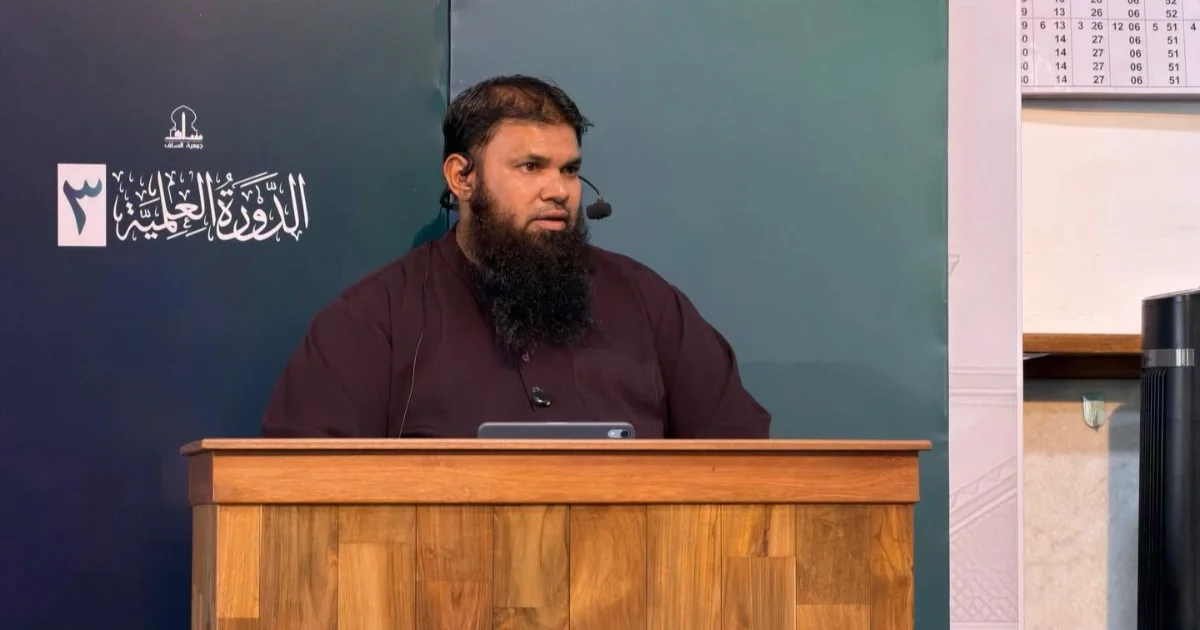
Jamiyyathul Salaf, an organisation dedicated to the protection of Islam, has denied a news report published by Adhadhu regarding the settlement of non-Muslims in Rasmalé.
At 12:07 am last night, Salaf issued a statement on the social media platform X, labelling the report titled "Jamiyyathul Salaf backs conditional non-Muslim residency in Maldives" as false.
"The news being circulated by some media outlets claiming that Jamiyyathul Salaf supports the settlement of people of other faiths in the Maldives is an absolute lie! Jamiyyathul Salaf’s appeal was that every development project must ensure the 100 percent Islamic character of the Maldives and that no room should be given to anything that undermines the Islamic identity of the country!" the statement read.
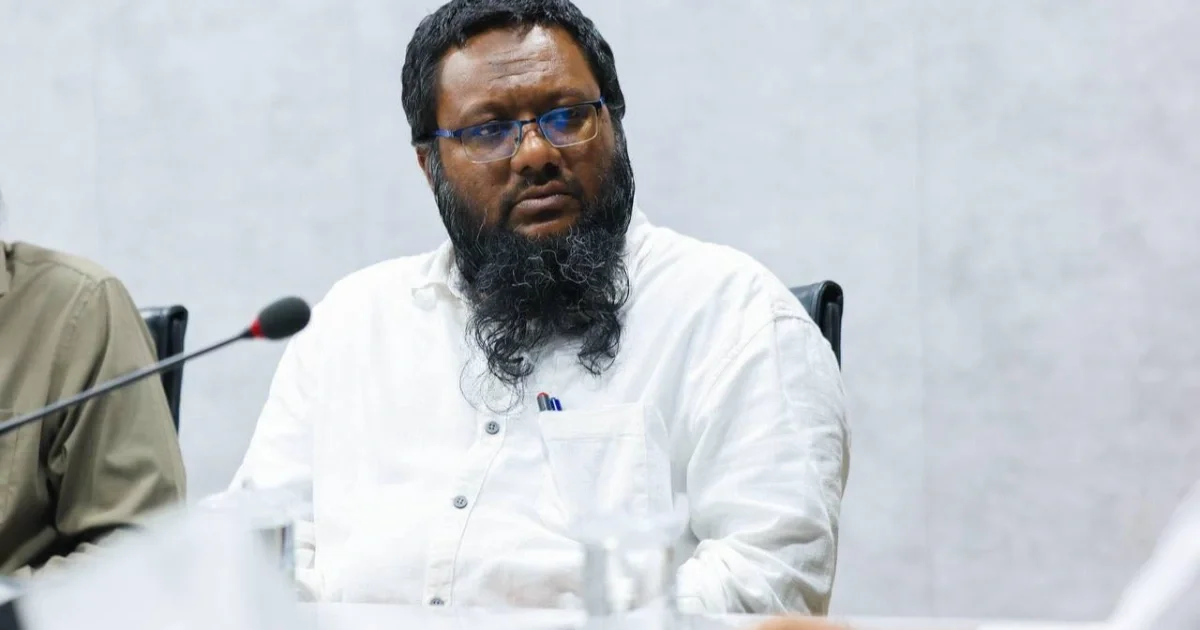
In addition to the official statement, the organization’s president, Abdullah bin Janab—who is the brother of First Lady Sajidha Mohamed—posted on X, denying the report. In his post, he characterised the news article as "propaganda."
"The propaganda spread by some newspapers claiming that Jamiyyathul Salaf supports the settlement of people of other faiths in the Maldives is a blatant lie! Jamiyyathul Salaf appealed for the 100 percent Islamic character of the Maldives to be ensured in every development project! And that every government must uphold the Islamic identity of the Maldives and refrain from anything that compromises it! Know that the good end is for the righteous," Abdullah’s post stated.
However, despite Salaf’s denials, the organization’s original statement regarding the Rasmalé issue explicitly stated that the settlement of non-Muslims in the Maldives would not be an issue provided certain conditions were met.
The first part of Salaf’s statement explained the concept of the Rasmalé project. It noted that under the project, foreigners would have the right to lease property in Rasmalé for 99 years. The statement also mentioned that foreigners would be granted the "right to reside there for a long period."
While Salaf’s statement mentions the right of foreigners to stay for a long period under the project, the official Dhivehi dictionary defines "settling" (Vazanverivun) as "establishing a home and beginning to live in a place."
Furthermore, Salaf’s statement described the Rasmalé project as one where "a large number of foreigners belonging to different religions and cultures will stay for a long period." After characterizing the project in this manner, Salaf outlined how the agreements and legal frameworks for such a project should be formulated.
"We sincerely appeal to the current and future governments to formulate agreements and legal frameworks under a robust system that ensures these special zones do not pave the way for future advocacy for religious freedom. It is vital that there is no adverse impact on the Islamic identity of Maldivian society, the nation’s sovereignty and independence, the long-standing Islamic national principles, or the constitutional framework that guarantees the Maldives remains a 100 percent Islamic state," the statement read.
Thus, by advocating for (1) closing the opportunity to lobby for religious freedom, (2) protecting the Islamic identity of society and national sovereignty, and (3) ensuring through agreements and legal frameworks that the Maldives remains a 100 percent Islamic state, the organisation has religiously endorsed opening the door for non-Muslims to settle in the Maldives.