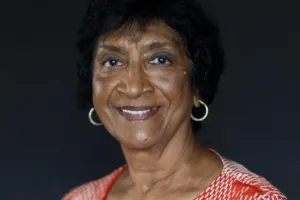
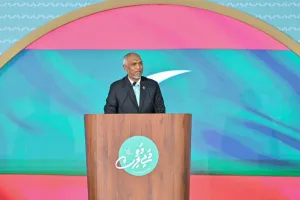
Dr. Ahmed Abdulla Didi is the fourth Chief Justice of the Maldives. This is an English translation of his original Dhivehi article.
The freedom of expression and freedom of the press, guaranteed under Articles 27 and 28 of the Constitution, are fundamental liberties regulated by laws and regulations enacted in accordance with the principles set forth in Article 16. In democratic societies, it is a vital responsibility of journalists to convey to the public, in good faith, information regarding illegal activities and systemic corruption within state institutions. Given that the facts presented in the documentary—based on statements made by a President’s Office employee accusing the President—pertain to actions allegedly committed outside the scope of official presidential duties, and considering that these are matters for which the President must remain accountable to the people under Article 100 (a) (1) and (2) of the Constitution, the documentary published by Adhadhu must, in principle, be viewed as media content that adheres to journalistic codes of ethics unless proven otherwise.
If there are complaints that Adhadhu violated journalistic codes of conduct in publishing the documentary, the authority to investigate such matters lies with the relevant institution mandated to oversee media ethics. However, the criminal investigation launched by the police against Adhadhu, and the subsequent measures taken against the outlet and its journalists, are practices alien to democratic norms and stand in violation of international treaties to which the Maldives is a party.
The Basis of the Criminal Investigation (Qazf)
While the police have stated that they are conducting a Qazf (Islamic legal term for falsely accusing a person of adultery or fornication) investigation regarding the documentary published by Adhadhu, it is noted that Qazf is criminalized under Section 612 of the Maldivian Penal Code and is also a crime for which a Hadd (fixed punishments in Islamic law such as lashes) punishment is prescribed under Islamic Shari’ah, where it is considered a major sin. Under the concept of Qazf in Islamic Shari’ah, the offense is defined as explicitly accusing a chaste person of adultery or denying the paternity of a child without providing the required legal witnesses.
In light of this definition, there is no evidence that the statements made by the President’s Office employee in the documentary fulfill the legal elements of Qazf. The documentary contains no confession or accusation of adultery; rather, the allegations refer to "sexual relations." Since not every sexual offense is legally categorized as adultery, the decision to preemptively conclude that the allegations constituted adultery and launch a Qazf investigation suggests a departure from the principles of independence and professionalism that investigative agencies are required to uphold.
Under the Maldivian legal system, the individual holding the office of the President is neither a sacred nor an infallible figure. Investigative agencies possess the authority to independently investigate any criminal allegations made against a sitting President. Furthermore, the President enjoys no legal protection from prosecution for such crimes beyond the specific "immunity" stipulated in Article 127 of the Constitution. If the police have decided to conduct a criminal investigation into the documentary, there is no legal basis to exclude the President as a potential subject of that investigation, especially since the facts involve him personally. The President’s own assertion that the claims are "categorically false" and his demand for the prosecution of those involved cannot serve as the sole basis for the investigation's direction.
Obstruction of an Independent Investigation
Although the Maldives Police Service, mandated by law to conduct criminal investigations, operates under the oversight of the Minister of Homeland Security and Technology, the Minister does not have the authority to exert direct or indirect influence over any ongoing investigation. However, social media posts by the Minister indicate an undue influence on the investigation into the Adhadhu documentary. By characterizing the allegations as "false accusations" and reaching a conclusion before the investigation has concluded—stating that "police are enforcing the law and upholding the President’s rights"—the Minister has made it highly unlikely that the police can conduct this investigation with independence and integrity.
Because conducting an independent and credible criminal investigation into a sitting President is inherently difficult, democratic presidential systems vest the legislature with the power to conduct parliamentary inquiries and impeach a President who commits acts of treason, bribery, or other high crimes and misdemeanors outside their official duties. This power is also granted to the People’s Majlis under Article 100 of the Constitution of the Maldives. Therefore, the allegations leveled against the President in the documentary are matters that warrant a parliamentary inquiry by the People’s Majlis.
Under the Constitution of the Republic of Maldives, executive power is vested in the President, who serves as the Head of State and Head of Government. While the dignity and prestige of the presidency must be protected as a reflection of the dignity of the State and its citizens, any matter that undermines the integrity of the office also affects the nation. If the existing institutions lack the capacity to investigate the facts presented in the Adhadhu documentary impartially and independently, it is essential to appoint a Special Investigator to probe the matter—similar to the appointment of Kenneth Starr as an independent counsel to investigate the Clinton-Lewinsky scandal in 1998.