The need for recognition—be it political, economic, or global standing—can never ethically justify measures that actively harm or neglect the fundamental rights and health of a population. But this seems to be exactly what the Maldives government is doing now, with its abrupt policies against tobacco.
The government claims it increased the tax on cigarettes and tobacco by over 200 percent in November 2024 to discourage the public from smoking. A nationwide ban on vaping was also introduced without any public consultation. The most recent measure is the generational ban on cigarettes for people born after January 2007.
But more than a year after the strict tobacco control policy was implemented, how far has the Maldives come? Do we have data to show a declining number of smokers? Has the high prices and non-availability of vapes curbed minors from picking up the habit? To these questions, the government has nothing to show.
However, one thing is clear—a new widescale black market has been created. Millions of cigarettes have gone missing from the airport duty free zone, from ports and even from police stations. This shows the seriousness of the issue.
As a result of this, smokers are now able to get low-quality, much cheaper options from every corner store of Male’. Not a single store checks the identity cards of customers to ensure the implementation of the generational ban on smoking. The rules continue to be so poorly implemented that you could see public officials smoking in banned places.
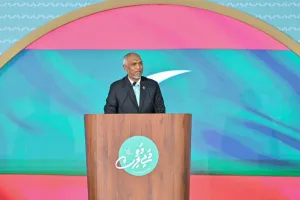
Despite this outcome, the World Health Organization (WHO) honored President Mohamed Muizzu with the World No-Tobacco Day Special Recognition Award in May 2025. According to the WHO, the award acknowledges “his exemplary leadership and steadfast commitment to protecting public health in the Maldives through robust tobacco control measures.”
“WHO commended these efforts as a national milestone and a powerful example for other countries seeking to curb tobacco use and mitigate its devastating health impacts and described the Maldives’ vision for a Smoke-Free Maldives as one that will save lives and improve the health and wellbeing of current and future generations,” the organization said.
The Maldives government was also awarded the Integrity Award by the Global Center for Good Governance in Tobacco Control (GGTC) at the Eleventh Session of the Conference of the Parties (COP11) to the WHO Framework Convention on Tobacco Control (FCTC), held in Geneva in November 2025.
This recognition exposes a critical flaw in global health governance: the tendency to reward policy intent and high-profile announcements over documented impact and effective implementation. The international community celebrates the "vision" while the Maldivian people contend with the reality of poor enforcement, soaring black market activity, and the continued, perhaps even exacerbated, accessibility of low-quality tobacco.
The initial question remains: Does the "need for recognition" justify a domestic failure that risks public health while simultaneously fueling corruption? The current situation in the Maldives suggests that the government, in prioritizing a façade of strict tobacco control for international applause, has created a policy environment that actively undermines public well-being and governance integrity.