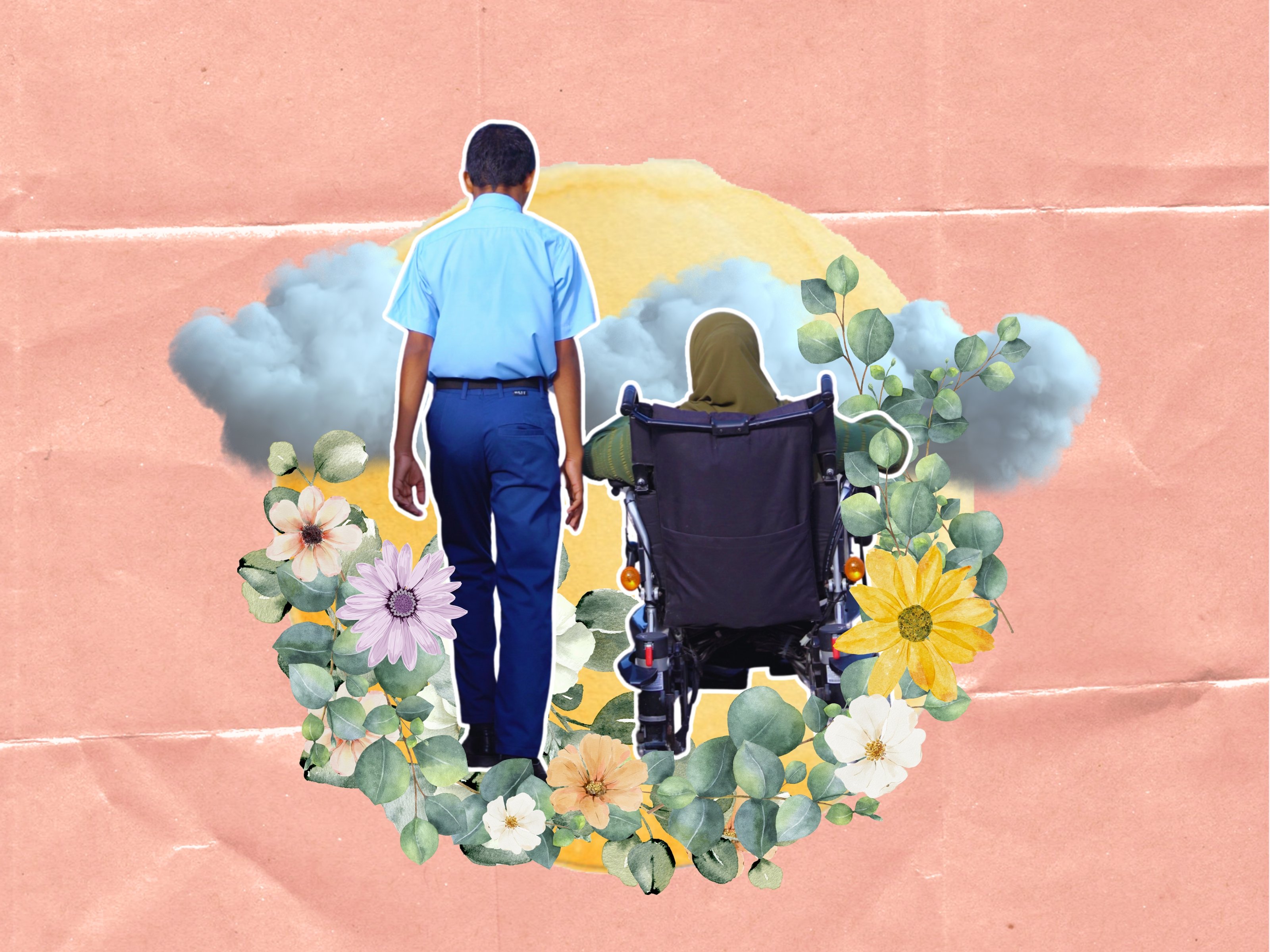
Every mother wants to be a part of her child's life; to witness and support every activity they take part in. I once asked my son, "Do you feel sad because your mom can't walk?" He told me that yes, he does feel sad, but what saddens him the most is knowing that I can't be there with him, sharing those moments or entering certain places by his side.
As a mother, I felt an overwhelming sense of pride the day my son was selected to participate in the Atoll Quran Competition. It should have been a moment of pure joy, but instead, I found myself consumed by worry. Due to transportation challenges, I had no way of accompanying him to the competition, which was being held on another island. Despite how much my son wanted me there with him, I was forced to tell him that I wouldn’t be able to go and watch him compete.
I am a disabled person. I have lived my entire life without the ability to walk, and at the age of 10, I began using a wheelchair. As a person with a disability, I face countless challenges when it comes to transportation. The current system makes it extremely difficult for people like me, or anyone with mobility issues, to travel from one place to another. For example, when I need to board a launch, it requires the effort of five people to lift me and my wheelchair onto the vehicle. Women with mobility challenges, who are unable to board a launch on their own, have to wait for a man to help lift them into the vehicle. This is not only uncomfortable but also demeaning for those women. In a country like the Maldives made up of many small islands, it's common for essential services to be unavailable on every island. This forces people like me, who live on smaller islands, to travel to larger islands for the care or services we need. As a result, transportation becomes an unavoidable and often challenging part of our lives.
Accessing basic services, like going to the hospital, is no easy task for me or my son, especially when either of us falls ill. My husband works on another island, and in his absence, I’m left to navigate the challenges of transportation on my own. How am I supposed to get onto these vehicles without him to lift me? How can I get off alone when I arrive? Often, we have to transfer from one launch to another when we reach land. It is also undignified for us to be carried from one place to another by a man. These physical barriers prevent those of us who need healthcare from accessing essential services. At least, the islands with larger hospitals must be equipped with the necessary infrastructure, like ramps, to ensure that people like us can receive the care we need. The government, service providers, and citizens must work together to remove these barriers, so that we can access the services we are entitled to, as guaranteed by our constitution.
How many of us and our children must endure so much difficulty and challenges just to receive basic care? Because of the transportation challenges, even my child misses out on opportunities to participate in activities. It is difficult to fully understand the depth of the sorrow and frustration that people like us, and our children, feel when we’re excluded from entering places or participating in community activities.
The Disability Act (8/2010) mandates that we should have access to necessary services from our local community or the nearest island, with as few barriers as possible. However, time and again, we find ourselves unable to access these services due to the transportation challenges we face. Many individuals have even been forced to leave their home islands and relocate to Malé city, simply because of the difficulties involved in traveling between islands
When I need to travel to Malé for an important reason, I continue to face numerous challenges moving around the capital city. Research conducted by the Human Rights Commission of the Maldives (HRCM) on wheelchair accessibility in the Greater Malé region revealed significant barriers for wheelchair users. It found that out of the places inspected, 53% of residential buildings, 46% of service offices, and 50% of bus stops lack proper accessibility. Despite bringing my wheelchair with me, the infrastructure of Malé renders it almost useless. I am unable to use my wheelchair on most pavements due to the lack of ramps, or when ramps do exist, they are often blocked by parked vehicles. Overcoming these barriers and ensuring our ability to move freely is a responsibility that falls to every citizen in the country.
I encounter many challenges, even when traveling by air. In my most recent trip, I called the airline in advance to inform them that I am a wheelchair user. However, when I arrived at the airport to check in, two airline staff approached me and told me that I wouldn’t be able to bring my wheelchair on the plane and would have to leave it behind. How is someone like me, who cannot walk at all, expected to leave our only means of mobility behind? It felt as though the airline was handling a wheelchair user for the very first time, completely unprepared for the needs of passengers like me.
The Disability Act (8/2010) clearly states that it is the responsibility of service providers to create accessible transportation options for people with disabilities. It also guarantees that we should have the same opportunity to access and use healthcare services as everyone else. However, it saddens me to say that, despite the passage of 14 years since the Act was enacted, people with disabilities continue to face numerous barriers in accessing these essential services. My inability to walk should never be a reason for me to be denied the services I desperately need.
While the challenges I’ve mentioned may require significant investment or time to address with long-term solutions, there are more affordable and immediate measures that can be taken to ease the barriers faced by people with disabilities. One such solution is to use the existing speakers on buses to announce the name of the stop whenever the bus reaches a designated location. This simple audio announcement would be incredibly helpful for individuals with visual impairments, making it easier for them to navigate and feel more independent while traveling.
Before, I didn’t realize that I had specific rights protected under the constitution. It wasn’t until two years ago, when I had the opportunity to participate in the "Power to Persuade" program organized by Care Society, that I learned about the rights guaranteed to us under the Disability Act and how to advocate for them. After returning to my island following the workshop, I began speaking out for my rights within my small community. Through my advocacy efforts, a ramp was built at the mosque, and it brings me immense joy to know that, after years of being unable to join in the Tharaweeh and Eid prayers with everyone else, I was finally able to pray alongside the community this past 2 years. While this change may seem small, it shows what one person can achieve when they speak up. Just imagine the positive change and impact we could create if everyone—disabled or not—came together to fight for these issues!
None of us can predict when we or someone we know might become a wheelchair user. That’s why, when development plans are being made for islands, it’s crucial to involve people with disabilities in the decision-making process and ensure that the plans address the needs of everyone. My greatest hope is that, in the future, transportation barriers for people with disabilities will be reduced. I believe that these changes wouldn’t just benefit those with disabilities but would also improve the lives of everyone in the community, including pregnant women and the elderly.
About the Author Aishath Amsoodha:
This article is written by a member of the Power to Persuade Network, a coalition of disability activists in the Maldives dedicated to raising awareness of the challenges faced by People with Disabilities. The Power to Persuade network aims to directly advocate for the rights of Persons with Disabilities and work towards finding solutions to the challenges they face in various aspects of their lives.
Aishath Amsoodha is a wheelchair user from Shaviyani Goidhoo. Amsoodha advocates for physical accessibility, focusing on health and education rights for persons with disabilities, particularly in island settings, with an emphasis on family impact.