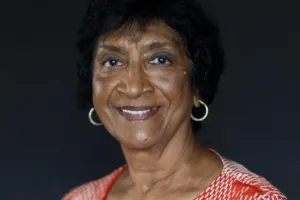
This article was written by former Police Commissioner Mohamed Hameed.
The recent diving tragedy in Vaavu Atoll has shaken the Maldives and drawn international attention for all the wrong reasons. Five Italian divers lost their lives after entering a deep underwater cave, and during the recovery operation, Maldives National Defence Force Staff Sergeant Mohamed Mahdhee also died while serving the nation in an extremely high-risk mission. International media have reported that the cave was around 50–60 metres deep, beyond normal recreational diving limits, and that the operation was later suspended due to the danger involved.
At the human level, this is a tragedy. Families have lost loved ones. A Maldivian serviceman lost his life trying to recover others. Nothing written here should take away from the courage of those who went into the water. Their service deserves respect.
But at the institutional level, this tragedy should force us to ask an uncomfortable question.
Are our national security and public safety agencies working together as one system, or are they still operating as separate camps, shaped by old rivalries, unclear mandates, and institutional ego?
In the Maldives, this is not an abstract issue. It affects real operations. It affects how quickly help reaches people. It affects how public money is spent. And in the worst cases, it may affect whether lives are saved or lost.
A Small Country Cannot Afford Institutional Ego
The Maldives is a small island nation with vast maritime realities. Our geography demands cooperation. We are not a large country with unlimited resources, unlimited vessels, unlimited divers, unlimited aircraft, unlimited command centres, and unlimited technical teams.
Yet every year, the state spends heavily on both the Maldives Police Service and the Maldives National Defence Force. In the 2026 budget, the Maldives Police Service is allocated about MVR 2.83 billion, while MNDF is allocated about MVR 2.82 billion. Together, that is more than MVR 5.6 billion in public spending on two security institutions in one financial year.
That level of spending must produce more than uniforms, vehicles, ranks, buildings, ceremonies, and separate institutional pride. It must produce a functioning national safety system.
The public does not care which agency gets the credit when a stranded boat is rescued, when a missing person is found, when divers recover a body, or when a tourist incident is handled professionally. The public expects the state to respond as one state.
Unfortunately, that is not always how we operate.
The Unresolved Shadow of the 2004 Split
Since the Maldives Police Service was separated from the military structure in 2004, there has remained an unresolved institutional tension. Many within MNDF still appear to carry the mindset that the Defence Force must remain the superior security agency within the national architecture. That thinking may be emotionally understandable for some who lived through the old integrated structure. But it is not useful for a modern democratic state.
MPS is not a junior institution. MNDF is not a rival institution. Both are constitutional and statutory instruments of the Maldivian state. They serve different but sometimes overlapping purposes. One is primarily a civilian law enforcement and public safety organisation. The other is a defence and national security organisation. In a country like Maldives, the sea, public order, disaster response, tourism safety, crime investigation, border risks, and rescue operations will inevitably create overlap.
That overlap should not be treated as a threat. It should be managed through law, doctrine, joint planning, and operational discipline.
Instead, we often allow it to become personal and territorial.
During my time as Commissioner of Police, I recall situations where a police speedboat based on a remote island was dispatched to assist a stranded civilian vessel nearby. On common sense alone, that should be the obvious response. The closest capable state asset should go. But even such actions could upset those who believed that maritime rescue belonged only to the Coast Guard, and therefore only to MNDF.
This is the problem. When agencies begin to worry more about who appears in the press release than who reaches the citizen first, the state has lost its way.
Capability Exists. Interoperability Does Not.
Both MNDF and MPS have developed specialist capabilities over the years. MNDF has Coast Guard divers and maritime rescue responsibilities. MPS has also built strong marine policing and diving capability through its Marine Police Wing and Police Diving Unit.
MPS has invested in structured diving training, including forensic diving, underwater search and recovery, rescue-related skills, and underwater evidence recovery. In July 2025, MPS completed its first international forensic diver course through the National College of Policing and Law Enforcement, with participants from Maldives, Saudi Arabia, Cambodia, and Sri Lanka. The course covered Open Water, Advanced Open Water, EFR Rescue, and Forensic Diving components.
That is not a minor capability. It is a serious national asset.
The question, therefore, is not whether MNDF has divers or whether MPS has divers. The question is whether the Maldives has one integrated underwater rescue and recovery system that uses all available state capacity intelligently.
From what is being said by officers familiar with the recent operation, the answer appears to be no.
One senior MPS officer described the situation to me in deeply worrying terms. According to him, police divers believed they had a better operational plan, and even an Italian instructor onshore preferred that plan. He also said MPS divers were involved in recovering the body of MNDF diver Mahdhee. His concern was not about credit. It was about mandate confusion and the lack of a settled joint operating arrangement for maritime search and rescue.
I cannot independently verify every operational detail of what was said to me. But I know the institutional problem he is describing. I have seen it before. It is real.
Rank, Protocol and the Culture of Superiority
There is another uncomfortable matter we must confront. The way institutions treat each other in moments of grief and ceremony says a lot about the deeper culture.
At the funeral of Staff Sergeant Mahdhee, there were concerns that the Commissioner of Police was not treated with the level of respect due to the head of a major national security institution. This may look like protocol to some. It is not. It reflects a deeper mindset: that military ranks are inherently superior to police ranks, and that the Chief of Defence Force stands above the Commissioner of Police in the national security hierarchy.
That thinking is outdated and harmful.
A Commissioner of Police and a Chief of Defence Force are not the same thing, but both lead national institutions of immense public importance. One commands a civilian police service. The other commands the military. Their roles differ, but neither institution should treat the other as secondary.
This is not about personal respect for an individual Commissioner. It is about institutional maturity.
A young democracy cannot afford security agencies that behave like competing kingdoms.
The Law Must Catch Up with Reality
Part of the problem is legal and structural. The Maldives Police Service Act was modernised through Law №34/2020, which came into force after the democratic reform process and clarified many aspects of civilian policing. The President’s Office described the law as setting out the principles, roles and guidelines for police officers, including the duty to ensure public safety in line with constitutional and human rights standards.
MNDF’s legal framework, however, has not gone through the same level of modern democratic review. In practice, this creates ambiguity in areas such as maritime rescue, disaster response, emergency support, public safety operations at sea, and specialist response functions.
The Maldives must urgently review and clarify these mandates. Not to weaken MNDF. Not to expand MPS unnecessarily. But to make sure that when an incident happens, nobody wastes time asking, “Whose job is this?” while lives are at risk.
In an emergency, the first question should be: who is closest, who is capable, who has the right equipment, who has the best plan, and who should command this specific operation?
What Must Change
The Maldives needs a formal national interoperability framework between MNDF, MPS, NDMA, Tourism Ministry, Transport authorities, health services, island councils, and private sector operators such as resorts, safari vessels and dive centres.
At minimum, this should include:
First, a legal review of MNDF and MPS mandates, especially on maritime search and rescue, underwater recovery, disaster response, public safety at sea, and investigative support.
Second, a joint command protocol for major incidents. The lead agency should depend on the nature of the incident, not institutional ego. A rescue at sea, a criminal investigation, a tourist fatality, a mass casualty event, and a national security incident may require different leads, but always one coordinated command structure.
Third, shared capability mapping. The state must know, in real time, where police vessels, Coast Guard vessels, divers, drones, ROVs, medics, decompression support, and specialist equipment are located.
Fourth, joint training and exercises. Interoperability cannot be invented during a tragedy. It must be practised before the tragedy.
Fifth, a national maritime rescue and recovery doctrine. This should define who does what, how decisions are made, how risk is assessed, how foreign experts are integrated, how evidence is preserved, and how public communication is handled.
Sixth, joint public communication. Press releases should not become a competition. In major incidents, the government should speak as one state.
This Is About Citizens, Not Agencies
The Maldives cannot continue to spend billions on security institutions and still allow confusion, rivalry, and protocol insecurity to undermine real-world delivery.
The sea does not care whether a diver belongs to MNDF or MPS. A stranded family does not care whether the rescue boat has Coast Guard markings or Police markings. A grieving parent does not care which agency’s logo appears on the press statement.
They care whether the state came in time. They care whether the best people were used. They care whether the operation was professional, safe, coordinated, and honest.
This recent tragedy must not become only another news cycle, another funeral, another set of statements, and another forgotten review. It should become the moment when Maldives finally accepts that public safety cannot be run on institutional pride.
MNDF and MPS both matter. Both have brave people. Both have capabilities. Both have mandates. But the country does not need rivalry between them. It needs disciplined cooperation.
The state must now do the hard work: clarify the law, define command, share resources, train together, and build a culture where agencies are judged not by who gets credit, but by how well they serve the people.
In a country of islands, interoperability is not an administrative luxury.It is a matter of life and death.