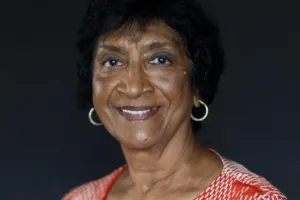
Hussein Fiyaz Moosa is the CEO of Adhadhu. This is an English translation of his original Dhivehi comment piece.
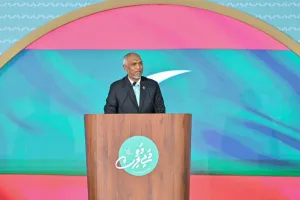
President Mohamed Muizzu frequently highlights the importance of justice in his speeches. However, the recent decision by the President's Office to penalise Adhadhu and its entire journalistic staff—while citing internal regulations—is a move that bypasses the constitutional principle of separation of powers and violates the fundamental right to due process.
The incident
Every Monday, Muizzu meets with the press from 10:00 am to 11:00 am. Even before this schedule was established, Adhadhu had produced a documentary titled "Aisha," which featured several allegations against the President. When the former Spokesperson at the President’s Office and current Heritage Minister, Heena Waleed, denied these claims, her response was also included in the documentary.
The Maldives Broadcasting Commission (Control Commission) began investigating the documentary following its release on February 28. Despite requests for a fair opportunity to respond, no such chance was granted, and the status of the case remains in limbo. The most recent correspondence received from the Commission referenced a letter number and declared it void, yet it remains unclear which letter they were referring to.
To date, the Commission has not determined that Adhadhu violated any laws, nor has it issued any such notice.
However, during a press conference on April 30, the President did more than just deny the allegations when questioned about the documentary.
Following that, police obtained a court order and entered the Adhadhu office, seizing laptops and equipment in a heavy-handed raid. Criminal allegations were raised against our Editor and me, and travel bans were imposed.
Last Sunday, just before Muizzu's weekly press conference, the Criminal Court issued an order. This order prohibited any direct or indirect discussion of the contents in the Adhadhu documentary—effectively a gag order on the public.
During yesterday’s briefing, journalist Shahzan posed two questions to the President. When the first question touched upon the documentary, Muizzu immediately "ruled" that such questions were prohibited. Following this, security personnel and administrative staff forcibly removed Shahzan from the microphone and escorted him out of the President’s Office. This marks an unprecedented incident in Maldivian history.
Seeking to understand the criteria for what questions are permitted at the President’s Office, I went there immediately and waited in the lobby with Shahzan until the briefing concluded. Despite repeated requests to meet with a media official or a relevant authority, a staff member at the counter informed me that no such meeting would be granted.
Because Shahzan’s questioning was deemed an issue by a Criminal Court judge, and because Leevan reported on the gag order, both journalists have been summoned to the Criminal Court today. Out of the six journalists in Adhadhu’s local department, four—including myself—now face active cases in the Criminal Court.
This escalation reminds me of a phone call I received from Muizzu during Ramadan last year. Driven by anger and based on mere suspicion, he threatened to take the harshest legal action possible against me. Ultimately, the Prosecutor General’s (PG) Office declined to file charges in that matter.
Now, we face this situation regarding the documentary. The legal actions against Adhadhu are being triggered in rapid succession, like a string of firecrackers.
The decision
The President’s Office issued a statement citing information from the Maldives Police Service regarding a criminal case at the Criminal Court involving video content circulated by Adhadhu. It also noted an ongoing investigation by the media regulatory body. The office claimed that during the press conference on May 11, 2026, Shahzan violated a court order issued on May 10, 2026, which prohibited commentary on an active trial. Citing the Maldives Media and Broadcasting Regulation Act and internal protocols, the President’s Office announced that, effective immediately, Adhadhu and its representatives are barred from attending or covering any press conferences organised by the President’s Office for the duration of these legal proceedings.
Is the President’s Office now the Media Commission?
A fundamental pillar of justice is the right of the accused to respond. It is baffling that the President’s Office cited Articles 39, 40, and 44 of the Media and Broadcasting Commission Act. No entity other than the Media Commission has the legal authority to investigate content and determine legal violations.
Article 39 outlines the standards for broadcasters and journalists; Article 40 details the code of ethics; and Article 44 addresses the responsibility to disseminate truthful information.
Adhadhu has not violated any of these articles. Furthermore, for the President’s Office to make such a determination in the absence of a ruling from the relevant statutory body is the very definition of an arbitrary decision.
Being subject to an ongoing court case does not equate to guilt. Suspending journalists as a "punishment" before a trial concludes is a violation of the principles of justice.
The Maldivian legal framework is designed so that the Media Commission oversees conduct and disciplinary action. For Muizzu to act as "judge" and declare that journalists have broken the law is an extrajudicial act.
The "Protocol for Covering Press Conferences" cited by the President’s Office is an internal administrative document. Such a protocol cannot legally override or restrict the fundamental right to freedom of the press guaranteed by the Constitution.
A disproportionate measure
While the office claims the authority to take action based on the "severity of an act" under Article 13 of their protocol, barring an entire news organisation indefinitely due to the actions of a single journalist is a wildly disproportionate response. This decision is inherently discriminatory.
By what standard was the "severity" of the journalist's act measured? What scale was used to determine the punishment? No such standards exist within the protocol. Therefore, the measure taken against Adhadhu late last night appears to be rooted in personal animosity rather than any legal basis.
In a state governed by the rule of law, disciplinary actions must follow established independent procedures, including the right to a defence. Otherwise, these protocols become "weapons" used by government agencies to stifle press freedom.
We are witnessing a systematic weakening of state powers. Adhadhu and I are working to ensure the flame of the "Fourth Estate" is not extinguished. Given the current climate of persecution, I fully expect that our team may face imprisonment or lashes.
My appeal to the President is this: align your actions with your speeches. Prioritize justice. Decisions made in anger, rather than through reason, will only lead to further error.