The "General Regulation on Tobacco Control" had the potential to be revolutionary for Malé and the wider country—if only it had been implemented properly.
On paper, the promise was clear: if the government enforced these regulations, residents of Malé would no longer be forced to breathe second-hand smoke. Smoking would be eliminated from most pedestrian streets, public gathering spaces, sports grounds, schools, and hospitals. Furthermore, if authorities took responsibility for enforcement, the sale of single cigarette sticks—and the circulation of counterfeit products—would cease completely.
But this is the Maldives.
The tobacco control regulations, which technically came into force on February 12, 2025, remain little more than words on a page. There is seemingly no one to enforce them, and no channel for the public to complain when the rules are flouted.
This regulation was intended to be one of the flagship changes under President Mohamed Muizzu's tobacco control policy, introduced following a 100% tax hike in November 2024 and a nationwide ban on vaping.
A Brief Introduction to the General Regulations
The primary objective of the General Regulations on Tobacco Control is to ensure the right of every person in the Maldives to be protected from tobacco smoke. The regulation consists of six main chapters:
- Preliminary provisions (introduction and purpose).
- Measures to protect society from tobacco smoke.
- Rules regarding the trade of tobacco products.
- Prohibition of advertising and promotion.
- Packaging and labeling standards.
- Penalties for violations.
While laws prohibiting smoking in certain public places existed prior to this, the new regulation significantly expanded the scope of "smoke-free" zones.
Where is Smoking Prohibited?
The list of banned locations is extensive, covering almost every public space:
- Mosques, Schools & Universities: Including both indoor and outdoor areas, plus a 25-foot radius from entrances.
- Healthcare Facilities: Hospitals, clinics, pharmacies, and wellness centers (indoors and outdoors).
- Government Buildings: All state agencies and companies, including entrances.
- Workplaces: All indoor office environments.
- Transport: Public transport vehicles, airports, bus stops, taxi stands, ferry terminals, bridges, and jetties.
- Recreation: Sports stadiums, courts, parks, and entertainment venues.
- Public Safety Zones: Areas with a high risk of fire (industrial sites, fuel stations).
- Family Areas: Children's parks, squares, and nursing homes.
- Commercial & Residential: Shops, markets, and common areas of apartment buildings (stairs, hallways).
- Public Streets: Most streets and alleys.
The Reality: Zero Enforcement
The regulations clearly define "public places" as any area where people can walk freely or gather. They also clearly mandate five specific state agencies—including the Ministry of Health, Maldives Police Service, and City Councils—to enforce these rules.
However, an Adhadhu photographer who took to the streets of Malé to verify the situation found that schools and hospitals were the only places where the measures were being respected.
Elsewhere, the law is being openly ignored. People were observed smoking freely near ferry terminals, outside shops, in the busy market and bazaar areas, near jetties, and in public parks. Smoking on marine vessels also remains common.
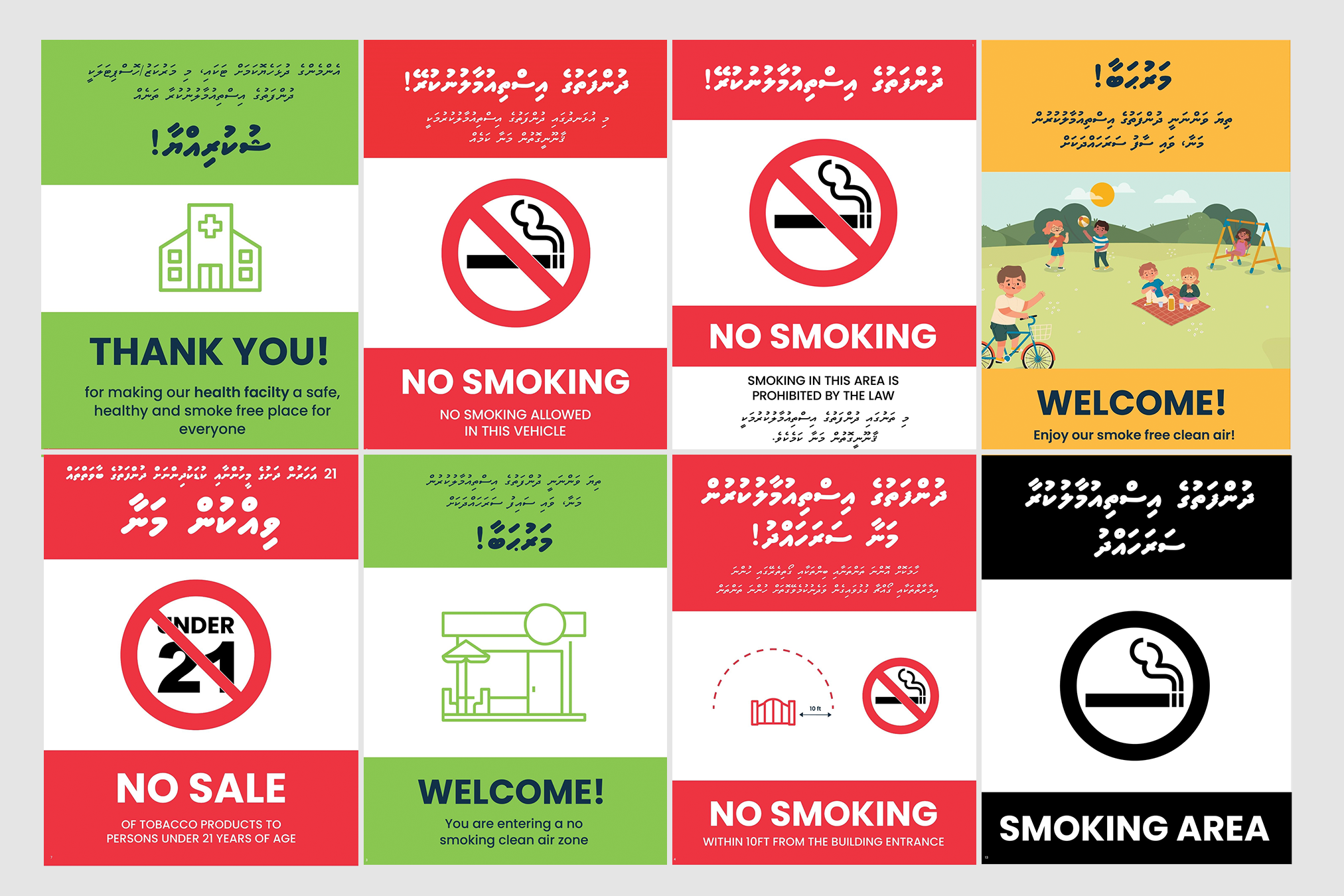
A glaring issue is the lack of signage. In many designated non-smoking areas—such as parking lots—there are no signs indicating the ban. As a result, many citizens may be breaking the law simply because they are unaware it applies to that specific location.
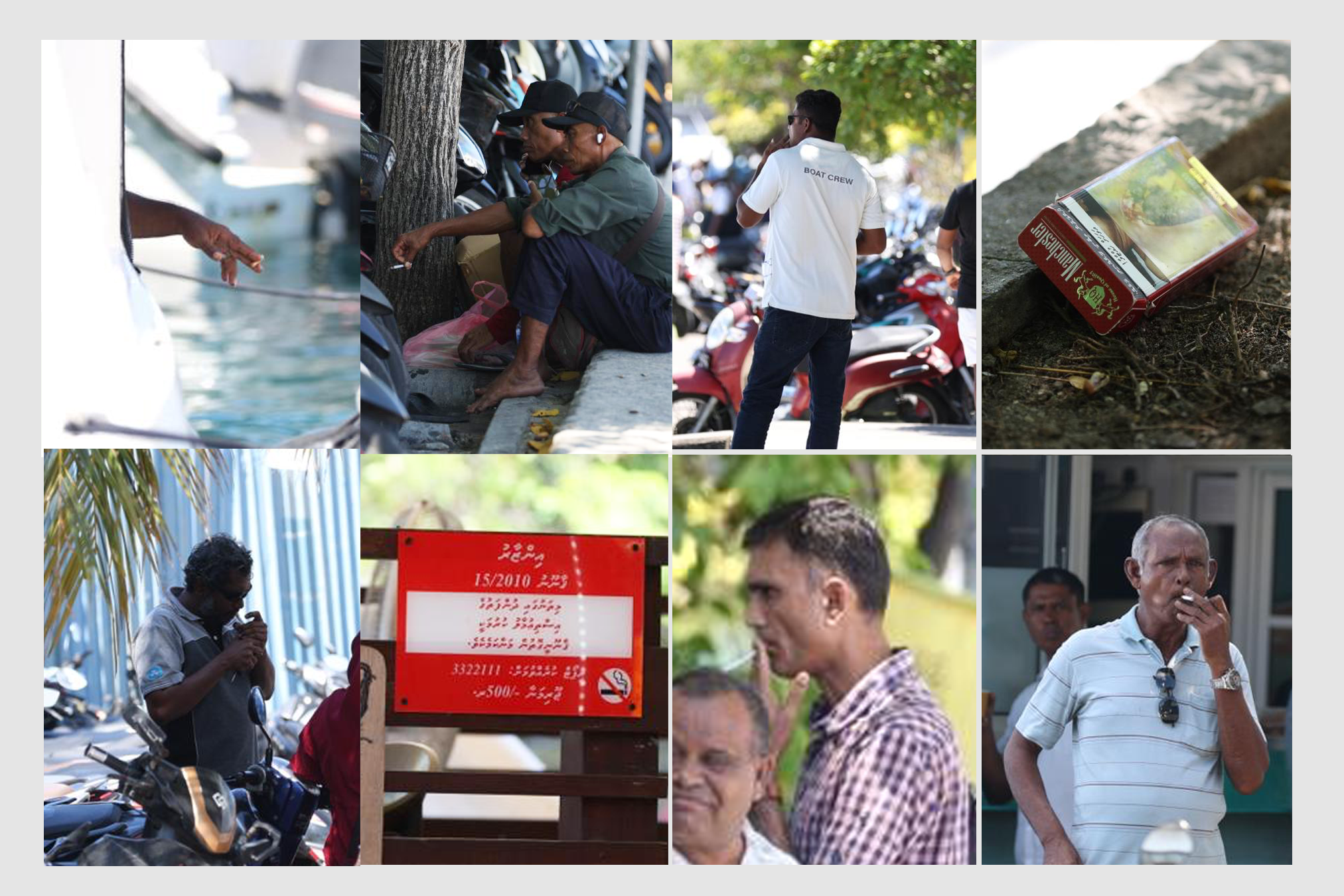
People smoking in prohibited places.
Regulation enforcement agencies
- Ministry of Health
- Maldives Customs Service
- Maldives Police Service
- Ministry of Economic Affairs
- City councils, atoll councils, island councils
Maintenance of smoke-free public areas is the responsibility of the agency in charge. For example, the city council is responsible for maintaining no-smoking signs in parking lots overseen by the city council and making the premises smoke-free.
The rules clearly define "public places." They are places where people can walk or come and go without any obstacles and where the public can stop or gather for other purposes.
The "Under 18" Rule: Ignored by Retailers
One of the regulation's most critical clauses is the prohibition of selling tobacco to anyone under the age of 18. The law explicitly bans the sale of tobacco to minors and prohibits employing anyone under 18 in the tobacco trade.
Retailers are legally required to:
- Check the ID of any buyer who appears to be under 18.
- Display a prominent sign prohibiting sales to those under 18.
Yet, this too is failing in practice. Many young people report that shops rarely, if ever, check their IDs. Furthermore, very few outlets display the mandatory warning signage.
Conclusion
Tobacco control policies, regulations, and laws must be comprehensive to be effective. But they only work when they are enforced. When a "revolutionary" law is passed but ignored by the very authorities meant to uphold it, it sends a dangerous message to the public: that the system is broken, and compliance is optional.
--
This article was first written in Dhivehi by Hassan Mohamed.