Cats live on all three floors of Ranauraage'aage house in a narrow alley in the Galolhu district of Male'. Residents of other homes in the alley say they have never seen the same cat twice and the sound of crying cats is a constant occurrence.
The house had a bed on the top floor. The second floor is used as a warehouse with goods loaded all over the place. The lowest floor is used as a kitchen.
Neighbours say Arafat Hossain, 32, a Bangladeshi, brings cats and cooks all day long.
People have seen a headless cat in the area - the poor animal partly skinned. They accuse Arafat of preparing food using cat meat.
"Two days ago, I saw a cat outside the house between two cycles. Its neck was cut off. It was hollow inside. Its skin was torn off. It had no head. The cries of cats can be heard from the house every day, except today," a woman who lives in the alley told Adhadhu.
"He steals cats and keeps them. Our children say they don't see the same cat twice."
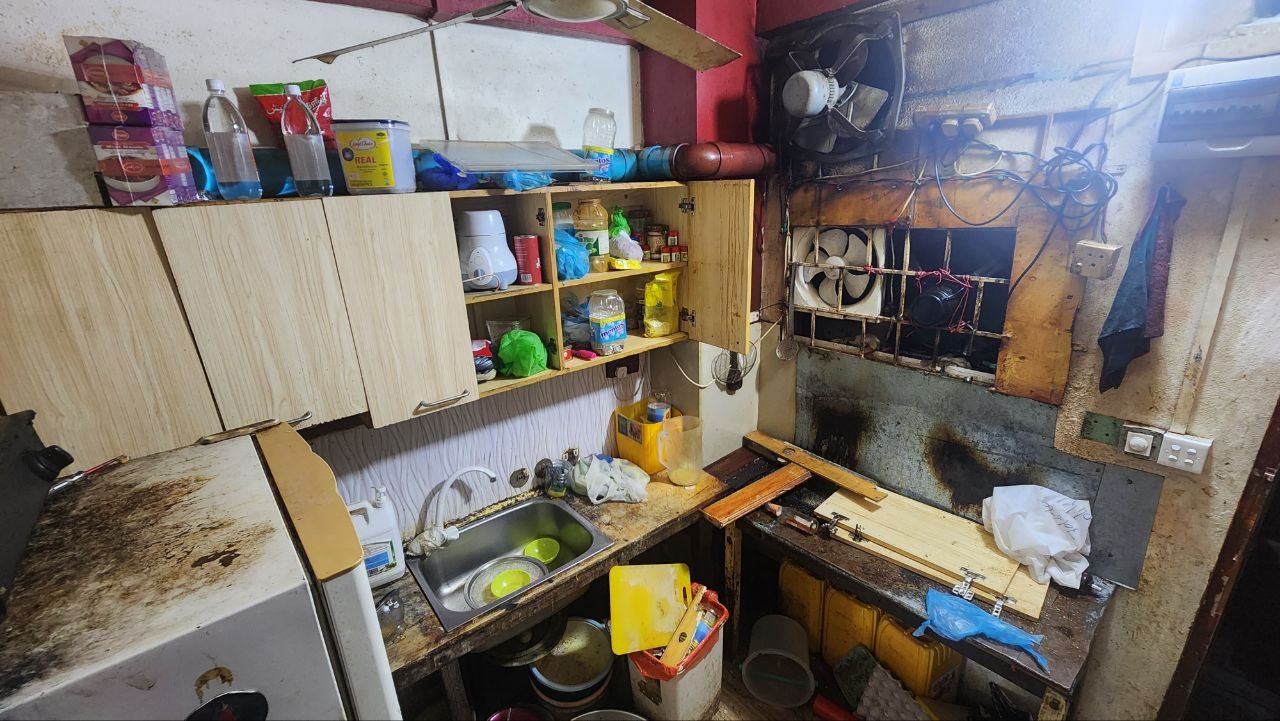
Arafat's kitchen. -- Photo: Adhadhu
Adhadhu reporters visited Arafat's house after the allegations were raised on social media yesterday. We witnessed the filthy food factory with a deep freezer stocked with suspicious pieces of meat. The stench of rotting meat hit us when we opened another fridge. A trap was placed on the ground on one side of the food preparation area - a big rat running around even as we were photographing.
Neighbours have reported Arafat's food factory to Immigration and other relevant authorities several times. But, the issue did not come to the government's attention before the story was exposed on social media yesterday.
"We take videos of him and send them to Immigration. We get no news from them. We call the police. Finally, last Ramadan, the police came and said they could not do anything because he was cooking in a rented place," one person said.
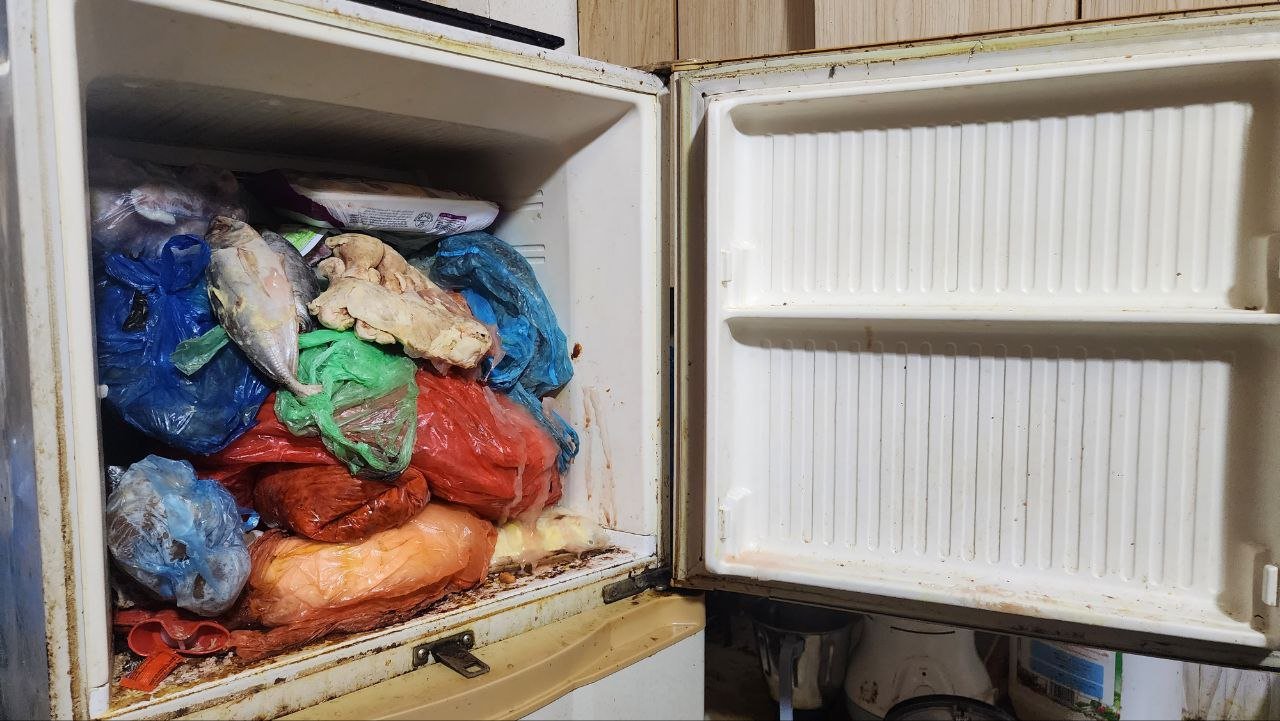
A fridge in the kitchen. -- Photo: Adhadhu
Residents had also been concerned for their safety. The kitchen's smoke chimney was their biggest worry. When people mention it, Arafat reacts with anger.
"He cooks in big pressure stoves. It's not safe at all. It gets so hot because he cooks for 24 hours. I wake up sweating sometimes. He says he can't be forced out of the place, that he will do as he pleases," one person said.
Arafat arrived in the Maldives to work as a waiter. However, his real job has been preparing food in the rented house. He usually cooks for other Bangladeshis living in Male'. However, Arafat also prepares food such as submarines and burgers popular among Maldivians.
Arafat's kitchen was full of utensils and cooking items. Many of the ingredients seen littered around the kitchen had been expired. There was no cleanliness or orderliness.
The public had expressed shock and disgust when the news emerged on social media yesterday. There were calls for his immediate arrest as well as calls to raid similar unhygienic locations.
Immigration launched a search for Arafat following the public outcry. Police raided his kitchen and the arrest was made on Tuesday morning. He was inside a barber shop, waiting to change his appearance, when police took him into custody.
Police say they have launched a serious investigation into the matter while the Animal Welfare Ministry is also conducting a separate investigation.
This article was first produced in Dhivehi by Leevan Ali Nasir.