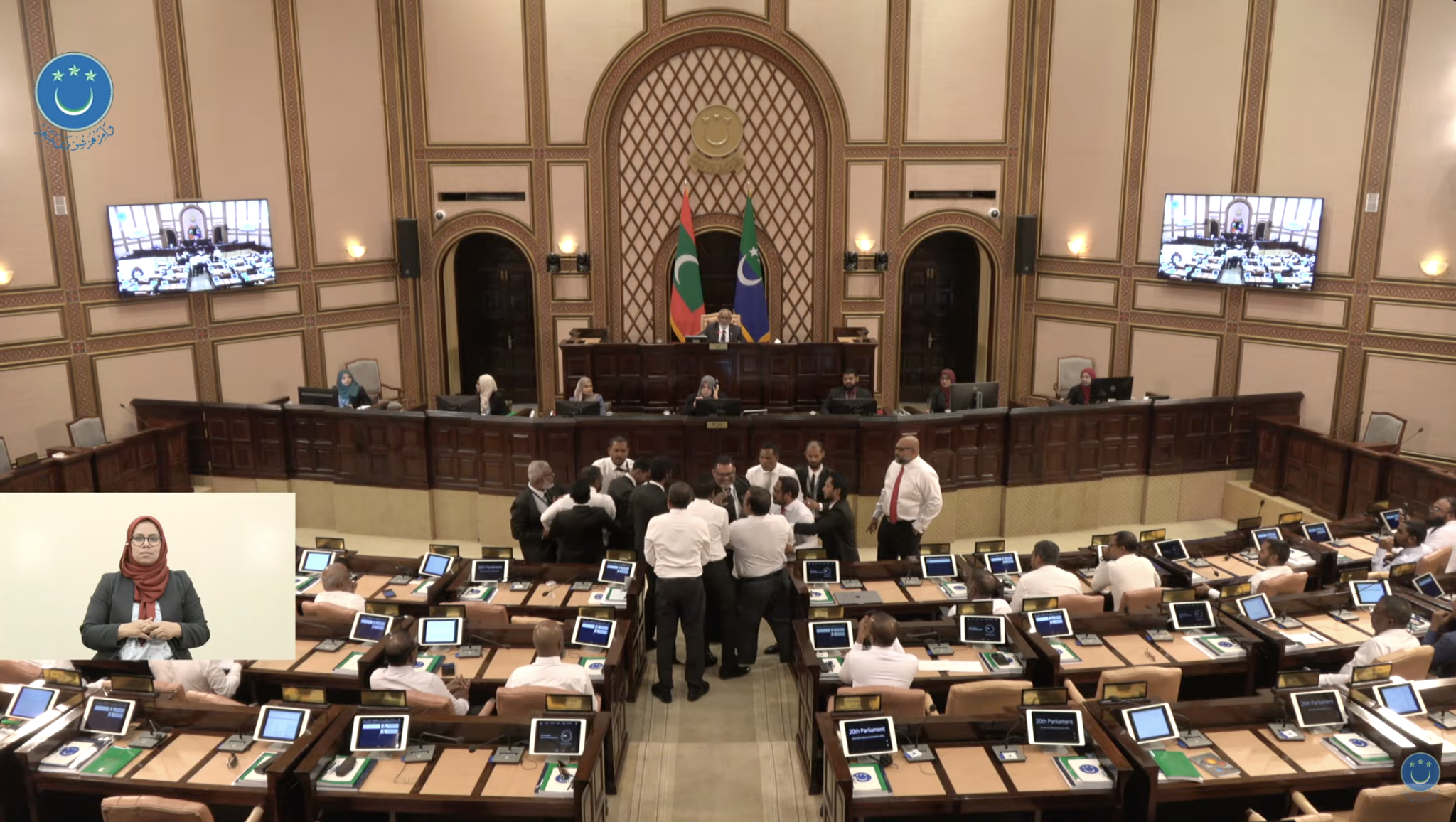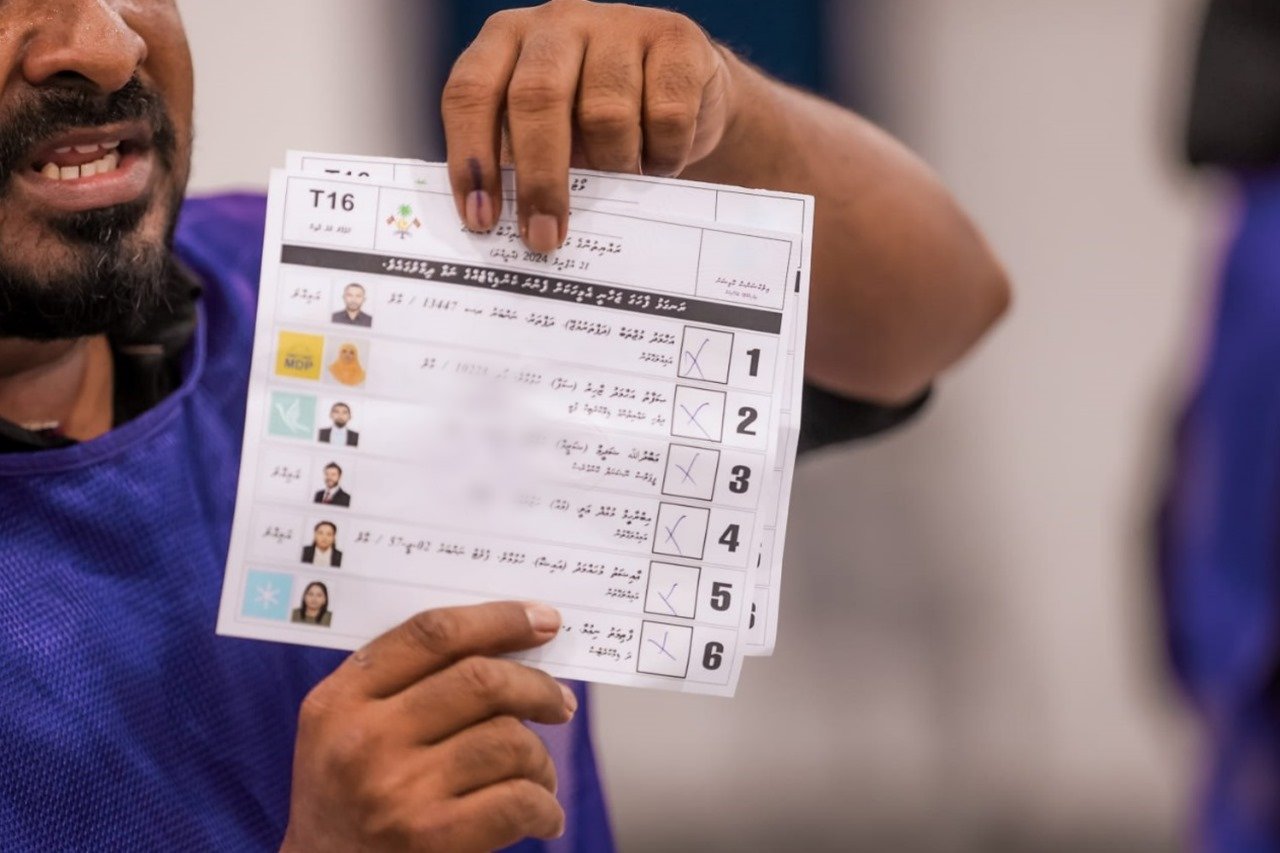
As polls closed for the 20th People's Majlis election today, figures showed a low voter turnout compared to previous elections. According to the Elections Commission (EC), 73 percent of the voters cast their ballots by 5:30 pm.
Statistics show that in the 2009 parliamentary election, 166,105 out of 212,559 eligible voters turned out to vote. In 2014, 240,653 people were eligible to vote, out of which 189,642 people cast their ballots. In the 2019 parliamentary elections, voter turnout was 81.32 percent. That is 215,053 out of 264,446 eligible voters.
Adhadhu reporters met and interviewed voters at polling stations during today's vote.
Why did you decide to vote?
The responses from most people showed that they vote because a family member or a friend is contesting as a candidate. In the parliamentary election, votes are mainly decided by relationships.
Ageedha Suheil, 50, who belongs to the Gaaf Alif Villingili constituency told Adhadhu that she decided to vote to elect a family member to parliament.
"A relative of my husband is contesting. So I'm here to help elect him."
Another person said they were voting because a close friend was a candidate.
"One of my close friends is a candidate. When deciding the candidate, I mostly look at how close they are to me," said Sharugeel Ashfan, 31, from Villingili constituency.
The second most common reason for voting in the parliamentary elections is fulfilling the individual responsibility towards the nation. Many people said everyone should put aside personal interests and vote in elections.
"I came to vote today because it is a personal responsibility. I have to fulfill that responsibility," said Rishah Naseer, 33, who works in the accounting field.
Some people who spoke to Adhadhu said it is the individual responsibility of every citizen of the constituency to elect a capable person for that seat.
"I came out to vote because the country will move forward by electing a candidate with the right potential. I want to fulfill that responsibility and bring about a positive change," said Mohamed Riflal, 29, a young pilot from Villingili constituency.
Some people saw it as everyone's duty to vote.
"Voting is a duty. Everyone must do it for the country," said Mariam Saeeda, 71, who came out from the ballot station after voting for the Maafannu Uthuru constituency.
No confidence in the People's Majlis, people want change
It is important to maintain public confidence in politicians in order to have high voter turnout. The right to vote is an essential responsibility, and today's parliamentary elections showed that many people have lost confidence in the system.
"We don't trust the parliament. It's because the people [MPs] there have no character. We voted in the hope that it would change," said Ageeda Suhail, who spoke earlier.
Some people said they did not believe the people's voices would be heard in Parliament.
"There is no confidence in the parliament. There has been no major change in the constituency in the last five years. The voice of the people is not heard in the parliament," Sharugeel Ashfan said.
Some young people said the parliament is not doing enough.
"The current parliament is not doing enough work either. Each one of them works for their own benefit so there is no trust," said Malaak Ahmed Fayaz, 21, who works as a journalist.
Some people said they did not believe the vote would bring a positive change.
"It is our responsibility to vote. But there is no guarantee or confidence that this vote will do that," Mariyam Saeed said.