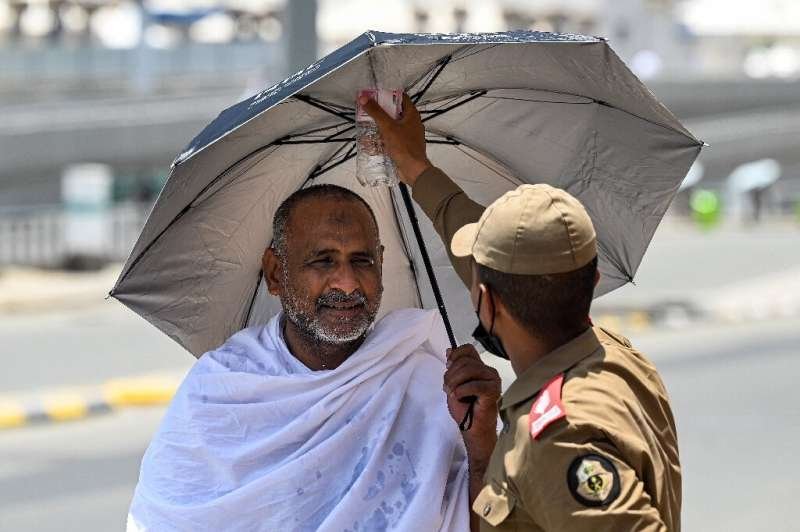
Mecca, Saudi Arabia (June 27) - Mobile phones are overheating and the pavement feels like a frying pan but for Abdul al-Assad, intense desert heat is all part of the hajj pilgrimage in summertime Saudi Arabia.
Even with temperatures hitting 46 degrees Celsius (115 degrees Fahrenheit), the 48-year-old Briton said the hardship only heightened his experience.
"If it was easy, it would be too easy," said Assad, a real estate agent, in Mecca, Islam's holiest city.
"The whole purpose is that you perform it in the way the Prophet (Mohammed) did, in the way that you appreciate what you have," he told AFP, his face reddened by the sun.
However, global warming has made Saudi's desert climate even hotter in recent years, probably exceeding the temperatures of the Prophet Mohammed's time about 1,400 years ago.
Average summer temperatures in the oil-rich kingdom have risen by 2.5 degrees in the last four decades due to climate change, said Karim Elgendy, a non-resident scholar at the Middle East Institute in Washington.
"Maximum summer temperatures of 50 degrees could become an annual occurrence by the end of the century," he told AFP.
"Humidity is also expected to rise making those future outdoor conditions very difficult to mitigate."
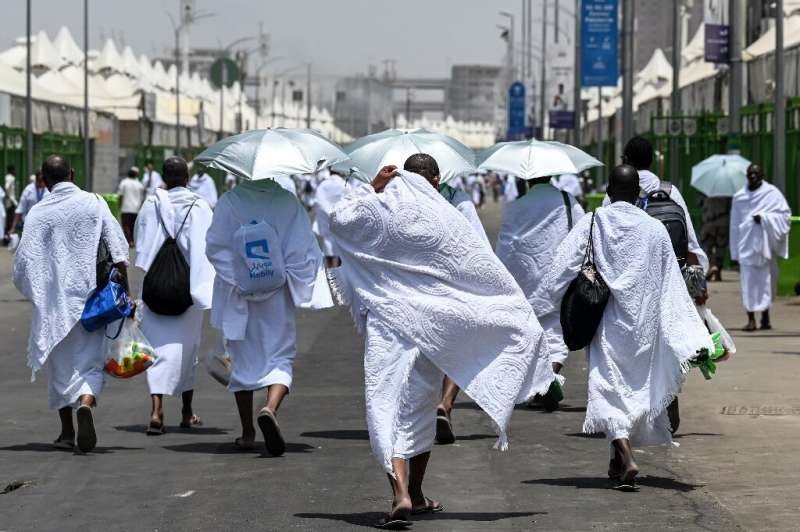
Many robed pilgrims walked from Mecca to Mina on Monday.
'Not normal'
Outside the Grand Mosque in Mecca, water was sprayed from long poles to keep the crowds of worshippers cool.
A few meters away, white-robed pilgrims sought refuge on cool, marble floors in the shaded entrances of hotels and shopping centers while awaiting the next prayer.
More than 32,000 health workers are on hand to treat anyone struck by heatstroke or other ailments, authorities say, while bottles of water are being distributed free of charge.
Many pilgrims hold umbrellas to shield themselves from the sun, while others carry their folded prayer blankets above their heads.
"The heat here is not normal, (it's) as if it's the heat of hell," said Nibal Mohammed, a 70-year-old Syrian pilgrim living in Canada.
"I can't wait to finish my hajj and leave."
The hajj, a major earner for the largely oil-reliant Saudi economy, follows the lunar calendar, meaning it does not always take place during the summer.
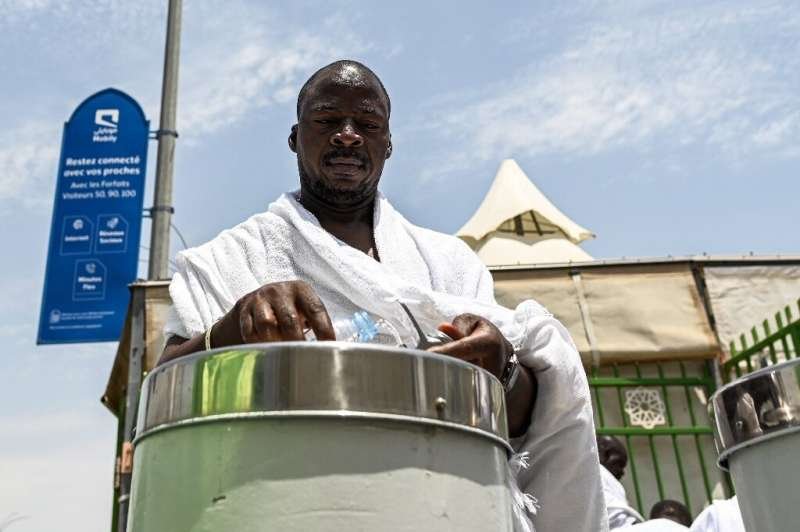
Bottles of water were handed out to the pilgrims.
This year's gathering could be the biggest on record, according to officials, after COVID-era caps on numbers were removed.
A maximum age limit has also been scrapped, opening the door to large numbers of elderly people who may be more vulnerable to the heat.
Summer in one of the hottest regions on earth can make any outdoor activity hazardous, bringing risks of dehydration, heat stroke and heart failure.
To protect manual workers, Saudi Arabia prohibits outdoor labor from 12:00 to 3:00 pm between June and September, the hottest months.
Heat 'not an obstacle'
The Gulf climate is so extreme that in 2021, the United Nations' Intergovernmental Panel on Climate Change warned parts of it could become uninhabitable by the end of the century because of rising temperatures.
But for Indonesian pilgrim Bodhi, the heat "is not an obstacle".
"We have faith in our hearts," said the 40-year-old tour operator.
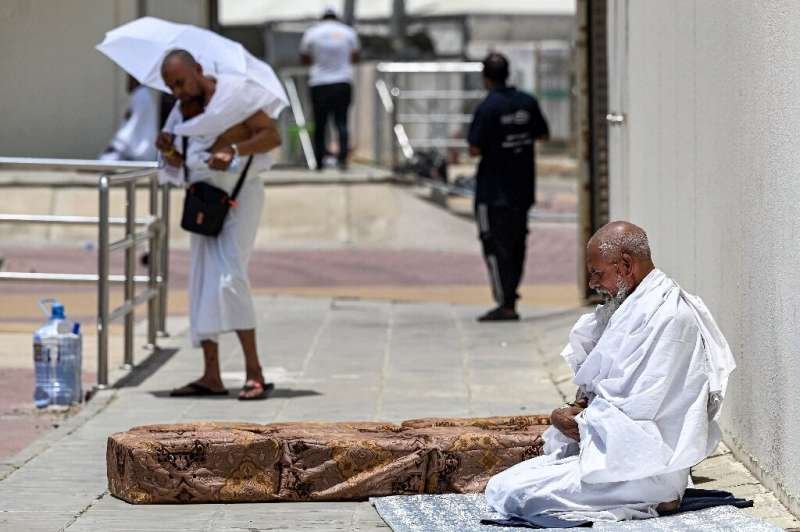
Most of the hajj pilgrimage takes place in the open air.
Assad's wife, Layla, was more concerned about overcrowding, with hundreds of thousands of pilgrims packing streets and prayer spots.
"The heat is not the problem, it's more everybody pushing, that's really the problem," said the 47-year-old, who manages a charity shop.
The hajj and year-round umrah rituals generate an estimated $12 billion annually for Saudi Arabia, which is investing in tourism as it tries to diversify its economy away from oil.
An expansion project that involves scaling up infrastructure and transport supporting Mecca and Medina is a key part of the plan to increase visitor numbers.
Resting in shade near the Grand Mosque, Ahlam Saei, a 40-year-old Tunisian, said the Saudi heat is "very severe" compared to her country.
But she shied away from complaining.
"Hajj as an idea is based on accepting hardship," she said.
"The reward is equal to the hardship."
This story was produced by AFP.