The biggest news last week was the decision by 13 MPs to join the ruling People's National Congress (PNC).
Twelve MPs of the Maldivian Democratic Party (MDP) and a former MDP MP signed up for the PNC at a special ceremony held at Dharubaaruge on Thursday night.
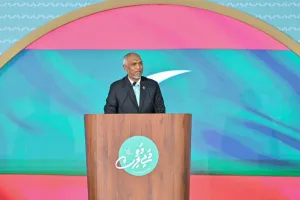
At the ceremony, President Dr. Mohamed Muizzu said the MPs joined the PNC for the sake of the country.
"We should always ask ourselves, what can we do for the country. You have chosen that path. Thank you from the bottom of my heart, thank you," he said.
But the people are not confused over the decision by a large number of MPs to join the ruling party. Everyone knows the real reason behind the change.
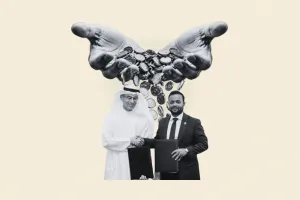
The public opinion about the MPs who switched parties "for the sake of the country" is clear. Everyone who heard the news and who does not belong to the ruling party is saying the same thing. Everyone alleges that the real reason behind the change is money. Everyone accuses the "MPs of selling themselves."
"This is the biggest corruption being repeated in the Maldives," said Ilyas Hussain Ibrahim, who has worked in politics for many years.
Another person who posted on social media described it as a business transaction on the stock exchange.
"Stock Exchange of Maldives Parliament," they wrote.
Another person described the members as "slaves of money" on social media with a photo of the MPs.
Some have said that MPs can only be stopped from changing parties by a change in the mindset of the people while many called to take action to stop MPs from changing parties.
Another noted the importance of an anti-defection law and said the "act of bribery" by MPs could be stopped by amending the laws.
"It is important that there is a way that MPs will lose their seats if they change to another party before the end of their term," they said.
MPs who signed up for PNC are:
- Maradhoo MP Ibrahim Shareef
- Feydhoo MP Mohamed Nihad
- Mahchangolhi North MP Ahmed Haitham
- Isdhoo MP Ali Hameed
- Kanditheem MP Abdulla Shaheem Abdul Hakeem
- Kurendhoo MP Abdul Ghani Abdul Hakeem
- Mathiveri MP Hassan Zareer
- Mulak MP Ibrahim Naseer
- Nilandhoo MP Abdul Muhsin Hameed
- Maafannu South MP Adam Ali
- Komandoo MP Mohamed Raashid
- Thoddoo MP Hassan Shiyan
- Guraidhoo MP Ibrahim Shaz
Some people had even called on the Elections Commission to investigate how the MPs changed party.
"The Election Commission should investigate whether MPs have taken bribes and whether the government has offered bribes. And action should be taken against the people who committed the dirty act of bribery," they said.
Several MPs had also condemned the move.
"It's not just the person who takes the bribe, the person who gives the bribe is equally at fault," Ungoofaaru MP Mohamed Waheed said.
"This is a filthy and uncivilized beginning. You are telling the people, you are encouraging them to do such uncivilized things," MP Ali Azim said.
"I did not vote for Adam Ali just because he is Adam Ali. I voted for him because he was a candidate on the MDP ticket. With the change of party, he does not deserve my vote now. He should resign before leaving the party," MP Ikram Hassan said.
MPs have changed parties in the past. Many opposition MPs joined the ruling party during the government of former President Mohamed Nasheed. There have been many such "transfers" since then. Each time, the real reason for the change is not concealed. Everyone knows the truth.