Stories like this are typically heard through the grapevine, framed as events from the early days of the Maldives' tourism industry. The narrative usually involves a foreign investor seeking to develop a resort who grants shares in the business to a local individual with no business background or capital. In an instant, that individual is transformed into a wealthy tycoon.
However, the events detailed here did not occur half a century ago; they unfolded recently. Just as in those old tales, a Maldivian with no business track record has become a shareholder in a resort. His name is Hassaan Waheed.
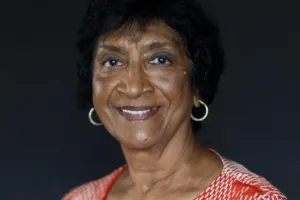
According to his LinkedIn profile, Hassaan is a diplomat and public policy professional with experience in foreign relations, government affairs, international relations, and strategic policy development. He currently serves as the Deputy Ambassador of the Maldives to the United Arab Emirates. He is a highly educated individual and an accomplished student who has received prestigious awards.
Yet, despite a diploma in social sciences that touches on tourism and hospitality, a thorough review of his profile reveals no prior experience or shareholding in the resort industry or any other business sector.
The question remains: how did such fortune suddenly find Hassaan? An investigation into this matter suggests a major corruption scandal facilitated by Hassaan, involving the use of family ties and official influence to secure illicit gains and acquire generational wealth.
The "Link" established through the Deputy Ambassadorship
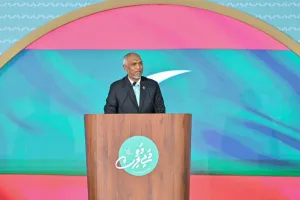
After serving for many years as a Deputy Director at the President’s Office, Hassaan was appointed Deputy Ambassador by the Muizzu administration—a position he holds to this day. Beyond his education and professional background, another factor qualifying him for this role is his family connection to President Mohamed Muizzu; he is the son of the President’s first cousin.
Allegations that Hassaan exploited his position and that Muizzu is linked to this transaction surfaced yesterday on the X account "Hassan Kurusee," accompanied by supporting documents. The account detailed the involvement of an Indian company, the mechanics of the deal, and the extent of the President’s alleged participation.
Further investigation by Adhadhu has uncovered additional information suggesting that this was a meticulously pre-planned scheme.
The scandal began in the UAE when Hassaan met with the Indian firm "Aratt Developers." Through this relationship, a "deal" was discussed to develop a resort in a prime Maldivian location at a favourable price. The deal was finalised for the islands of Futta, Vanbandhi, and Kani, located within the same lagoon as Thaa Omadhoo and Hirilandhoo.
These islands were included in the list of land for tourism lease in late June last year. However, on May 15, before designating 21 sites for tourism, the Tourism Ministry temporarily suspended the leasing of islands. At the time, the Ministry stated the suspension was to review prices and locations under a policy aimed at providing incentives to atolls with fewer resorts.
The Kurusee account alleges that throughout this period, Hassaan was assuring his Indian partners of a favourable deal. It further claims that he acted under the advice and instruction of President Muizzu, and that the President himself met with the heads of Aratt.
Why does a capable Indian company need Hassaan?
Ayatana Hospitalities, the entity that leased the three islands, is owned by Hassaan and the Indian firm Ayatana Hospitalities. The foreign partner, bearing the same name, has been active in the tourism sector since 2017, operating resorts in Goa, Ooty, and Coorg. Its parent company, Aratt Developers, is a prominent real estate firm based in Karnataka, Bangalore. There is little doubt that such a company could afford the lease acquisition cost of approximately USD 900,000.
However, the method of payment to the Maldives Inland Revenue Authority (MIRA) has raised eyebrows. A MIRA payment slip leaked by Kurusee—and verified as authentic by Adhadhu—indicates that the lease acquisition fee of USD 864,000 (approximately MVR 13.3 million) was paid in cash. Conversely, another source suggests that while it was recorded as cash, the funds originated from a bank transfer.
The islands were leased at a rate of USD 75,000 per hectare. This is cheaper than Kurandhivaru in Thaa Atoll, leased last year at USD 671,936 per hectare, but higher than Maagulhi, which was leased at USD 57,142 per hectare.
The issue is not the capability of the Indian company or its planned project, but rather Hassaan’s involvement in the transaction. When contacted for comment via calls and messages, Hassaan Waheed did not respond.