Paris, France (July 8) - The head of French firm TotalEnergies says national oil giants from the Gulf and other nations must pull their weight against global warming, and the Emirati oil executive chairing the COP28 climate summit is right man to press them.
The appointment of Sultan al-Jaber as head of the COP28 talks to be held in Dubai later this year has been controversial because he heads the United Arab Emirates' Abu Dhabi National Oil Company.
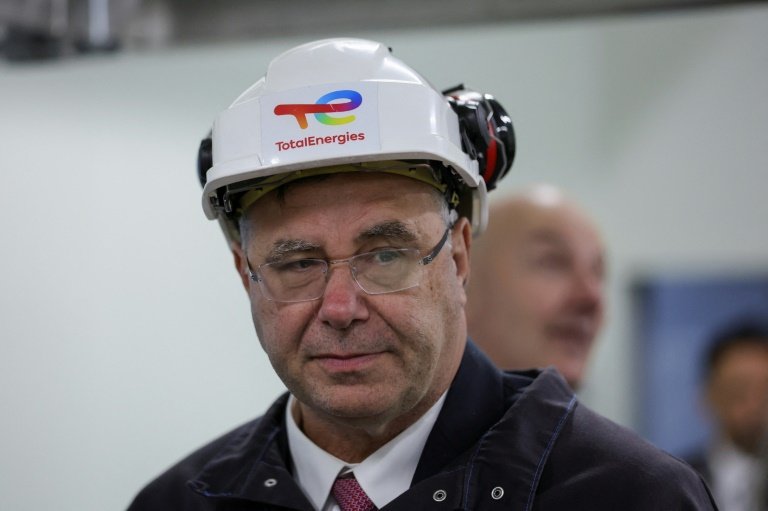
But TotalEnergies chief executive Patrick Pouyanne told AFP that Jaber "is trying to level up the discussions and he knows well what the expectations are on this".
The French firm, like other Western oil majors such as BP, Chevron, ExxonMobil and Shell, has been hit with criticism and lawsuits for continuing to invest heavily in fossil fuel extraction.
The International Energy Agency says no new oil projects can be launched if the world is to reach net zero carbon emissions by mid-century and limit global warming to 1.5 degrees Celsius.
Pouyanne, however, insisted the world will continue to need fossil fuels to meet growing energy demand from developing nations.
Western oil and gas firms no longer dominate the world energy markets, accounting for 15 percent of total output in 2018.
More than half of global production came from national oil companies such as those controlled by Gulf nations, China, Iran and Russia, according to the IEA.
Jaber has brushed off criticism over his appointment, noting he founded the UAE's national renewable energies firm Masdar in 2006 and has represented his country a dozen COP meetings.
"I know there is scepticism regarding Sultan al-Jaber... but I think that on the contrary, his background is an advantage," said Pouyanne in his first interview concerning COP28.
"His position means more pressure on national oil companies," added Pouyanne, who has known Jaber for nearly two decades.
"The United Arab Emirates wants the COP in Dubai to be a success" and this creates a "reputational risk", he said. "That makes Jaber the spokesman of the oil and gas industry" in terms of climate pledges.
Pouyanne considers Jaber to be a "pragmatic industrialist".
Both advocate boosting renewable energy production but consider fossil fuels as indispensable for the foreseeable future.
They also look to the still underdeveloped technology of carbon capture and storage to reduce the climate impact from burning fossil fuels.
Pouyanne's comments offer a hint of possible outcomes at COP28: instead of a call to phase out fossil fuels, Jaber could seek more climate pledges from different industries -- including the energy sector -- concerning both decarbonisation and the reduction of methane emissions.
Methane is a potent greenhouse gas and escapes in large volumes from gas fields and pipelines.
"One area where we could do something very strong is to get the national oil companies to roll up their sleeves and pledge to arrive by 2030 at zero methane emissions and a reduction of their emissions" from operations, said Pouyanne.
Around 20 percent of an oil company's emissions come from its operations, so-called scope 1 and 2 emissions. More than 80 percent of emissions come from the burning of its products by clients (scope 3).
For the most part, only Western oil companies have made pledges covering all three scopes.
"Every national oil company needs to set at least one objective and not just the (Western oil) majors," said Pouyanne.
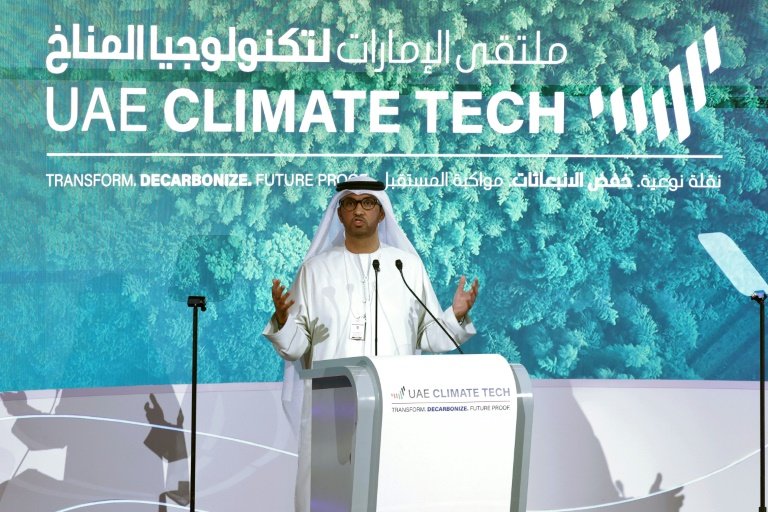
The appointment of Sultan al-Jaber as head of the COP28 talks to be held in Dubai later this year has been controversial because he heads the United Arab Emirates' Abu Dhabi National Oil Company. -- Photo: AFP
Speaking at a seminar of the Saudi-led OPEC oil cartel on Thursday, Jaber called on the oil and gas industry to "urgently decarbonize its operations".
Pouyanne said that, for Jaber, "the problem isn't fossil fuels themselves but lowering emissions from fossil fuels" while simultaneously building up renewable energy systems.
"This is a pragmatic vision which responds clearly to the view of emerging countries ... which say 'we need fossil fuels'", said Pouyanne, who noted demand for oil is continuing to rise.
"We won't succeed in battling climate change by banning fossil fuels," he said, adding the real question is how to build a new energy system around renewables.
"Reducing fossil fuel use faster won't accelerate the construction of a new system," said Pouyanne.
The French CEO said as many energy-producing nations as possible must come on board.
"I don't want to point the finger at any country in particular, but we know which countries are energy producers, especially in the Middle East," he said, adding "it's by diplomacy that we'll succeed."
This story was produced by AFP.