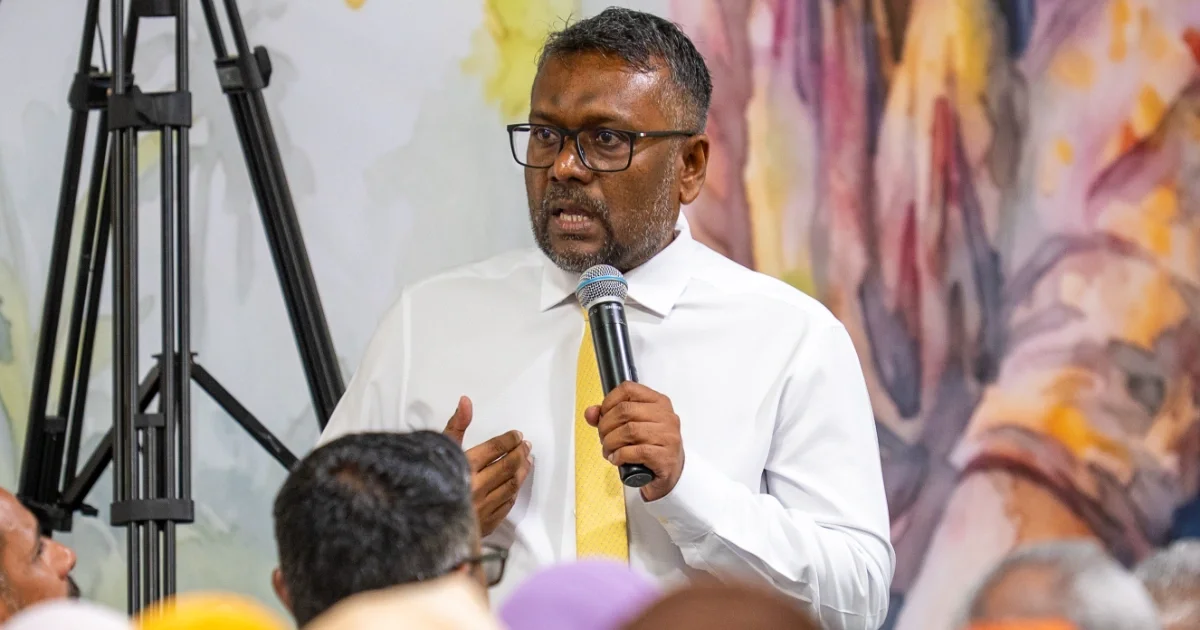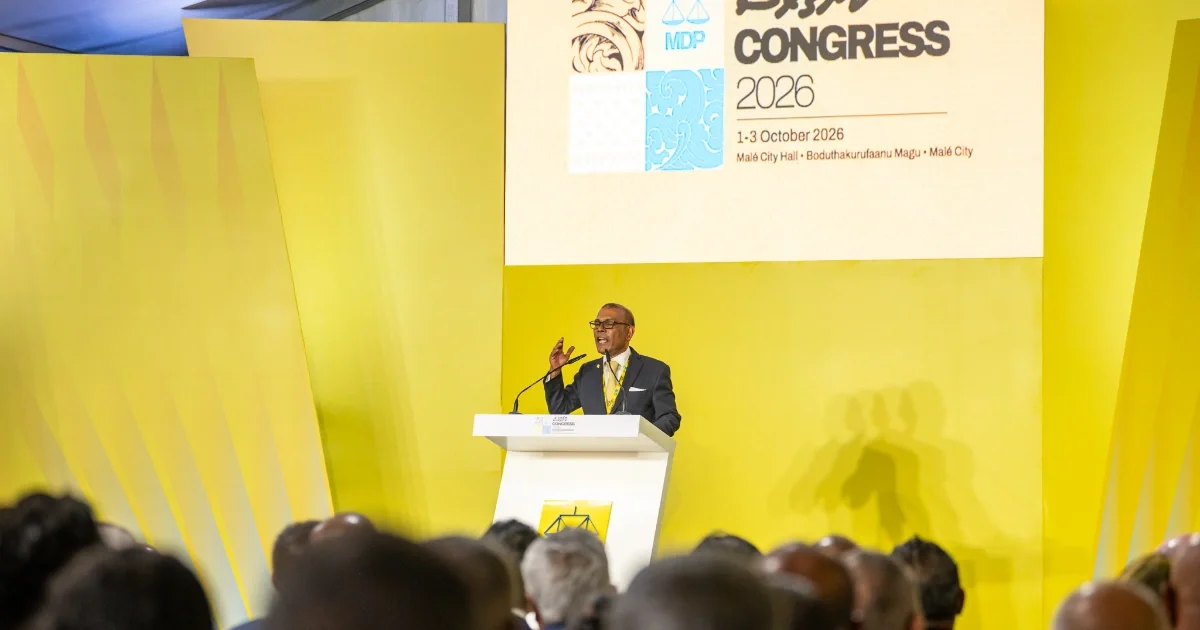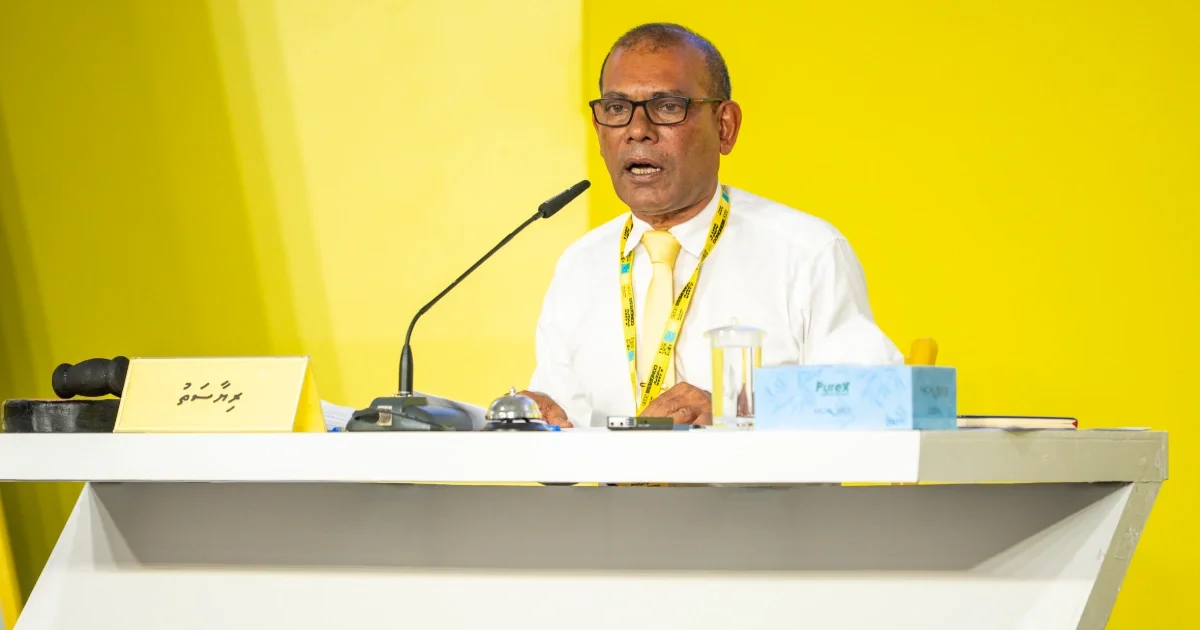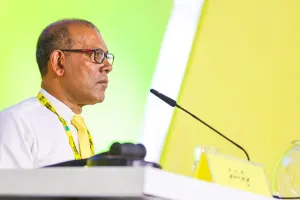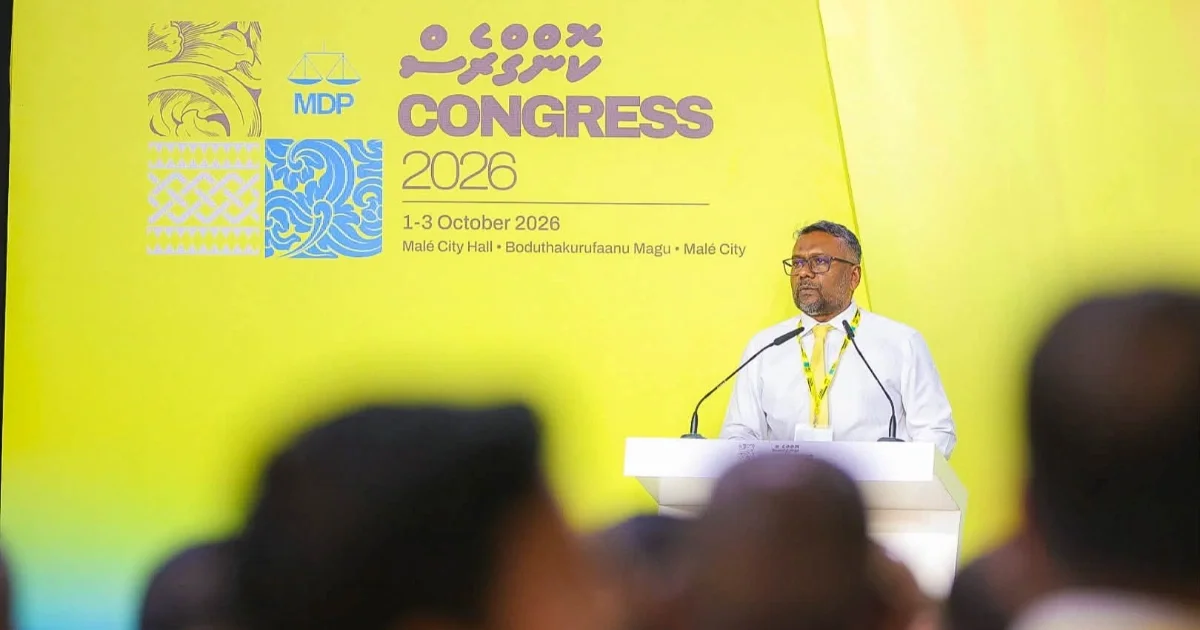
Former Chairperson of the Maldivian Democratic Party (MDP), Fayyaz Ismail, said today that the country must reconsider its current governance system, as the rights of the leader now appear to supersede the rights of the citizens.
Presenting the "Big Change" policy at the ongoing MDP Congress, Fayyaz asserted that the People’s National Congress (PNC) has utilised its supermajority in Parliament to dismantle the fundamental concepts of checks and balances enshrined in the Constitution.
"The PNC government has taken a supermajority in Parliament and discarded all the constitutional concepts of checks and balances, prioritising the leader's rights over those of the people. This is why we must rethink this system," Fayyaz said.
Fayyaz noted that when the separation of powers was established, the expectation was that Parliament would serve as the guardian of the Constitution and the rights of the people. However, he observed that whenever those who do not subscribe to democratic values come to power, the entire system is thrown into disarray.
"We are looking to rethink the systemic arrangements. As it stands, the checks and balances within the state are not functioning. In my view, the biggest issue is that when we separated the three branches of power, we hoped the Parliament would be the entity to uphold this Constitution," Fayyaz said.
"We expected the Parliament to protect the rights of the citizens and to hold the government accountable. However, what ultimately happens is that, for various reasons, those who do not believe in democracy gain power. Every time that happens, we see the entire system being completely undermined."
Highlighting that the objective of the "Big Change" policy is to decentralise government power, Fayyaz explained that the policy aims to separate the functions of the State and the Government. He clarified that this is not a parliamentary system, but rather a framework where the government is elected while the Head of State is appointed by Parliament.
The "Big Change" policy also proposes requiring public consent to remove Supreme Court justices and members of independent commissions. Additionally, the reforms include establishing a mechanism for atoll representation in Parliament and introducing a process for the recall of Members of Parliament.