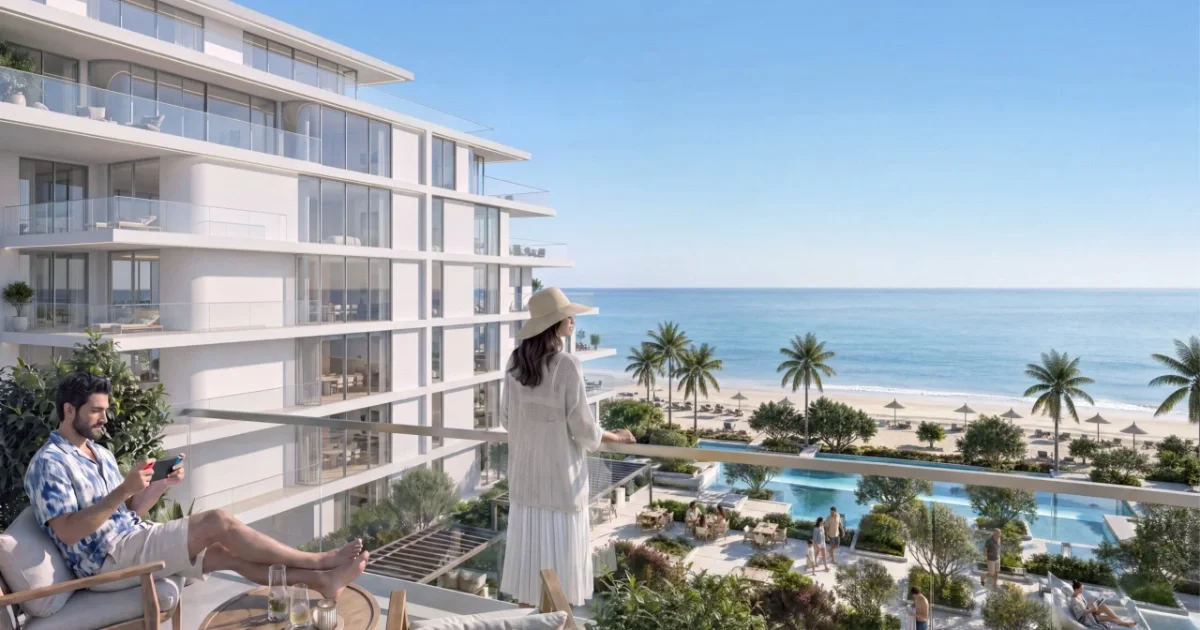
It has emerged that the 5,000 housing units to be developed in Hulhumale’ by UAE-based Eagle Hills—the company behind the Rasmalé Waterfront and Marina project—will be financed through future state revenue, despite government claims that no direct payments will be made from the state budget.
Since the announcement of the Rasmalé project, the government has frequently highlighted the housing units to be constructed by Eagle Hills.
The administration stated that the project is being carried out under a contractor financing model at the company's own expense. Furthermore, the government noted that an agreement was reached to begin this work prior to the commencement of any physical labour on Rasmalé itself.
When questioned by Adhadhu regarding the matter, the Finance Ministry also maintained that the project is structured so that no payments will ever be made from the state budget. The Ministry further asserted that the project would not increase sovereign debt and that no government guarantees would be required.
However, it has now been revealed that these housing units are not being provided free of charge. This clarification came from a post published on LinkedIn by Housing Minister Abdulla Muththalib, in which he shared further details regarding the Rasmalé project.
In his post, Muththalib disclosed that the 5,000 housing units would consist of three-bedroom apartments, developed for $400 million to $500 million. He reiterated that the project is structured to avoid adding debt to the state’s balance sheet and does not involve a sovereign guarantee.
While the government is not required to provide upfront funding for the construction, Muththalib explained that the cost of these flats would be offset against the 10 percent revenue share the government is entitled to receive from future developments at Rasmalé.
"Since it has been agreed to take 10 percent of the revenue instead of an acquisition cost, the cost of these houses will be deducted from the government's share of revenue as it is received—this is not something being done through the state budget or by taking out loans," Muththalib said.
Despite the Minister’s defense of the project’s design, critics argue that any obligation settled at a later date constitutes a debt. Some have called for the full disclosure of the terms agreed upon by the Maldivian government regarding these housing units.
Furthermore, observers have pointed out a logical inconsistency: the government previously justified granting a large area of land to the company without acquisition fees or rent by citing the 10 percent revenue share. Critics argue that forfeiting a portion of that same revenue share to pay for the flats undermines the justification.
The government estimates that it will receive over $11 billion in revenue from the sale of properties or during the development phase of the project. This figure is projected to be realised over a 10-year period.
It remains unclear exactly where in Hulhumale’ Eagle Hills the flats will be constructed or what category of housing they will fall under. However, based on the estimated cost per unit, it is anticipated that these will be mid-range apartments rather than social housing.