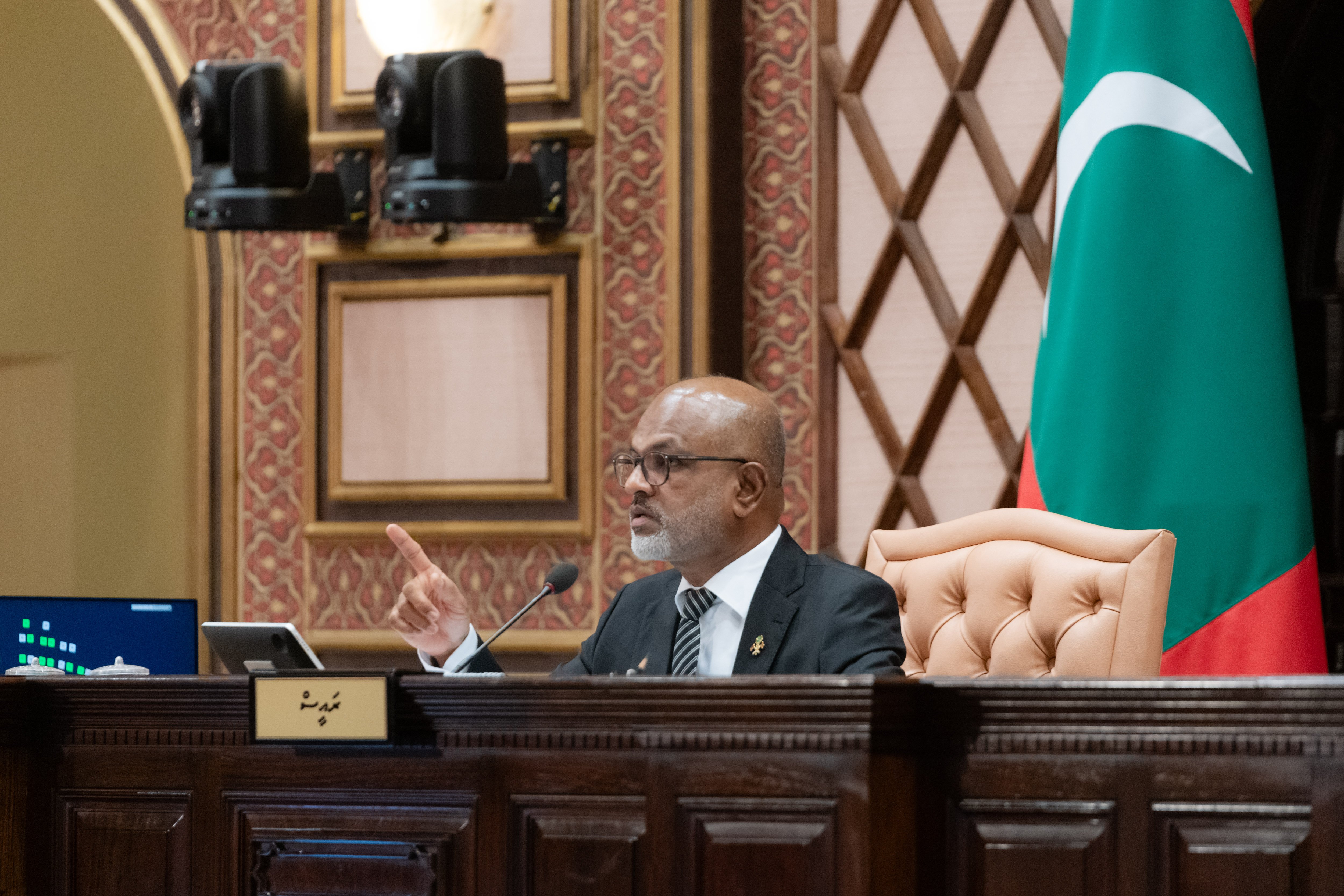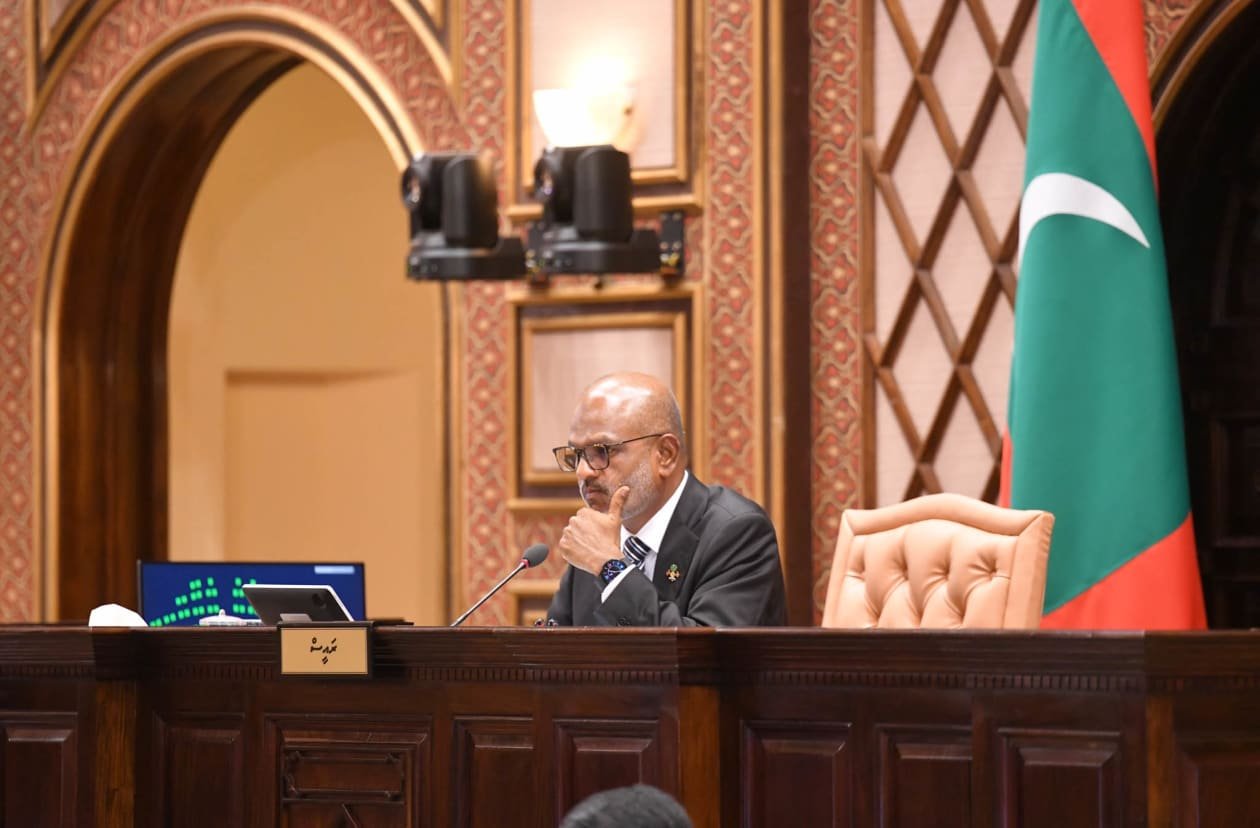
The government should reveal the state of the Maldivian economy and clarify to the public if bitter medicine is needed to overcome the present economic downturn, Deputy Speaker of Parliament Ahmed Nazim has said.
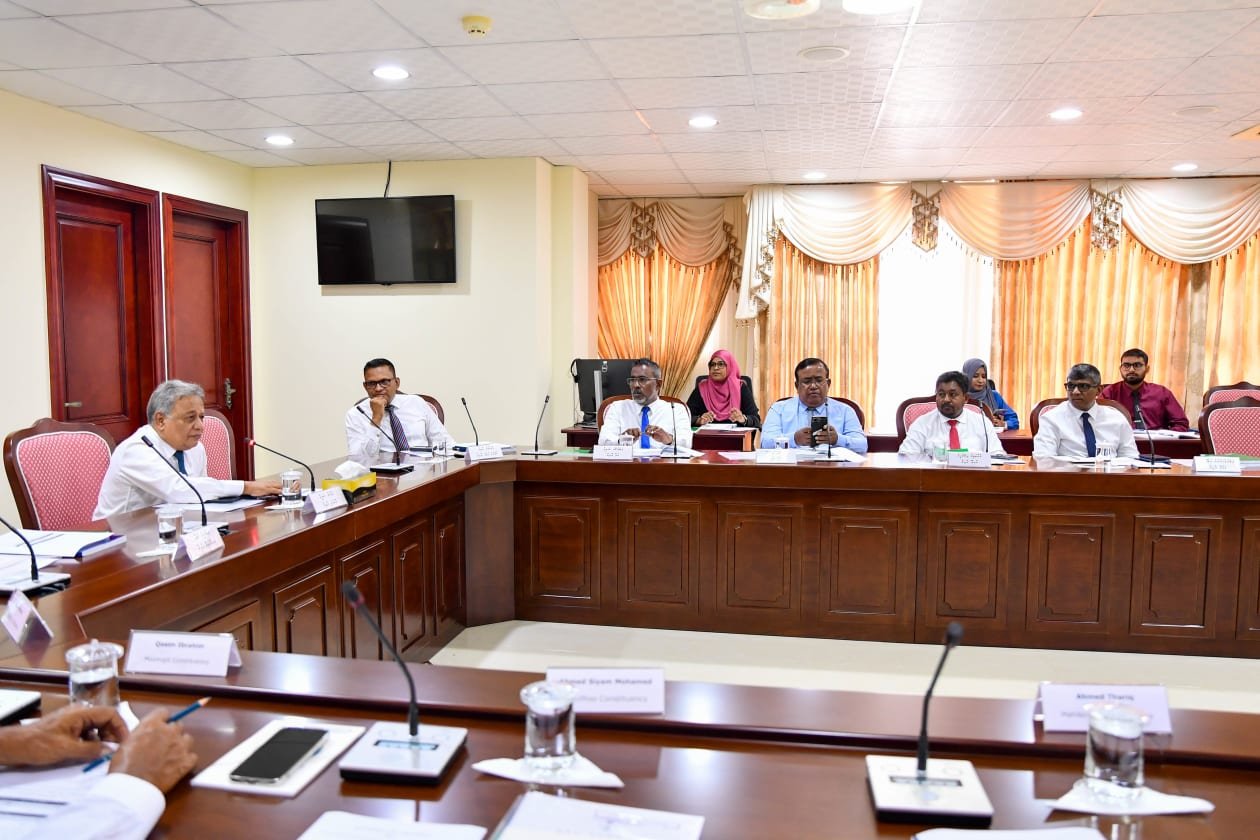
Speaking at a meeting of Parliament's Public Accounts Committee on Tuesday, Nazim said there was nothing to hide about the economic situation as the election season has ended.
"This needs to be talked about with the Maldivian people in true language very clearly. The reason is because the public's expectation and everything is based on what they say," he said.
Dark days would be ahead if economic realities are not faced, Nazim said.
"The people of islands need to know whether projects would go ahead or not. Okay? The election season has now ended. So I would say, let us tell the people as well to face reality, that we need to learn how to confront reality right now. Otherwise it will be dark days ahead for us," Nazim said.
The Finance Minister must clearly explain the situation for the public to understand the bleakness facing the Maldivian economy, Nazim said. Explaining the true picture is necessary for the sake of the public and the nation, Nazim said.
"It's not our party's interest that we should put first at this committee. It is not our interest. It's the interest of the nation's finances, okay," Nazim said.
"Don't bullshit, say it if there's a bitter medicine prescription!"
What happened to neighbouring Sri Lanka should be recalled in order to overcome the economic downturn, Nazim said. When Sri Lanka went bankrupt and its economy was completely demolished, "those closest countries" remained, Nazim said.
However, those countries did not help Sri Lanka because the fundamentals of the economy were not correct, Nazim said.
"If the fundamentals of an economy is not correct, then they would also say that it would be like giving money to an alcoholic. That he would go and drink as soon as money is given and come back the next day, isn't that so?" he asked.
As a further example, Nazim said countries like Saudi Arabia did not provide financial assistance for Pakistan to overcome its economic difficulties due to the same reason. Instead, countries like Saudi Arabia asked Pakistan to adhere to economic principles backed by the International Monetary Fund (IMF) or World Bank, he said.
"As such, Saudi has kept USD 3 billion in Pakistan's central bank as deposits even now because they agreed to drink the bitter medicine that the World Bank and IMF advised," Nazim said.
"So even for us, if there's a prescription for bitter medicine, we need to know that, we need to know what we could do. Instead, it won't do for us to go ahead like this and become bankrupt," Nazim said.
If there is a situation where the country could become bankrupt, raising taxes or any other measure could only be taken when the government explains the situation, Nazim said. Therefore, it would not be good to avoid talking about the economy until the end of the year when next year's budget needs to be passed, he said.
"So instead of waiting for the budget, waiting for November, we need to find out what we need to do, what we could do, immediately right now. After that, to put it in English, we need to have a hard talk with the Finance Ministry, [and say] 'don't bullshit, say what needs to happen truthfully,'" Nazim said.