Maldives Ports Limited (MPL) has classified agreements made with China Harbour Engineering Company (CHEC) regarding the relocation of the nation’s primary commercial port from the congested capital, Malé, to the industrial island of Thilafushi.
In addition to keeping the two signed agreements confidential, MPL has refused to disclose the total value of the contracts. When contacted by Adhadhu, MPL CEO Captain Hussain Shafeeg said that any details regarding the agreements could only be shared following consultations with legal counsel.
"I can only provide the figures after speaking with our lawyers," Shafeeg said.
MPL entered into the first agreement with China Harbour Engineering on February 5, 2026, for the Local Harbour Relief Project. The objective of this contract is to undertake works necessary to alleviate the current port's capacity constraints.
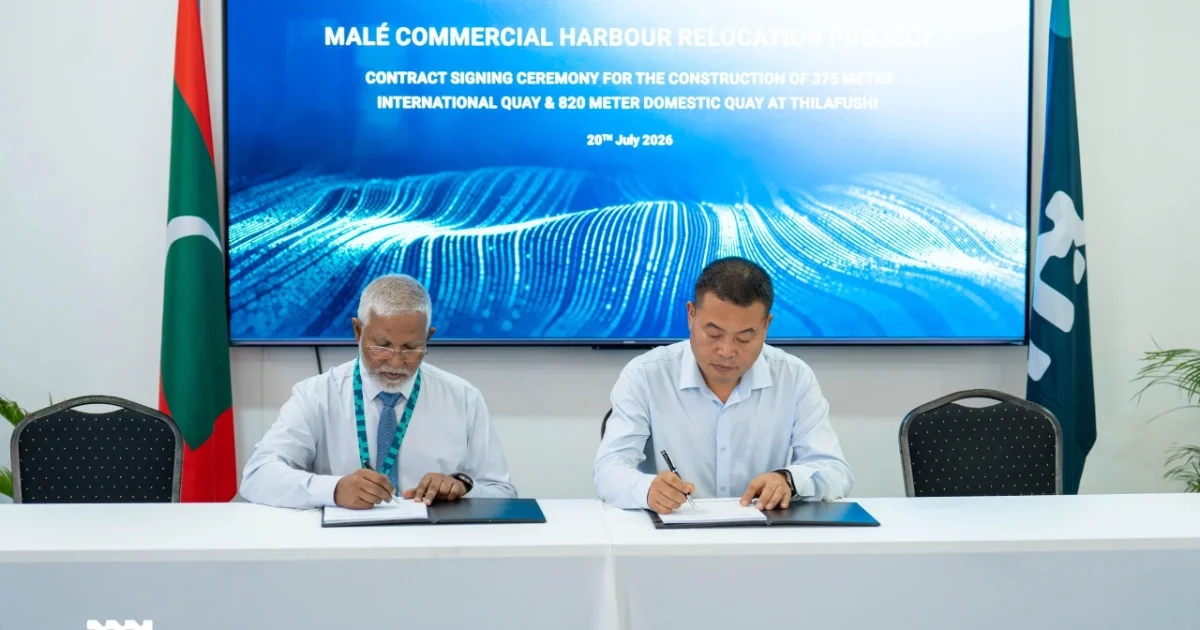
The second agreement with the Chinese firm was signed on July 20, 2026. This contract includes the construction of a 375-meter international quay wall, a 14.6-meter container vessel quay wall, and an 820-meter domestic quay wall.
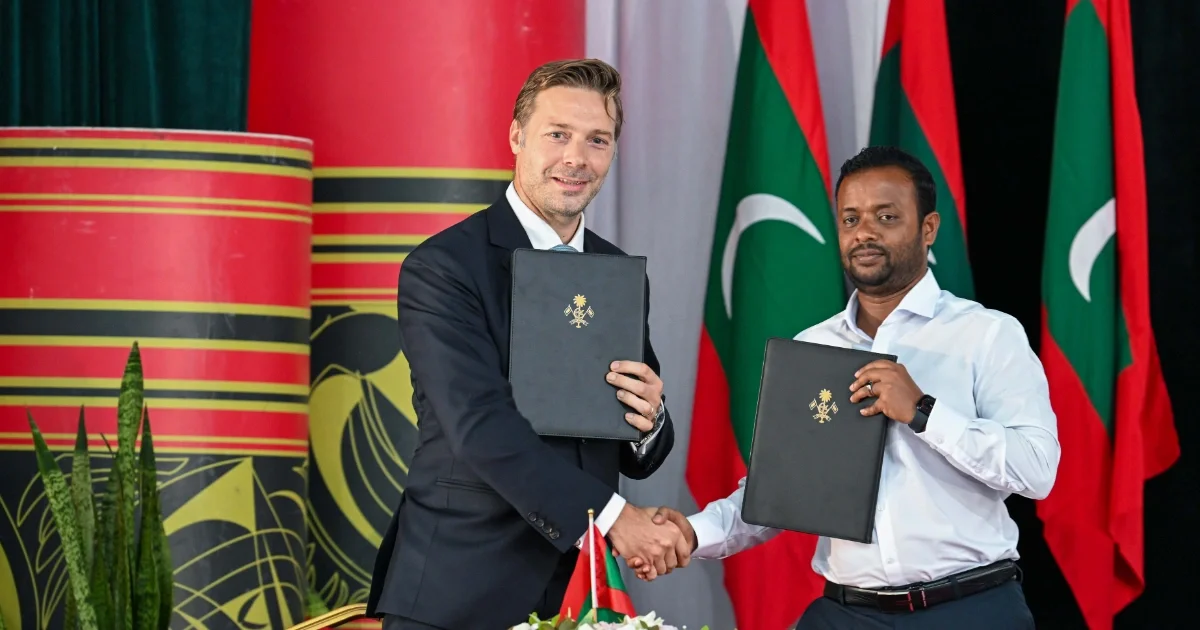
Furthermore, on June 1, 2026, MPL contracted the Maldives Transport and Contracting Company (MTCC) to construct a 100-meter quay wall and asphalt a 6,775-square-meter area.
The government’s refusal to disclose the Thilafushi Port agreements comes despite President Mohamed Muizzu having previously expressed concerns over "secret agreements" allegedly made by the preceding administration.
Following the awarding of the Thilafushi Port project to the Chinese company, a senior delegation from the United States visited the Maldives to inspect the site. Indian media outlets reported that the Indian government had expressed concerns over the matter.
In response, the Maldivian Foreign Ministry issued a statement asserting that the decision to award the Thilafushi Port project to a Chinese firm does not reflect a shift in the country's diplomatic stance.
"This project was awarded in accordance with the established laws and procedures for such procurements. The decision was made with a view toward the long-term development of the Maldives. This decision does not reflect a specific stance toward any particular country, nor will it alter existing bilateral relations," the statement read.