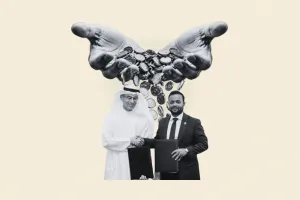
A lot of people raised questions after a photo of a meeting between senior officials of the Maldivian Democratic Party (MDP) and the Democrats began circulating on social media last week. Just two months ago, few would have believed that the two parties would sit at the same table.
Democrats was formed by former senior members of the MDP who left the party after expressing discontentment over key policies. The two parties fielded separate candidates for the 2023 presidential election. MDP believes one of the reasons for the defeat in the election was the party's inability to get the backing of former members of the party.
Democrats faced the presidential polls to kick out MDP from the administration. They did not support a candidate in the second round but was able to achieve its aim with the election loss of former President Ibrahim Mohamed Solih.
However, the two parties, which are ideologically similar but have major differences on some policies, have now announced that they will work together. The current ruling parties were unable to play the role of a responsible opposition party in parliament or any other platform during the former MDP administration.
While the MDP and Democrats agree that they will not field joint candidates for the upcoming parliamentary election, the question we face now is whether the two parties, with their majority in parliament, can bring reforms. Can the government be monitored and held accountable? Looking at the number of seats in parliament and the support of the two parties, these are things that the two parties can do. The only thing they need is political will.
Difference in opinion on some policies but same ideology
"We still have differences of opinion. We are not talking about a marriage between the two parties."
This was the response from MDP Chairperson Fayyaz Ismail following questions about the two parties sitting at the same table. He believes that the two parties are able to work together because they have politically mature members.
"We are trying to find a way to work together through parliament to [resolve] the concerns of both parties," said Fayyaz, the former Economic Minister.
Democrats President Hassan Latheef, who was sitting next to Fayyaz at the press briefing, also said the differences of opinion remain.
"I don't think there will be a single MDP member or Democrat now who thinks we should not agree to do this work together," Hassan said.
Fayyaz indicated that the two parties might work together in the next session of parliament if necessary.
Dissatisfaction with government's direction and policies
The Maldives relations with India have deteriorated after President Dr. Mohamed Muizzu assumed office in November. A deadline has been given for the withdrawal of Indian troops from Maldives.
"It is very dangerous that this government is shaping its foreign policy in a very bad way and acting in accordance with it by shaping the foreign policy of this country to stand against a great power. That is not good for the people," Hassan stated.
Both parties have said that employees are being laid off and politically intimidated.
“We will work to stop the intimidation of people working in companies within the legal framework and to conduct things within a system where everyone has full political freedom given by the Constitution,” Fayyaz said.
In addition, the MDP and Democrats have said that the government came to power saying that Maldives is going into debt, but instead of cutting spending, it has announced big projects and increased spending.
"The most important thing now for everyone is to save the country. Only after that, should we talk about our own interests. We know this country is not going in the right direction. There is no transparency in government policies," Parliament Deputy Speaker Ahmed Saleem said.
"We don't know if this country is going to default debt. That is why we have to work together in the parliament."
Proposed reforms by the two parties
The two parties have decided to propose four main things. These include limiting the number of MPs, fully regulating government-owned companies, reforming laws, capping the number of political posts and holding parliamentary elections after Ramadan.
"The number of MPs is increasing and increasing to the point where we don't want any more MPs. Both parties think that the number of MPs must be capped," Hassan said.
The current government has increased the number of political appointments, especially state ministers, deputy ministers and ministerial-level appointees, Hassan said.
The number of political appointees in top government posts is 296, including 163 deputy ministers and 90 state ministers. There are 22 ministers and 20 appointees at ministerial rank.
In addition, one person was appointed as a senior minister, a new post created by the current government.
Hassan said the high number of political posts is a serious problem for the Maldivian economy and the number should be capped even if it requires constitutional amendments or changes to laws.
Medhu Henveiru MP Ali Azim, parliamentary group leader of The Democrats, said the proposal for limiting political posts has now been drafted.
“Now as you know, how to limit the number of political posts in government and the number of ministries has been discussed, it has been drafted and work is ongoing on submitting it to the People’s Majlis,” Azim said.