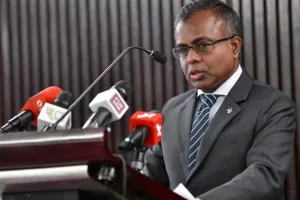
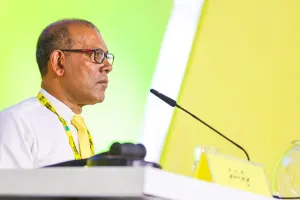
Hiding the true value of the dollar will not generate foreign currency, nor will it reduce the demand for imports or stop the pursuit of scarce forex, former Chief Budget Executive Mohamed Saruvash has said.
Saruvash made these remarks in a post on X, following a decision by the Parliament’s Public Accounts Committee yesterday to legally prohibit the publication of black market exchange rates that exceed the official rate.
He noted that the emergence of a black market or parallel market for foreign currency is not the root problem, but rather a symptom of an underlying issue.
"Hiding the true price of the dollar will not create dollars, nor will it reduce the volume of required imports or halt the efforts to acquire scarce foreign currency," Saruvash said.
He explained that a black market for dollars is created when banks are unable to supply enough currency to meet demand, resulting in a diminished capacity to control the market.
During yesterday's meeting, the Public Accounts Committee passed a motion to ban the publication of news regarding black market rates that are higher than the official exchange rate set by the Maldives Monetary Authority (MMA).
The committee also decided to include provisions in the law to fine those who disclose such information.
Highlighting that this move is unlikely to yield positive results, Saruvash cited examples from other countries that have attempted similar measures.
He pointed to the bitter outcomes of measures taken by Venezuela in 2015, Zimbabwe in 2020, and Nigeria in 2021 to address foreign currency shortages.
"None of these measures eliminated parallel markets. Instead, they only changed how prices were determined. The scarcity of dollars and the practice of selling above the official rate persisted," Saruvash said.
To address its foreign currency crisis, Venezuela categorized the disclosure of exchange rates that deviated from the official rate as spreading misinformation. Furthermore, a law was enacted with prison sentences of 10 to 15 years for violators.
Between 2015 and 2018, Venezuela arrested more than 50 individuals on such charges, even bringing terrorism charges against those operating websites that published exchange rates. However, these measures failed to resolve the dollar shortage. Instead, the country's black market simply went underground. Following these adverse results, Venezuela repealed the law in 2018.
Zimbabwe and Nigeria also attempted to resolve their foreign currency issues by freezing the bank accounts of black market traders and blocking the publication of rates. However, these measures similarly failed to provide a solution to the dollar crisis in either country.