Lawmakers of the ruling People’s National Congress (PNC) have expressed frustration over the stalling of projects assigned to State-Owned Enterprises (SOEs), questioning the technical capacity of these companies and claiming that development work has come to a standstill across the islands.
The lawmakers from the ruling party, which holds a supermajority in Parliament, voiced these concerns during a meeting of the Committee on State-Owned Enterprises on Monday. The discussion was triggered by a delay in Fenaka Corporation’s response to a letter sent by a Member of Parliament.
The letter was submitted in December last year by Kanditheemu MP Ameen Faisal regarding poor service delivery by Fenaka in his constituency. Fenaka only provided a response to the inquiry on the July 14.
Expressing dissatisfaction with the delay, Kinbidhoo MP Ali Ashrag from the PNC questioned why it took so long to receive a response. Stating that providing a written reply should not be a difficult task, he proposed that the committee investigate the reasons behind Fenaka’s lack of responsiveness.
Supporting the motion, Thoddoo MP Hussain Sameer noted that SOEs have been highly negligent in providing essential services to the public. An opposition MDP MP also noted that with numerous such issues surfacing, it is imperative to identify the root causes of negligence within SOEs.
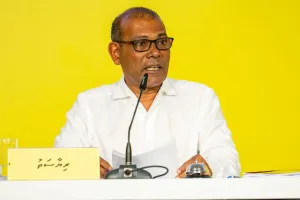
In response to these comments, the Chair of the SOE Committee, Feydhoo MP Ibrahim Didi (IB), suggested that projects were stalled because the previous administration had awarded them without proper budgetary allocations.
However, PNC MPs who spoke after the Chair expressed further frustration, noting that even projects initiated under the current administration are not progressing. These members included Dhiggaru MP Ahmed Nazim, Gadhdhoo MP Mohamed Ali, Faresmaathoda MP Ashraf Rasheed, and Fuvahmulah South MP Ibrahim Hussain.
MP Nazim highlighted that since Infrastructure Minister Abdulla Muththalib had previously stated that Fenaka lacks the capacity to manage such projects, the SOE Committee must verify the company’s actual capabilities. He argued that if Fenaka is unable to execute projects, a solution must be found, even if it means the company relinquishing those projects.
Gadhdhoo MP Mohamed Ali also raised concerns regarding halted Fenaka projects in his constituency. He noted that residents are complaining because materials required to finish the work are already on-site, yet the projects remain idle for extended periods. He suggested that if Fenaka cannot deliver, the work should be outsourced to ensure completion.
He also criticized the ongoing efforts to reform Fenaka. He pointed out that since the current administration took office, three different managements have taken over the company, each claiming to initiate new reforms, and questioned when these reforms would actually yield results.
Fuvahmulah South MP Ibrahim Hussain stated that his constituents are unable to improve their livelihoods because Fenaka has failed to establish essential services. He noted that the budget for a powerhouse project started during the previous administration has vanished, and residents still lack water and sewerage services.
Following the deliberations, the SOE Committee decided to summon Fenaka’s management for clarification. Furthermore, the committee resolved to summon other state-owned enterprises on a scheduled basis to investigate ongoing project delays and issues related to public service delivery.