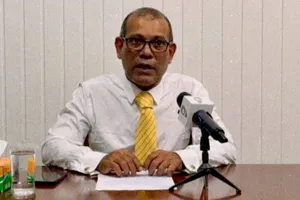
Attorney General (AG) Ahmed Usham has claimed that the Right to Information (RTI) Act, designed to facilitate the constitutional right to access information, is being "abused" under the guise of seeking information.
He made these remarks in response to a journalist's inquiry concerning the President’s Office's failure to respond to RTI requests within the legally mandated timeframe.
Usham acknowledged that the Act was created for an important purpose and emphasised that providing information to those who utilise the law "in good faith" remains a priority.
"However, what we are seeing very often, especially recently, is that the RTI Act is being heavily abused," Usham said.
Usham noted that such misuse of the RTI Act forces government agencies to dedicate an excessive amount of time to processing requests. He attributed this burden to the "activities" carried out through the Act, though he did not provide further details.
Usham’s comments regarding the challenges posed by information requests echo similar sentiments expressed last year by Home Minister Ali Ihusaan, who described the RTI process as a costly endeavour.
While government ministers have voiced these concerns, there is growing public criticism over the government’s failure to respond to RTI requests and its tendency to withhold information by citing various non-disclosure clauses within the law. There are also allegations that the information provided is often inaccurate or incomplete.
According to statistics released by the Information Commissioner’s Office (ICOM) for last year, the majority of the 712 complaints filed—specifically 487 cases—pertained to a total lack of response from state institutions.
The President’s Office remains one of the institutions with the highest number of complaints against it. In addition to failing to respond to numerous requests, the office has also faced criticism for delaying the release of information even after being ordered to do so by the Information Commissioner.