Maldives Monetary Authority (MMA) has drafted a foreign exchange bill with concessions to tourist establishments and opened for public consultation.
The draft bill states that resorts do not have to exchange USD 500 for tourists who do not spend 24 hours at the resort, children under the age of two and tourists who stay for free or on a complimentary basis.
Under the new rules introduced by MMA in October, resorts do not get any exemptions based on the duration of the stay, age of tourists and those who stay on a complimentary basis.
The draft bill also moved hotels and safaris operating in islands from category A which requires to exchange USD 500 to category B which requires to change USD 25 per tourist.
However, the rules introduced in October say that hotels and safaris with more than 50 rooms will be in category A.
The draft bill also requires all businesses in all sectors with annual revenue of more than USD 20 million to exchange a certain percentage of their dollar revenue.
Businesses with an annual revenue of more than USD 20 million must deposit all their dollars or foreign currency into a local bank account.
They will have to follow a regulation from MMA that will require them to exchange an amount not exceeding 25 percent of the monthly foreign exchange earnings.
Tourism industry accounts for a large percentage of the dollars entering Maldives. Relatively few businesses in other sectors earn more than MVR 20 million annually.
These include fish exporters, seaplane service provider Trans Maldivian Airways (TMA) and other tourism-related goods and services providers.
MMA changed its foreign exchange rules on October 1, forcing resorts to exchange dollars at the rate of USD 500 per tourist visiting resorts and USD 25 per tourist visiting guesthouses. The rule is effective January 1, 2025.
The government has been criticized by tourist resort owners and those working in the sector as well as politicians over the new rules. More than 50 resorts have informed MMA that they cannot comply with the rules.
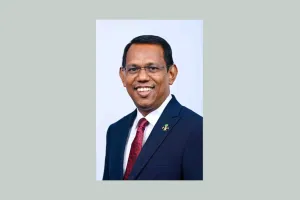
At a press briefing on Wednesday, MMA governor Ahmed Munawar said the solution to the dollar crisis lies with increasing dollars in banks.
He said that resorts would not exchange all their dollars to the central bank and that 40 percent of their dollar revenue would be deposited in the banks.
Munawwar said the rules were intended to shrink the black market that expanded after the Covid-19 pandemic.
"Now there is an informal market that has developed, not banks. So we are working to bring from the informal market to the formal market. Under that, banks should also work to provide the facilities to the industry," he said.
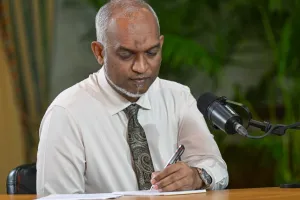
Meanwhile, in a post on X, President Dr. Mohamed Muizzu also described the draft bill as the solution to the dollar shortage crisis.
"These positive changes will result in dollar prosperity for the general public and small and medium enterprises," he said.
He gave a timeline of four changes to be introduced when the bill becomes law;
- State-owned enterprises (SOEs) can buy dollars at the official rate without going to the parallel market starting from July 1, 2025.
- Increase in the proportion of dollars allocated to banks for TT for importing goods by local businesses - July 1, 2025.
- Double the USD 500 sold per Maldivian passenger to USD 1000 starting March 31, 2026.
- Credit card limits to be increased starting March 31, 2026.