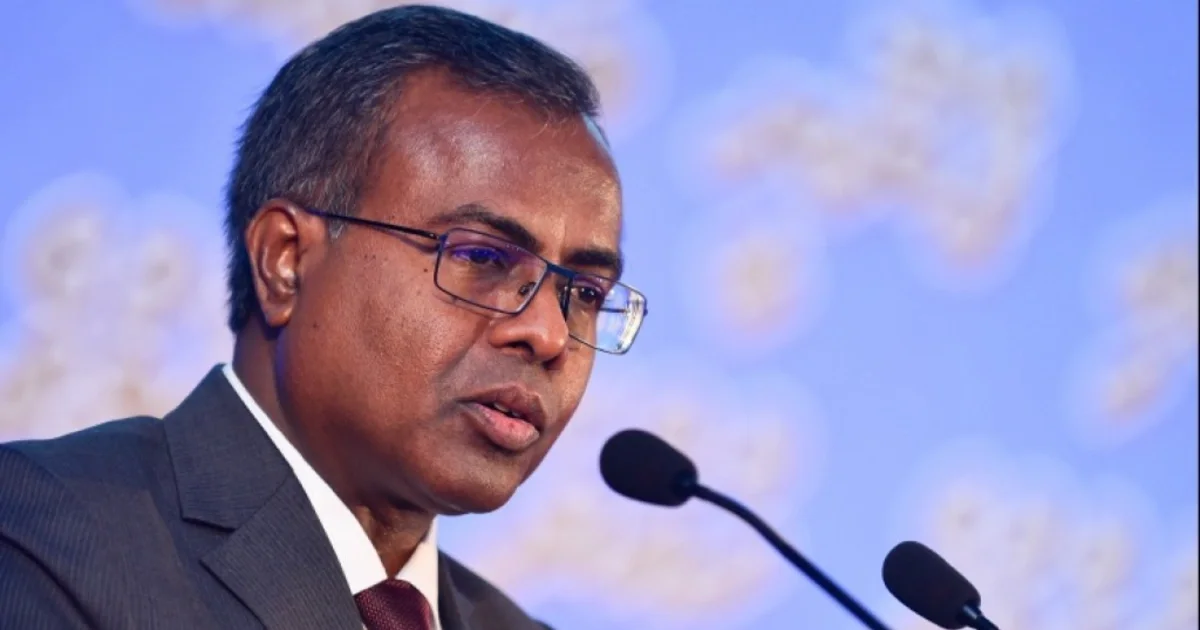
Former Chief Justice Dr Ahmed Abdulla Didi has asserted that the President and the government do not possess the constitutional authority to settle foreigners, including non-Muslims, in Rasmalé for generations, stating that such power rests with the people.
The government is currently preparing to hand over 500 hectares of the state-funded Rasmalé land reclamation project to a UAE-based company. While many have voiced opposition to the move, public concern is centred on the inclusion of clauses in the agreement that would allow people of other faiths to establish residency there.
Jamiyyathul Salaf, an organisation advocating for Islamic causes, has expressed support for settling people of other faiths in the Maldives, provided certain conditions are met. In response, the former Chief Justice questioned the organisation's mandate on the matter.
"The settlement of foreigners, including non-Muslims, in Rasmalé in a manner that persists century after century is not a constitutional power vested in the President or his government, to whom the people have entrusted executive authority for only a five-year term," Didi stated.
Didi emphasised that the people, as the holders of sovereignty, hold this authority exclusively. He further noted that the conditions Salaf requested the government to guarantee are, in fact, obligations the government is already mandated to uphold.
"If the scholars of Salaf were sincere, they would have called upon President Muizzu and the government to respect the Constitution of the Maldives and the religion of Islam, to refrain from actions that could compromise state sovereignty and Islamic unity, and to ensure they do not betray the state and its citizens," Didi said.
The statement released by Salaf included conditions such as protecting Islamic identity and national sovereignty, as well as safeguarding the state's strategic independence.
Salaf issued the statement supporting the residency of non-Muslims following an assessment of the government's decision to sell Rasmalé to Eagle Hills, a UAE company.
In its statement, Salaf noted that before settling people of other faiths in the Maldives, several key factors must be ensured, including the continued governance of the Maldives as an Islamic state.
The organisation also stressed the need to ensure that no Israeli citizen can establish residency in Rasmalé or any other part of the Maldives. Additionally, the group stated that the government must guarantee that the Rasmalé project yields significant benefits for the Maldivian people.
Furthermore, Salaf’s statement called on the government to seek extensive consultation with political parties and the general public before proceeding with such a project.
The commercial terms to sell 500 hectares of Rasmalé—reclaimed from Fushidhiggaru Falhu using state funds—to Eagle Hills were signed on September 21. The government aims to sign the final permanent agreement on November 11, which marks the Maldives' Republic Day.