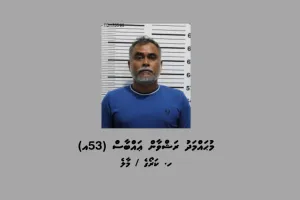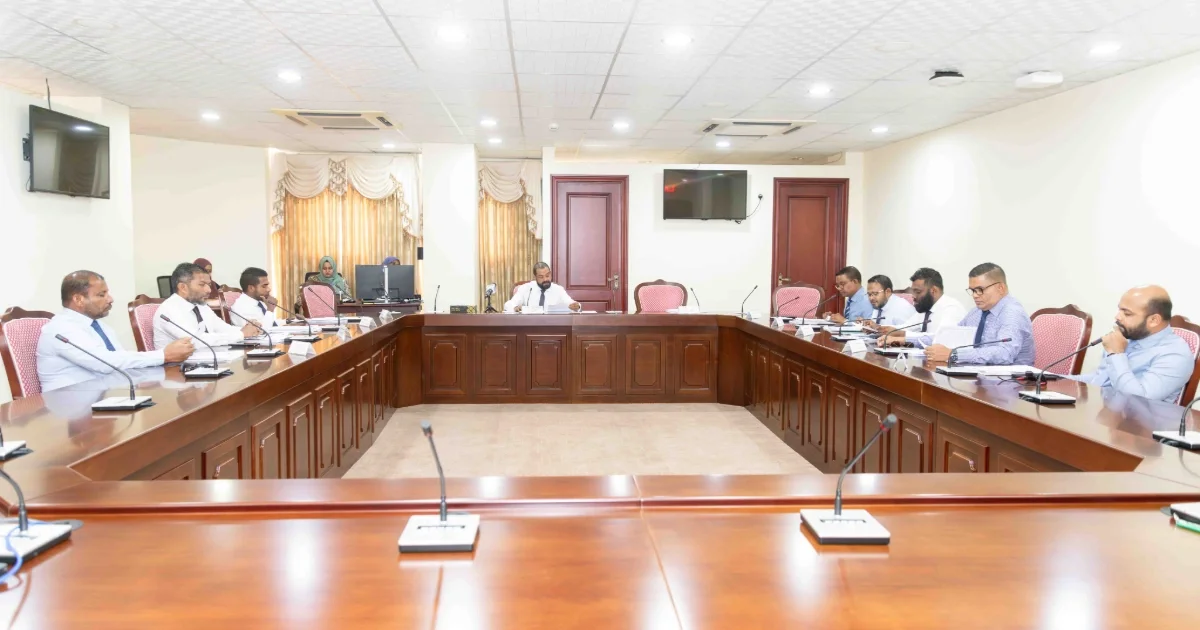
The Parliament’s Judiciary Committee yesterday unanimously decided to summon the Parole Board for questioning regarding the controversial release of Abdulla Ibrahim (Abucha), who was serving a 25-year sentence for a 98-kilogram drug trafficking case.
The matter was submitted to Parliament by Galolhu North MP Mohamed Ibrahim. Members present at yesterday's committee meeting voted in favour of summoning the board to clarify the circumstances surrounding the convict's release on parole.
During the meeting, Hulhudhoo MP Mohamed Shahid, representing the ruling PNC, emphasised the need to investigate how the convict was allowed back into the community. He noted that while the government has dismissed the Parole Board members since the issue surfaced, termination alone is not a sufficient solution.
Shahid further stated that it is the committee's responsibility to investigate whether the board members committed any illegal acts and to disclose those findings to the public.
"The issue is not resolved simply by removing those responsible from their duties or terminating their employment," Shahid said, referring to the dismissal of the board members.
Expressing concern over the matter, Kurendhoo MP Shamin Habeeb said that the re-arrest of a dangerous individual shortly after his release proves that the decision was flawed. He argued that resignation or dismissal should not be the end of the matter when a significant error has occurred, adding that the committee must investigate how many others may have been unlawfully released by the board in the past.
Kanditheemu MP Ameen Faisal echoed these sentiments, asserting that returning Abucha to prison and dismissing the board members does not rectify the board's misconduct.
He called for a thorough investigation and the imposition of the strictest penalties against the Parole Board members involved.
Abdulla Ibrahim was sentenced to 25 years in prison on May 19 last year for his involvement in an attempt to smuggle 98 kilograms of narcotics into the Maldives. His sentence comprised three separate 12.5-year terms. He was reportedly deemed eligible for parole after claims that he had served 6.5 years; however, he had not actually completed that duration.
Under Section 125 of the Prisons and Parole Act, individuals convicted of drug trafficking, trade, or importation are only eligible for parole after serving at least half of their longest single sentence.
After irregularities were discovered in his release, Abucha was taken back into custody, and the Parole Board members were dismissed. However, the government has not yet disclosed the names of the board members involved.