President Mohamed Muizzu has decided to dismiss six members of the Parole Board following their decision to grant conditional release to Abdulla Ibrahim (Abucha), accused by police of operating a large-scale drug trafficking network in Addu City.
The Parole Board is composed of eight members. With the removal of six members, all parole proceedings are currently suspended.
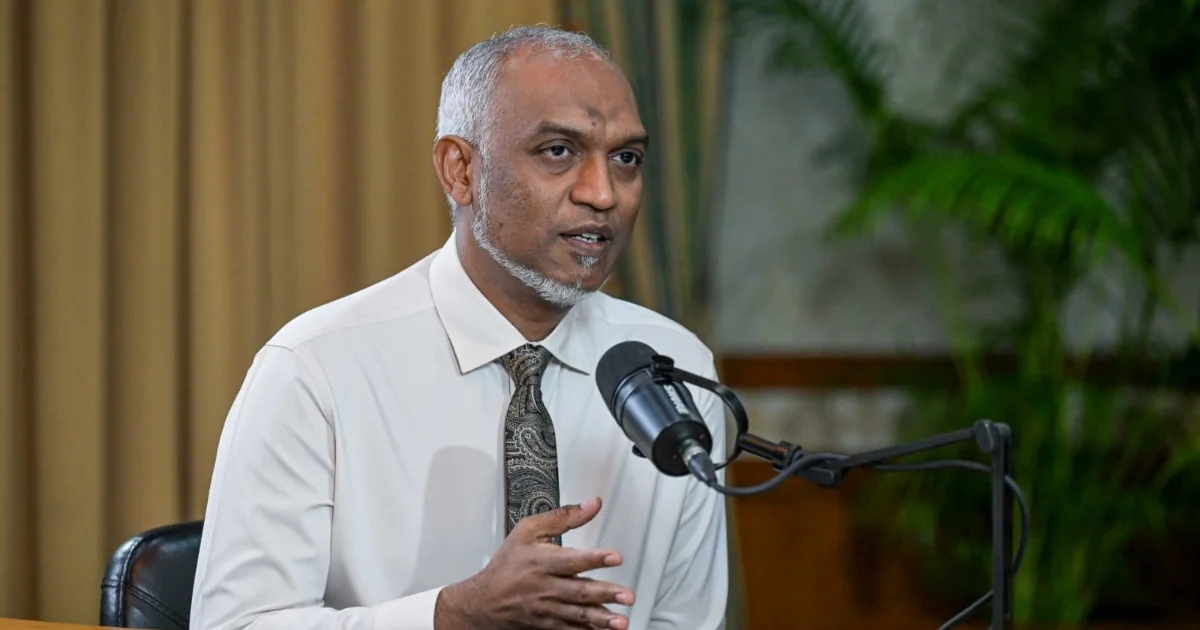
Speaking at a press conference held at the President's Office, Home Minister Ali Ihusaan said that the President decided to remove the six members who voted in favour of Abucha’s release. The Minister asserted that the decision to grant him parole was unlawful.
"Upon reviewing the matter, we found that the Parole Board’s calculation of the eligibility period did not align with the legal requirements. Furthermore, as such actions are inconsistent with community safety and government policy, the President has today decided to dismiss the six members who made this decision," Ihusaan said.
However, the Minister noted that the names of the dismissed members would not be disclosed, as initial inquiries suggested there was no evidence of malicious intent or deliberate misconduct in their decision-making process.
"Our review thus far does not indicate that any of these individuals acted with wrongful intent. Therefore, we do not intend to release their names. Nevertheless, we believe there was a failure to exercise the necessary legal due diligence in this case," Ihusaan added.
The Minister further announced that the government intends to amend the Prisons and Parole Act. He noted that since the Act was enacted in 2013, there have been legislative changes to drug laws and other statutes that necessitate an update to the parole framework.
Ihusaan confirmed that the Parole Board was instructed to reverse its decision after it was determined that the eligibility criteria had been misapplied. Abucha was taken back into custody today at 4:48 pm.
Abucha was sentenced to 25 years in prison on May 19 last year for his involvement in an attempt to smuggle 98 kilograms of drugs into the Maldives. His sentence consists of three separate 12.5-year terms. While it was claimed he met parole eligibility after serving 6.5 years, authorities clarified that he had not completed the required duration.
Under Section 125 of the Prisons and Parole Act, individuals convicted of drug trafficking or importation are only eligible for parole after serving at least half of their longest sentence.