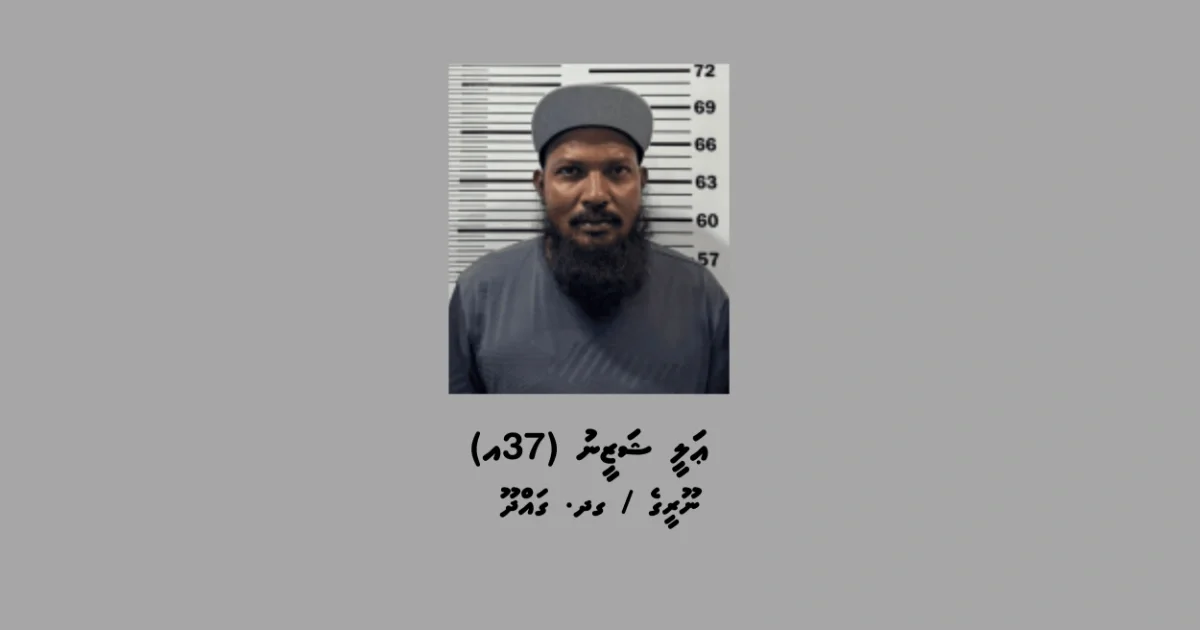
Abdulla Ibrahim (Abucha), whom police identify as a major drug kingpin operating in Addu City, has been returned to custody after the government intervened to reverse a Parole Board decision granting his release.
Speaking at a press conference held at the President's Office, Home Minister Ali Ihusaan said that the government ordered a review of the decision because the Parole Board had failed to properly consider certain mandatory factors. Following this directive, the Board rescinded its decision, and Abucha was taken back into custody today at 4:48 pm.
"Once the Ministry received information regarding this case, we conducted an inquiry into the circumstances of his release. Our review concluded that the Parole Board’s decision did not align with the legal requirements that must be satisfied. So I instructed the Parole Board earlier today to reconsider that decision," Ihusaan said.
"The Parole Board has since reversed its decision. Under the Parole Act, the Board holds the authority to both grant parole and review its own decisions. Having overturned the ruling, Abdulla Ibrahim was taken into the custody of the Maldives Police Service at 4:48 pm today to serve the remainder of his prison sentence."
Abucha was sentenced to 25 years in prison on May 19 last year for his involvement in an attempt to smuggle 98 kilograms of narcotics into the Maldives. His sentence consists of three separate 12.5-year terms. He became eligible for parole consideration only after serving 6.5 years of his total time in detention.
Under Section 125 of the Prisons and Parole Act, individuals convicted of drug trafficking, trade, or importation are only eligible for parole after completing at least half of their longest single sentence.
Senior police officials noted that they have repeatedly urged successive administrations to refrain from granting parole or sentence reductions to drug traffickers, gang leaders, and those involved in major organised crimes.
Abucha had previously been arrested in 2019 on drug smuggling charges; however, he was released by the court in September of that year following the investigation.
In addition to drug offences, Abucha’s criminal record includes prior arrests for gang rape, multiple counts of assault, attempted non-consensual sexual relations, and obstruction of justice.