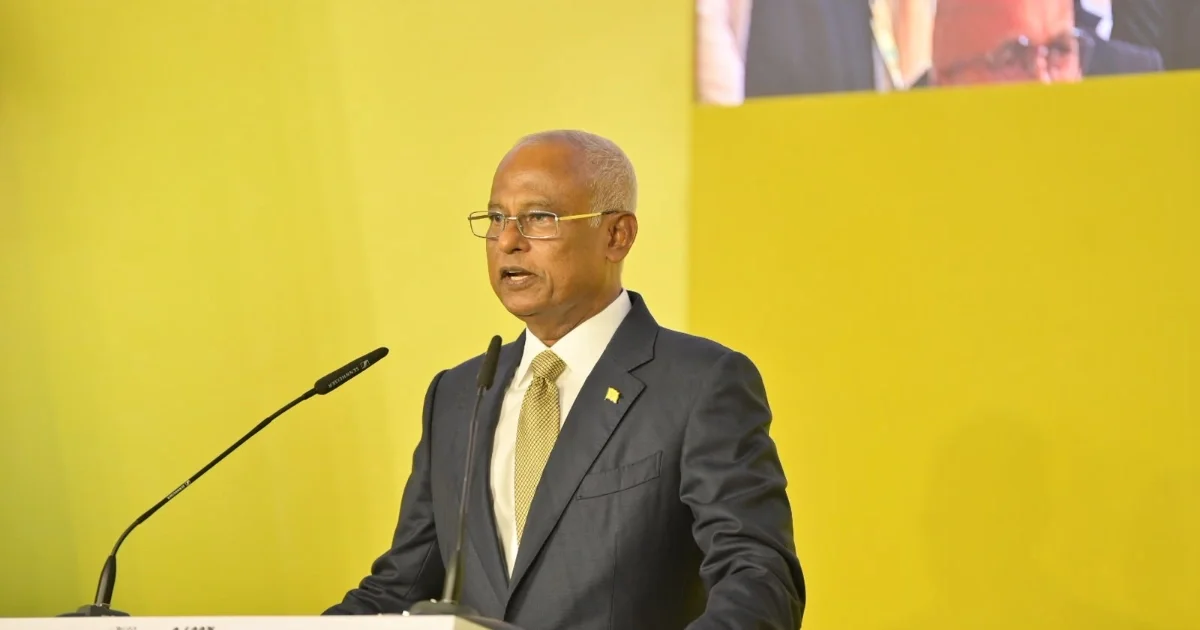
Former President Mohamed Nasheed said last night that destroying the Maldives' coral reefs is detrimental and argued that national development should be pursued while preserving natural resources.
Speaking at an investment forum held on the sidelines of the MDP Congress, Nasheed noted that while some citizens continue to request land reclamation, there is a growing outcry from fishermen who are forced to travel further distances to find baitfish due to the destruction of reefs.
"While one segment of our population is strongly calling for land reclamation, this kills the reef. Meanwhile, fishermen are deeply concerned about the increasing distances they must travel for bait. We must ask ourselves: is development achieved by killing the reef, or by preserving it?" Nasheed said.
"Can we generate prosperity while keeping our natural resources intact? That is the core of our discussion in tonight’s panel. It is increasingly evident that achieving development while preserving our natural assets is not only possible but essential."
Nasheed highlighted that the Maldives' natural resources provide vital services to the entire planet. He noted that the Maldives is home to the world's fourth-largest coral reef system, which supports marine life across the global oceans.
"We are examining the global services provided by the Maldives' natural resources. Our reefs, the fourth largest in the world, along with the fish and diverse marine life they sustain, provide a service to all the world's oceans," Nasheed said.
"There would be no fish for the Chinese, Koreans, or French to catch in the Indian Ocean if the nurseries and breeding grounds in our waters were destroyed."
Nasheed has previously expressed concern over the environmental damage to reefs caused by the Rasmalé project at Fushidhiggaru lagoon, the largest lagoon reclamation project in Maldivian history.
Before his current political engagements, Nasheed served as the Secretary-General of the Climate Vulnerable Forum (CVF), an international organisation advocating for the rights of small nations most affected by the adverse impacts of climate change.