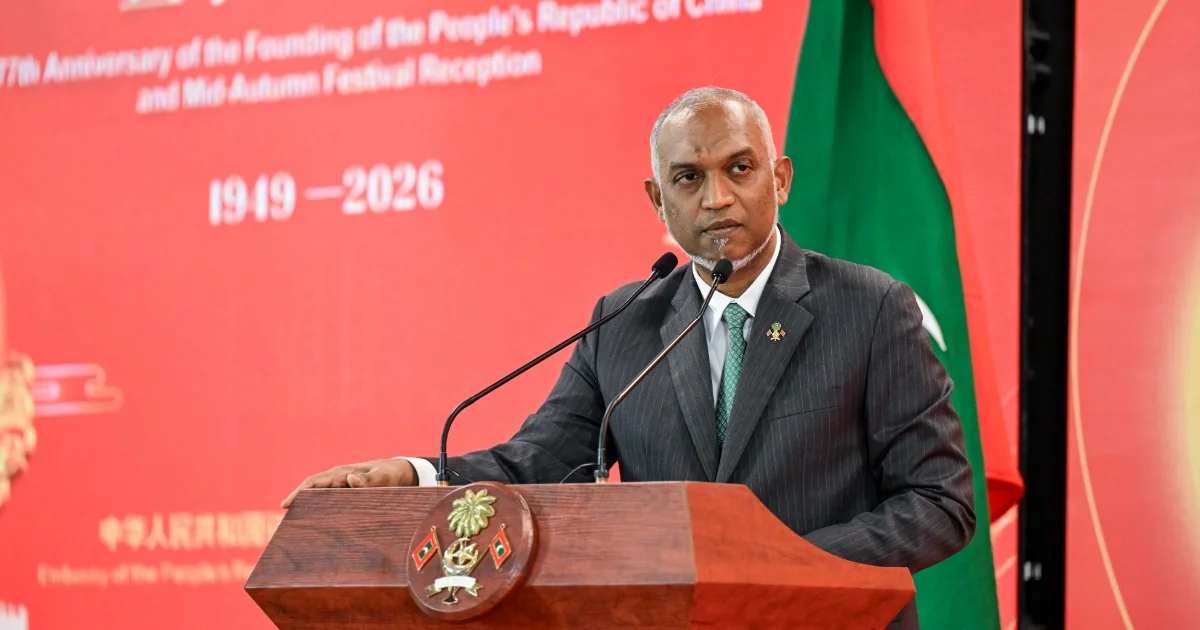
President Mohamed Muizzu has said that while foreign currency reserves are currently low, the government's ongoing efforts will lead to a recovery within the next six months.
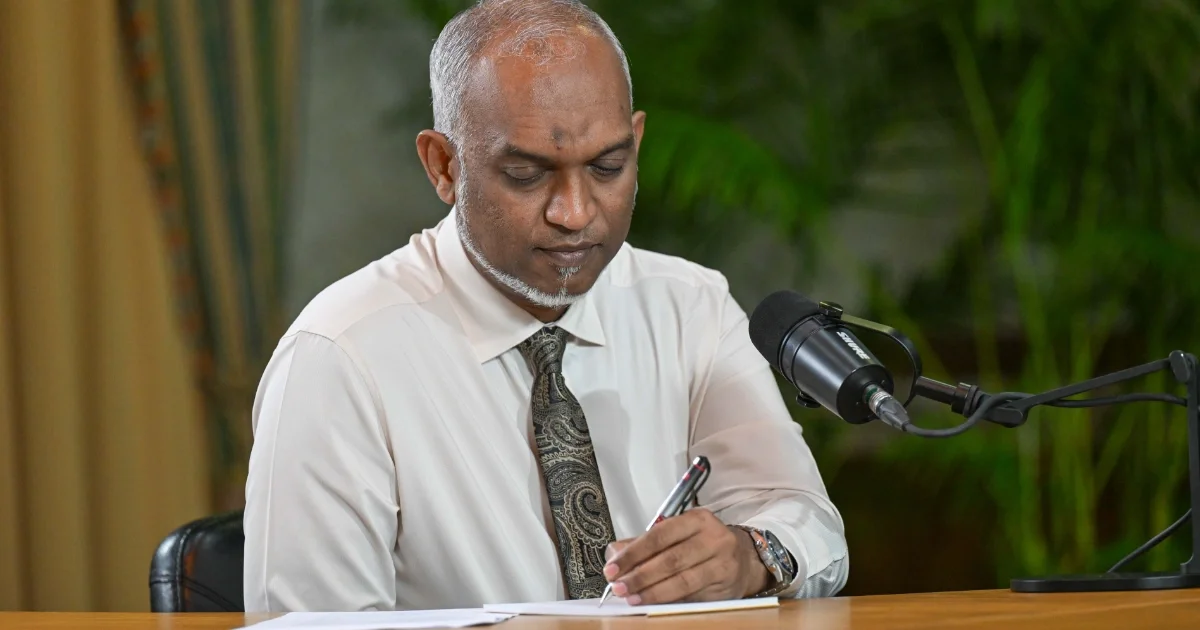
Speaking on the state media PSM program "Nation Chat," Muizzu acknowledged the decline in reserves but emphasised that the situation is being addressed through active measures. He expressed confidence that the coming days would see a steady increase in the nation's reserve levels.
"Therefore, the upcoming period will be a time of continuous improvement for our reserves. Based on the results of our current efforts, we expect to see monthly progress, leading to a much stronger position within the next six months," he said.
The President’s assurance comes as the latest statistics from the Maldives Monetary Authority (MMA) show that total reserves stood at $643.8 million at the end of last month. Usable reserves were recorded at $200 million, marking the lowest level of usable foreign currency so far this year.
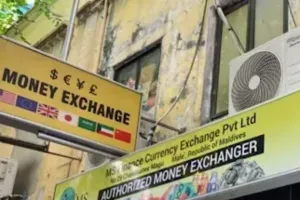
Despite these figures, reserves are projected to grow in the final quarter of the year (October to December), bolstered by a 40% increase in foreign exchange conversions. Additionally, the government has initiated efforts to secure a $100 million currency swap facility with the Central Bank of Malaysia.
While these developments offer a positive outlook for reserve growth, significant pressures on the nation's foreign exchange position are expected to persist into next year.
A major challenge is the upcoming maturity of a 30-billion-rupee currency swap with the Reserve Bank of India, which currently accounts for nearly half of the total reserves. This swap is due to expire in June next year. If the underlying reserve levels are not substantially increased by then, the economy could face renewed difficulties without the swap arrangement.
The government and the MMA attribute the decline in reserves to external debt repayments and the rising cost of fuel imports in the global market, which necessitates a higher outflow of US dollars.
During the recent ruling PNC Congress, Finance Minister Hassan Zareer noted that by the end of last month, the state had spent $660 million on debt servicing and $683 million on fuel imports.