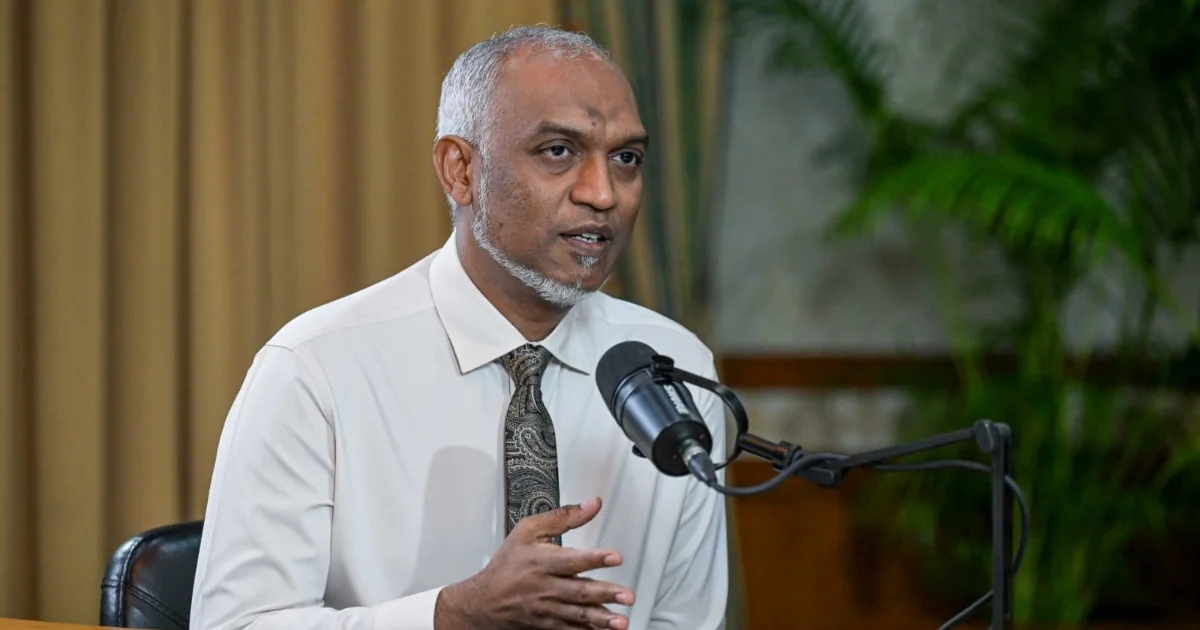
Calls for President Mohamed Muizzu's resignation are intensifying as the nation’s dollar shortage escalates into a full-blown crisis and the administration introduces policies perceived as burdensome to the general public.
Despite government measures, the scarcity of foreign currency and the rising cost of goods remain unresolved. Numerous social media users have taken to various platforms to demand the President’s resignation, expressing their frustration over the lack of economic relief.
Some argued that the damage caused by the current administration's policies has become unbearable, stating that "enough is enough."
Public backlash reached a peak following government revelations that it is considering a ban on dollar-denominated salary payments for employees in resorts and state-owned enterprises.
"We are the ones who put you in power, and we will be the ones to remove you," wrote an account named Athif on Facebook, warning the government against interfering with salaries.
Another commenter noted that policy must be balanced, arguing that if foreign currency earnings are mandated to be exchanged at banks at the official rate, then the public must also be able to purchase dollars at that same official rate when needed.
During a press conference at the President’s Office last Monday, Maldives Monetary Authority (MMA) Governor Ahmed Munawar announced plans to transition all financial transactions to Maldivian Rufiyaa. He stated that the MMA aims to implement these changes by 2030, noting the high volume of dollar transactions currently taking place within the country.
"Salaries are currently being paid in dollars—for instance, at TMA [Trans Maldivian Airways] and across various resorts. Therefore, changes must be made to the practice of paying salaries in dollars. This is the only way to truly increase demand for the Maldivian Rufiyaa," Munawar said.
The government has further drawn public ire by accusing citizens who receive salaries in foreign currency of money laundering and selling dollars on the black market.
Speaking at the same press conference, Home Minister Ali Ihusaan said that exchanging dollars without authorization and utilizing the resulting income constitutes money laundering.
In a related move, the People’s Majlis yesterday passed amendments to the Foreign Exchange Act, mandating that resorts and large businesses convert 40 percent of their foreign currency earnings into local currency.
Additionally, the Parliament passed a measure yesterday that seeks to criminalize the reporting or discussion of black market dollar exchange rates.