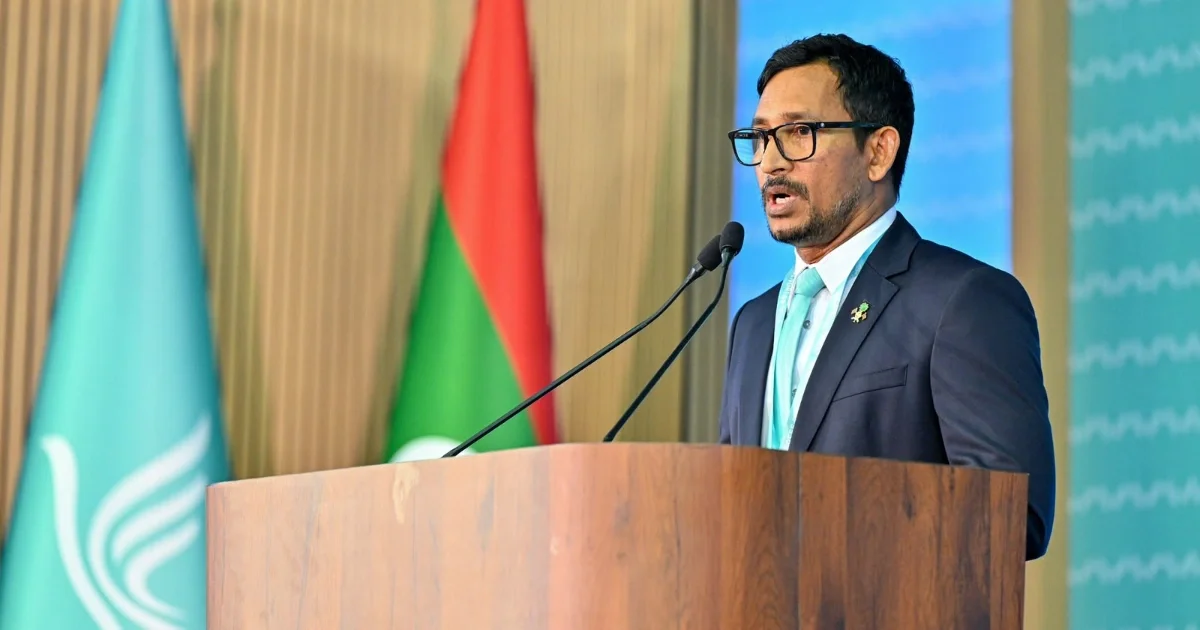
The Governor of the Maldives Monetary Authority (MMA), Ahmed Munawar, said today that while the conflict involving Iran has caused temporary fluctuations in the dollar market, there is no justifiable reason for the exchange rate to have surged to its current levels.
Speaking at a press conference held at the President’s Office regarding amendments to foreign exchange regulations and the strengthening of enforcement mechanisms, Munawar attributed the price hike to market speculation and artificial rate-fixing by certain groups.
Munawar noted that according to data collected by the MMA, although overall tourist arrivals have seen a slight decline, total tourism revenue has increased by one percent. Furthermore, he highlighted that dollar deposits and credit within the banking system have grown by 18 percent.
Despite the increase in dollar earnings and savings by individuals and businesses this year, the state’s foreign currency reserves have declined. Munawar explained that this was due to rising fuel costs, which have doubled and are currently higher than they were at the onset of the Ukraine war.
Referencing these figures, Munawar observed that the dollar rate began to climb when the central bank initiated consultations with tourism industry stakeholders to implement new foreign exchange policies. He added that the MMA has since launched a special operation targeting money changers to investigate the situation.
"Even with temporary market volatility, we do not see a reason for the rate to rise this significantly at this stage. It is highly evident that there are major speculative elements at play, which is why we have been closely monitoring the operations of money changers," Munawar said.
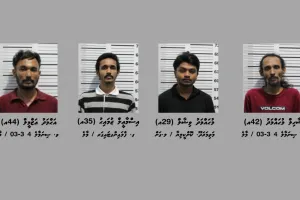
The MMA’s investigation revealed that the black market is sustained by individuals who earn in dollars but choose to exchange them through unauthorised channels. Munawar stated that these transactions are facilitated through money changers.
Providing further details on the operation, Home Minister Ali Ihusaan noted that unlicensed individuals are operating in the black market. He cited an example where monitoring of seven money exchange outlets—both licensed and unlicensed—revealed that they had transacted 76 million dollars within a nine-month period.
While the government has tightened regulations and equated unauthorised currency exchange with money laundering to address the dollar shortage, economic experts maintain that these measures will remain ineffective unless the government reduces its overall spending.