Home Minister Sheikh Imran Abdulla on Saturday night explained his threat to stop protests by opposition supporters during President Ibrahim Mohamed Solih's campaign trips to islands.
Imran, leader of the ruling coalition’s Adhaalath Party (AP), issued the warning at a campaign rally in Dhiggaru after about 14 people protested upon President Solih’s arrival on the island. Two of the protesters were also arrested.
Imran’s warning drew criticism from opposition parties. Asked about the controversy during Adhadhu’s ‘Etherefuh’ program, he said, “What I said would be clear if you listen to the whole speech that night.”
He then went into the history of political parties.
“When political parties were first formed in the Maldives, among the things we learned was that it became very chaotic and political activities were carried out sometimes to the point of endangering property, body and life,” said Imran, who led some of the largest protests staged in the country.

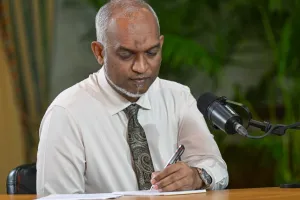
Sheikh Imran appears on Adhadhu's 'Etherefuh' program. -- Photo: Mirash Nashim/ Adhadhu
Basic rights were also curtailed during that tumultuous period of political activity, he noted. Media outlets were closed and parties faced several obstacles in conducting peaceful campaign activities, he added.
Since assuming office, President Solih has changed the situation with unrestricted press freedom and freedom of expression, Imran said. Peaceful protests and gatherings can also take place, he said.
“We shouldn’t do political work today within the chaos that existed in the beginning. Throwing sand, throwing water, laying hands on people - this isn’t how we should protest today. That won’t be allowed,” the minister explained his previous remarks.
However, protesting in Male’ except in the carnival area remain prohibited by law. Imran has also said that he wants to keep the legal changes made by the formerly ruling Progressive Party of Maldives (PPM).
Asked about the reason for keeping the prohibition on street protests in Male’ in place, Imran said restrictions were needed to prevent violence and “the public trying to do things through force.”