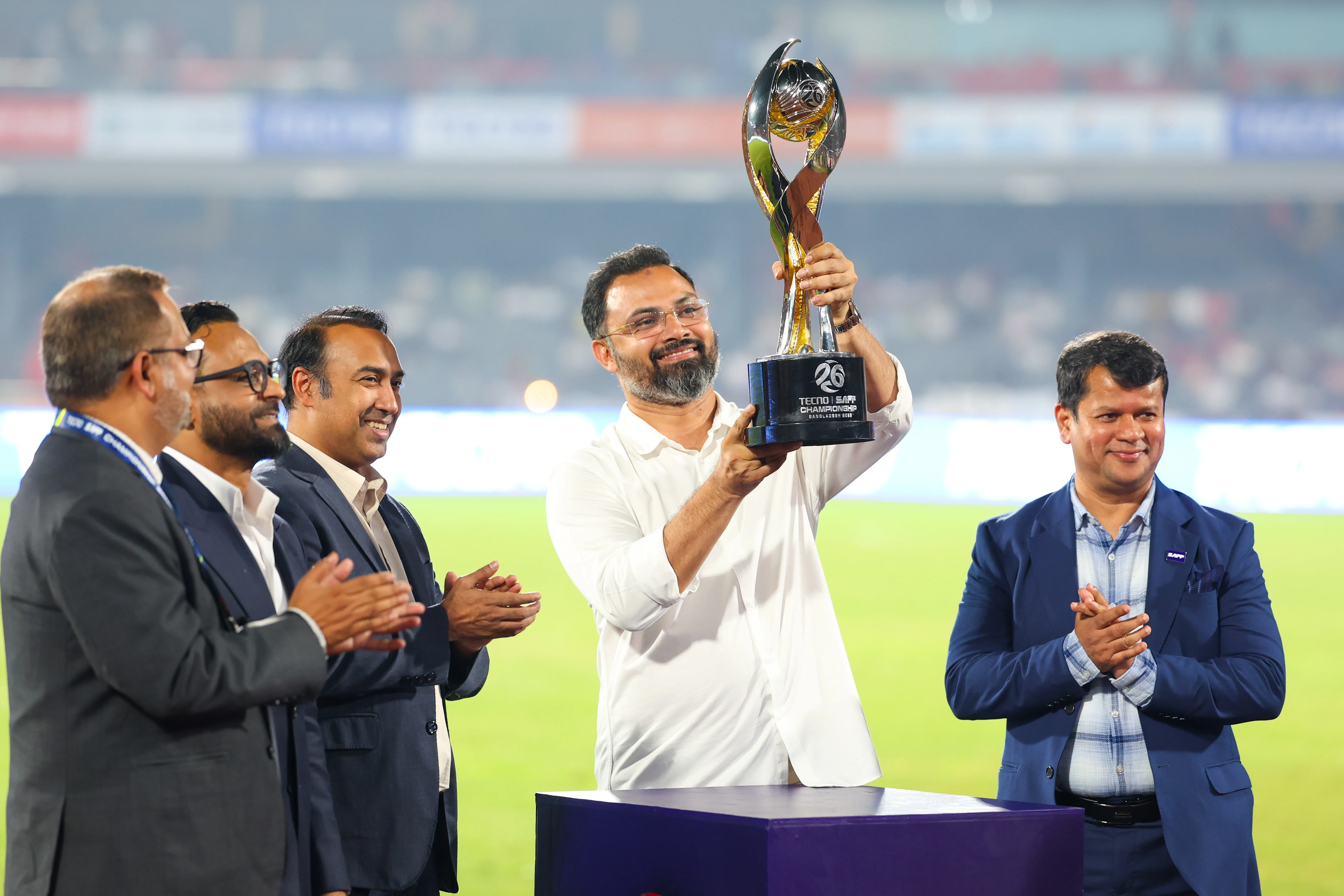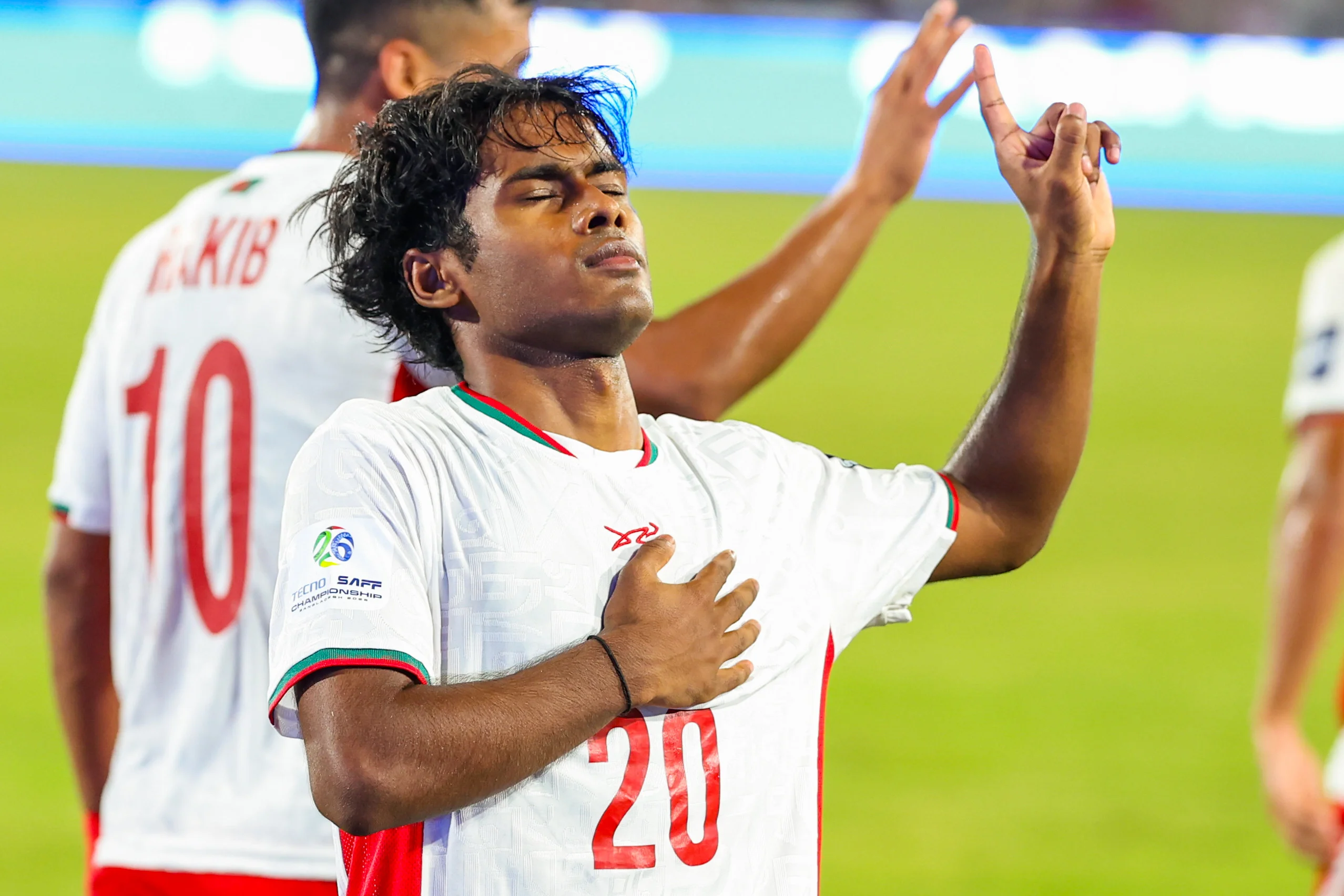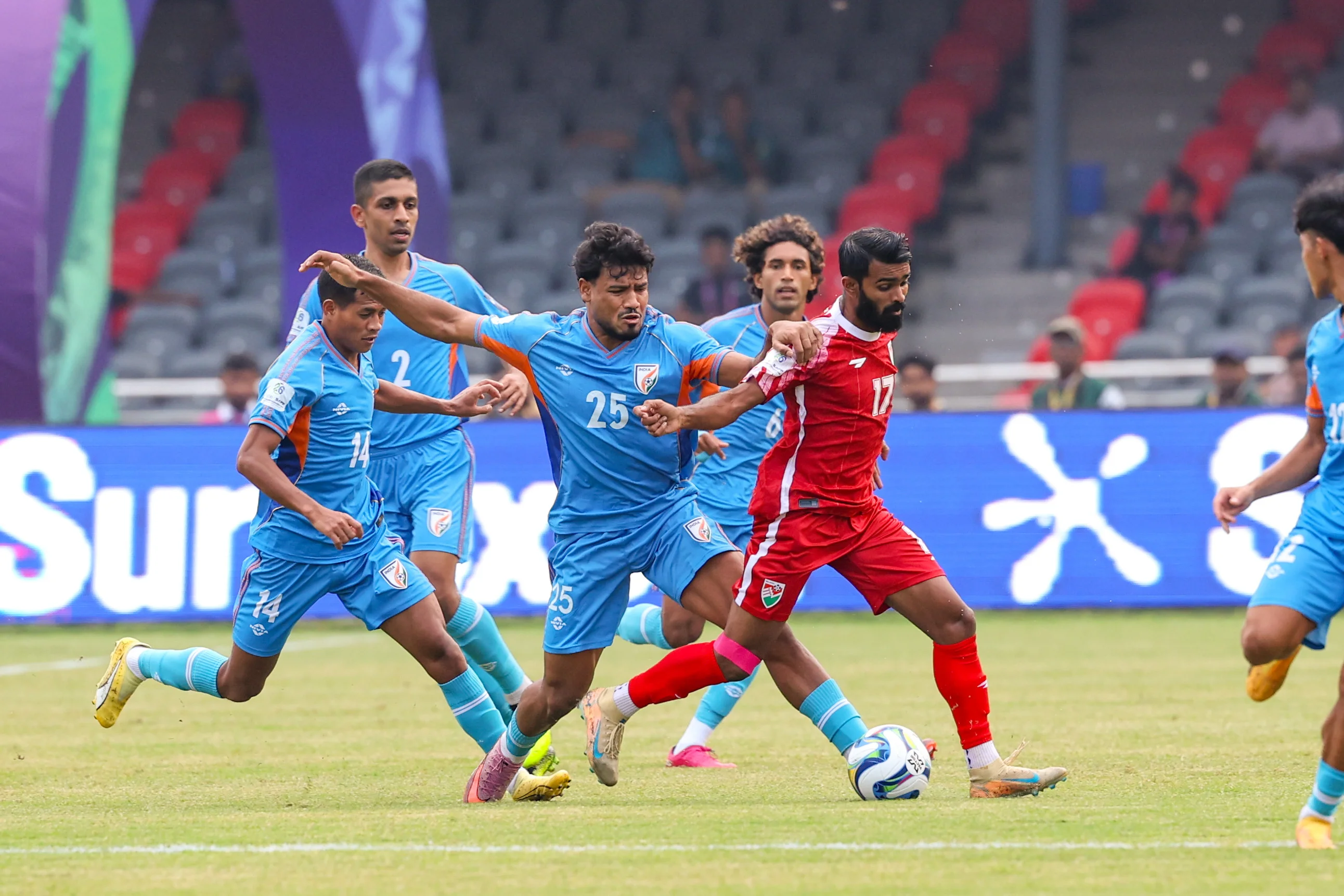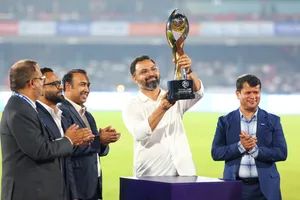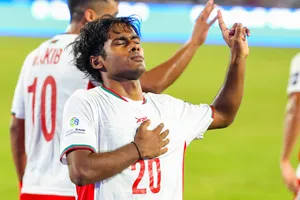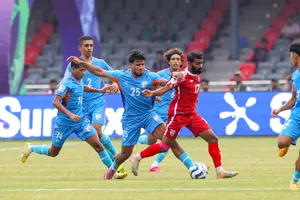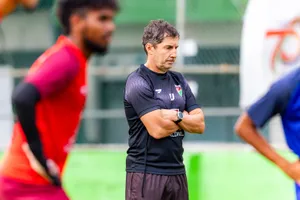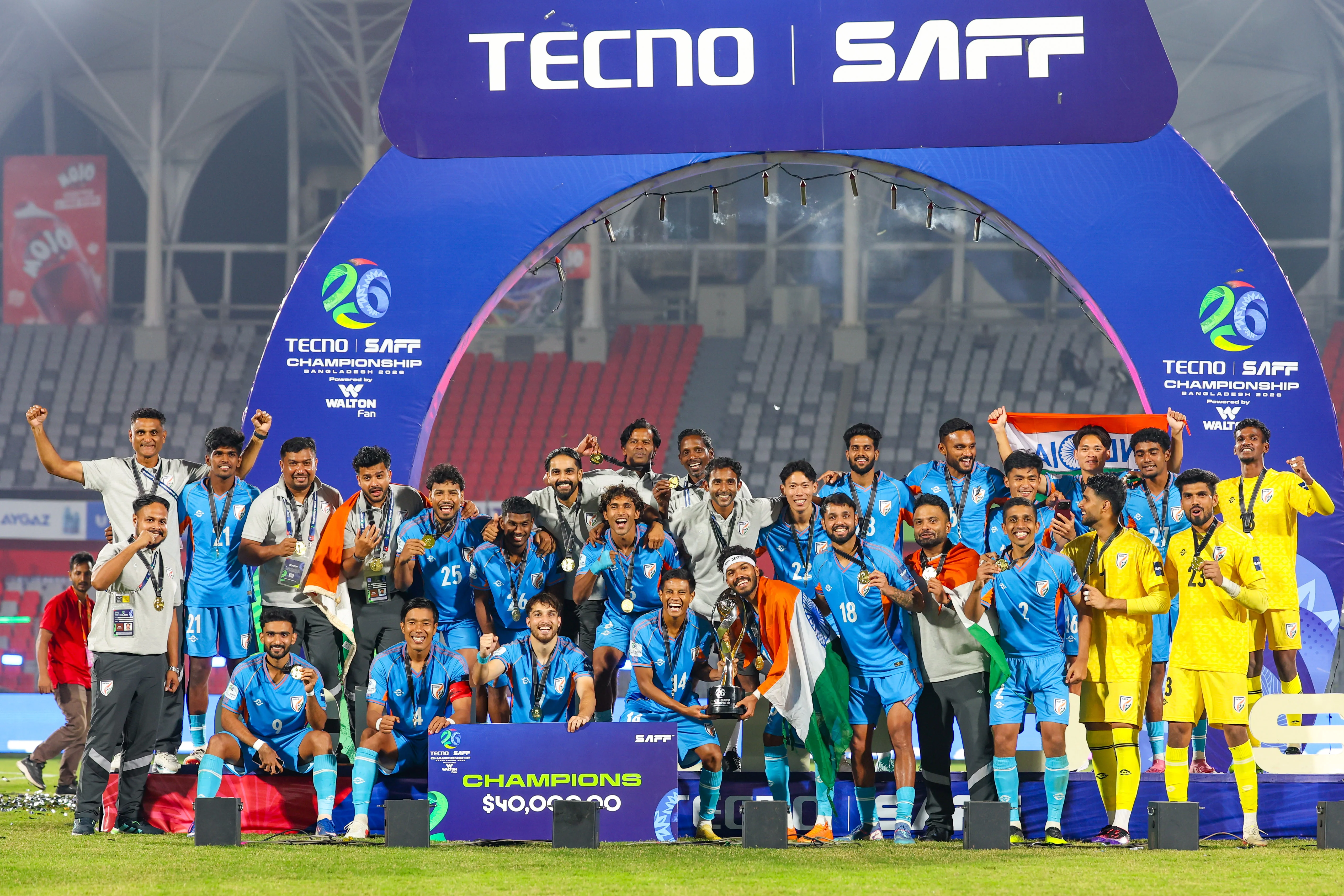
India secured their 10th SAFF Championship title after defeating archrivals Pakistan 2-1 in a dramatic final on Tuesday, completing another successful campaign under head coach Naushad Moosa despite significant squad challenges and competing commitments during the tournament.
A late header from Sandip Mandi in the 88th minute sealed the victory for India after Suhail Ahmad Bhat had cancelled out Alamgir Ghazi's first-half opener. The triumph extended India's dominance in South Asian football, adding the 2026 championship to their previous titles in 1993, 1997, 1999, 2005, 2009, 2011, 2015, 2021 and 2023.
The victory was particularly significant given the circumstances surrounding India's campaign. With several players unavailable due to competing international commitments and an unsettled squad throughout the tournament, Moosa guided a relatively young group through a challenging competition to retain India's position at the top of South Asian football.
Pakistan strike first as India struggle to find their rhythm
Pakistan entered the final with confidence after producing strong performances throughout the competition, including a squad featuring several players based in Europe.
The opening half saw Pakistan enjoy the better attacking moments, with wide players Haris Ali Zeb and Ali Akbar Khan causing problems for India's full-backs Sandip Mandi and Khaiminthang Lhungdim.
India struggled to establish their usual attacking rhythm and found themselves under increasing pressure as Pakistan looked to exploit the wide areas.
Their persistence paid off in first-half stoppage time when Alamgir Ghazi broke the deadlock with an excellent right-footed finish.
The move began with Junaid Shah delivering a cross from the left. After a slight deflection off an Indian defender, the ball fell to Ghazi inside the penalty area, where he curled a superb effort into the far corner beyond the goalkeeper.
Pakistan went into the break with a 1-0 advantage, leaving India facing a situation they had not encountered earlier in the tournament: having to recover from a deficit.
Moosa's tactical adjustments change the game
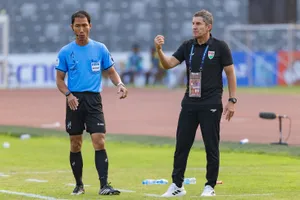
India's response after the interval reflected the influence of Moosa, who made important adjustments to improve his team's physical presence and attacking threat.
Manglenthang Kipgen was replaced by Macarton Nickson at half-time, a change that immediately improved India's ability to carry the ball forward and compete physically against Pakistan.
Nickson's introduction allowed India to play higher up the pitch, creating more opportunities for Brison Fernandes and PV Vishnu to threaten in the final third.
India gradually gained control of the contest without abandoning their tactical approach. Ricky Shabong and Abhishek Suryavanshi helped progress possession into more advanced areas, allowing Nickson to use his physicality and ball-carrying ability against the Pakistani defence.
Vishnu also had opportunities to equalise before India's breakthrough, but the forward was unable to convert two promising chances.
The turning point arrived around the hour mark when Pakistan were reduced to 10 players.
Junaid Shah received a straight red card in the 60th minute for a rash challenge on Brison Fernandes, leaving Pakistan with a numerical disadvantage at a crucial stage of the final.
India immediately increased the pressure and made their advantage count.
Bhat restores parity as India take control
Just three minutes after the dismissal, India found the equaliser through Suhail Ahmad Bhat.
Lhungdim Khaiminthang delivered a free-kick into the penalty area, where Macarton Nickson managed to get a slight touch before Bhat finished with a composed side-footed effort to make it 1-1.
Bhat, who had already scored twice against Pakistan in India's opening group-stage victory, once again proved decisive against the archrivals.
Following the equaliser, Pakistan's head coach responded with several substitutions, withdrawing Ghazi and Abdullah Iqbal in the 64th minute as his side attempted to reorganise defensively.
India, however, continued to dictate the tempo with their numerical advantage. Moosa also made changes in the wide areas, introducing Irfan Yadwad and Abdul Rabeeh to provide fresh attacking options.
Both players looked to take on the Pakistani defenders whenever opportunities arose, helping India maintain their attacking pressure as the match approached its final stages.
Mandi delivers late winner to seal historic triumph
With extra time appearing increasingly likely, India found the decisive breakthrough in the 88th minute.
Sandip Mandi rose inside the penalty area and guided a header past Pakistan goalkeeper Yousuf Butt to give India a 2-1 lead.
Although the goal involved a questionable moment from the Pakistani goalkeeper, India had earned their opportunity through sustained pressure and a disciplined second-half performance.
Pakistan were unable to find another response, allowing India to hold on for a memorable victory and their 10th SAFF Championship crown.
Moosa's achievement amid significant squad challenges
India's triumph was also a major achievement for Naushad Moosa, who had maintained throughout the tournament that his team was not a second-string side and had travelled with the ambition of winning the championship.
However, the head coach faced considerable challenges in managing the squad due to the All India Football Federation's arrangements around India's simultaneous international commitments.
The initial 28-player squad announced for the SAFF Championship was subsequently affected by an arrangement involving Mumbai City FC, under which three players were expected to feature in only one match.
The situation became more complicated when Bijoy Varghese, Muhammad Suhail and Liston Colaco were withdrawn from the SAFF squad to travel to New Zealand for international fixtures.
Injuries to Ronney Kharbudon and Suresh Singh Wangjam further reduced the available options, leaving India with only 20 players for the competition, including three goalkeepers.
The squad was never fully settled throughout the tournament. Some players missed the opening match against Pakistan because it was played outside the FIFA international window, while others departed after that encounter.
Despite these difficulties, Moosa managed to keep the team focused on the championship objective and guided them through the competition with a series of important results.
India opened their campaign with a 3-2 victory over Pakistan before recording a 1-0 win against the Maldives. They then defeated Bhutan 2-1 in the semi-finals to secure their place in the final.
The victory over Pakistan completed an unbeaten championship campaign, demonstrating the team's ability to adapt to different challenges and deliver when it mattered most.
India reaffirm their dominance in South Asian football
India's 2026 triumph further strengthened their position as the most successful nation in SAFF Championship history, taking their overall title count to 10.
Their championship victories have come in 1993, 1997, 1999, 2005, 2009, 2011, 2015, 2021, 2023 and 2026.
The latest success was particularly meaningful given the strength of the opposition and the challenges surrounding India's preparations. Pakistan arrived with a number of Europe-based players, while Bangladesh had also assembled a competitive squad, raising expectations of a possible change in the regional balance of power.
India, however, demonstrated their experience and resilience when it mattered most.
For Moosa, the victory represented an important achievement with a young group of players. His tactical adjustments, confidence in his squad and ability to manage difficult circumstances proved decisive in the final.
India once again emerged as South Asian champions, defeating their fiercest regional rivals in a final that required patience, tactical discipline and a late moment of quality to secure a historic 10th title.