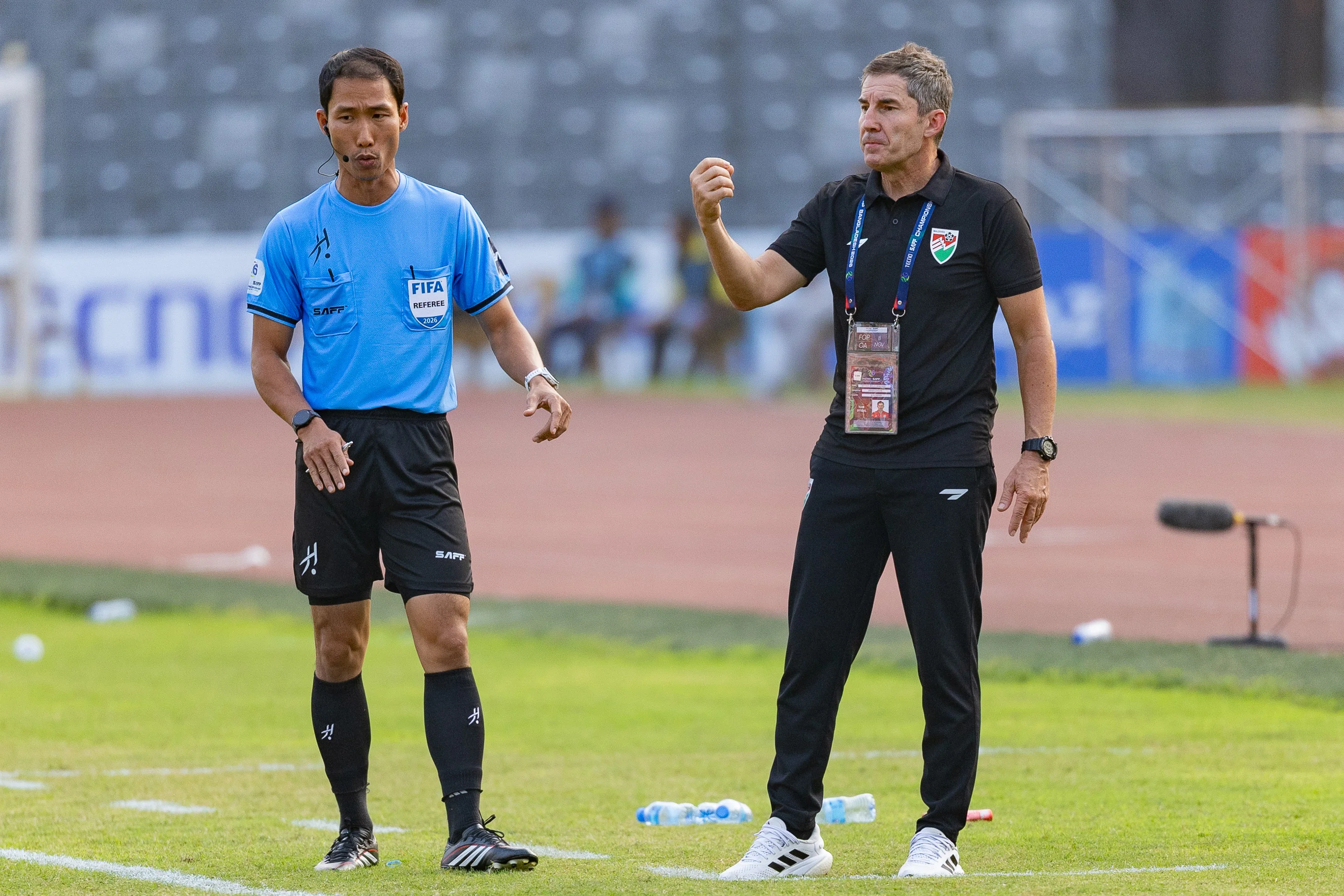
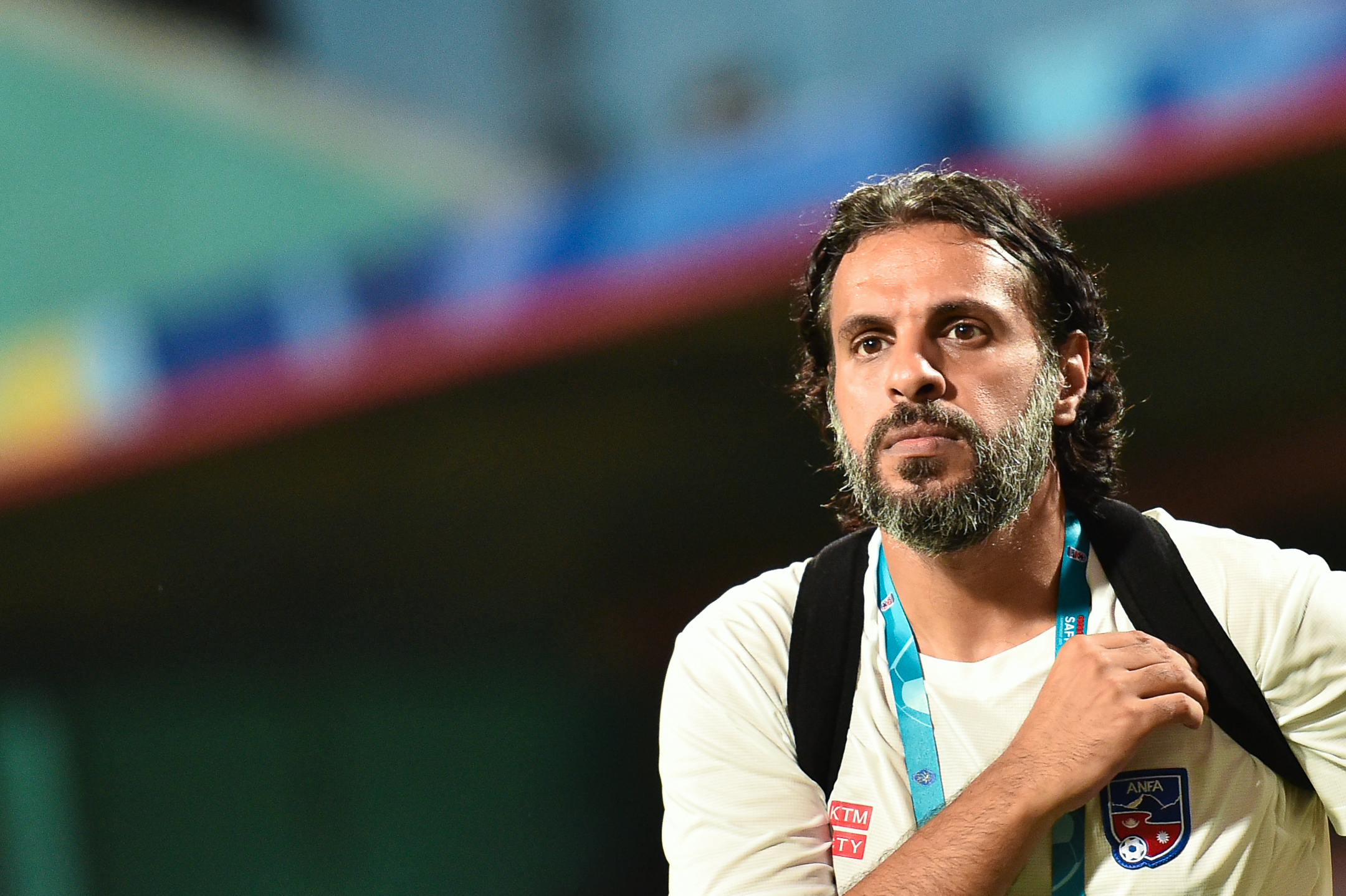
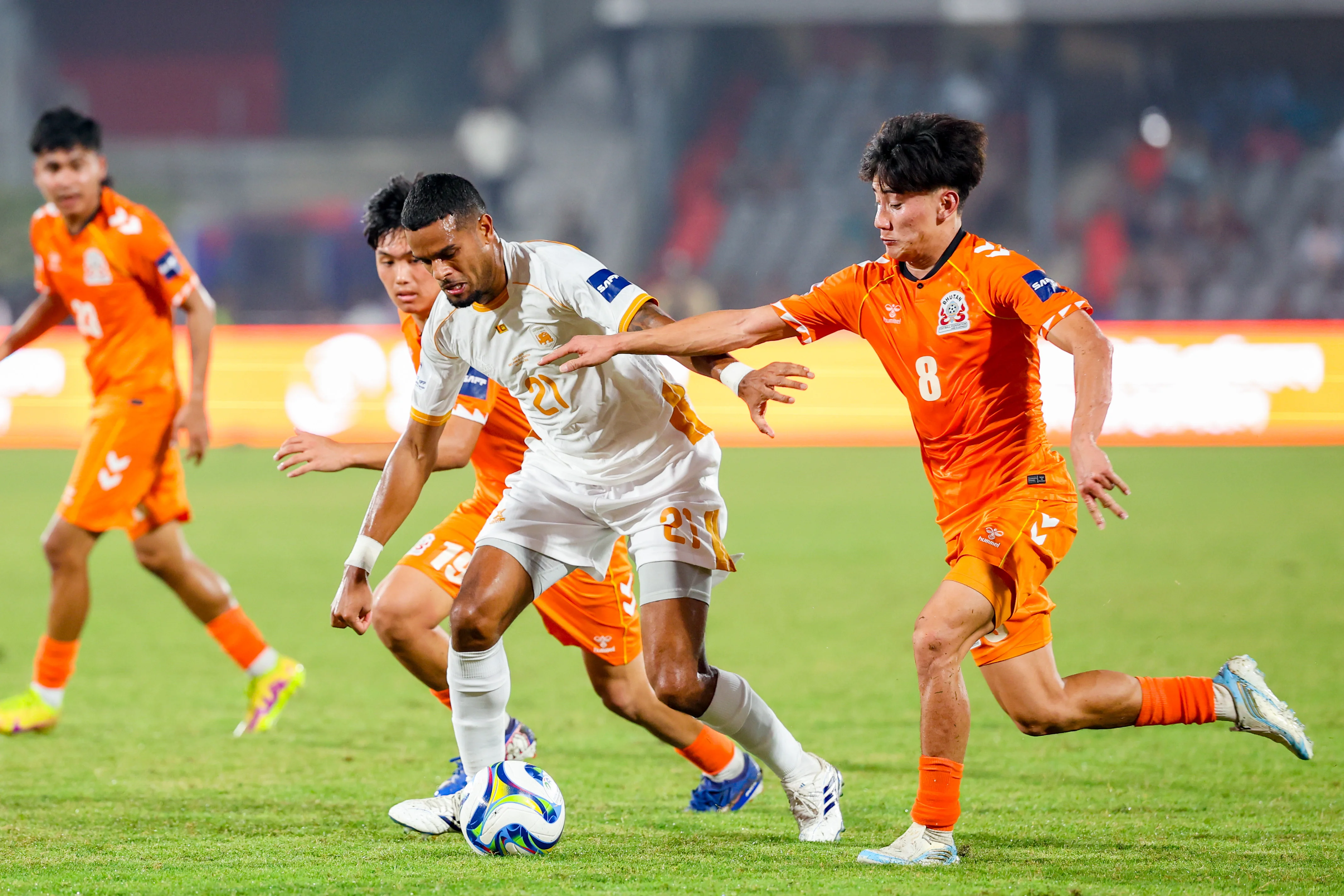
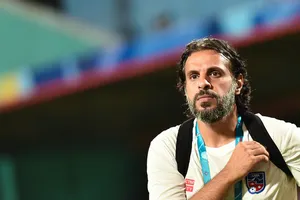
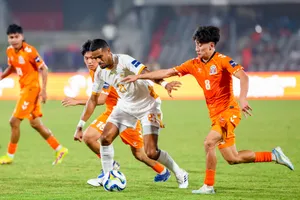
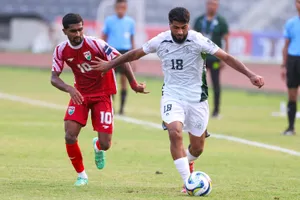
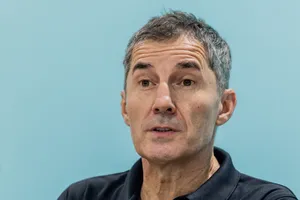
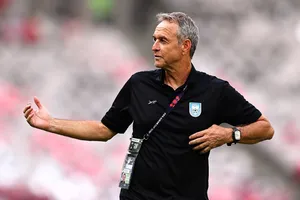
Maldives national team head coach and Technical Director István Urbányi has described the upcoming clash against India as a major challenge, urging his players to remain compact and focus on doing what is necessary as the team fights to keep its semi-final hopes alive in the TECNO SAFF Championship 2026.
Following a 3–0 defeat to Pakistan in their opening Group B match, Maldives now face a difficult task against India. To progress to the semi-finals, they must defeat the Indian side by at least three goals. Otherwise, Maldives will be eliminated in the group stage for a second consecutive edition, having suffered an early exit at the 2023 SAFF Championship in Bengaluru, India.
Speaking ahead of the decisive encounter, Urbányi said the team’s preparation had focused on staying compact and finding ways to compete against stronger opponents.
“I hope the players will be compact. That was also one of the targets in our last training session. That is why we played against strong opponents during preparation, especially during the China trip, to learn how to play and compensate for the advantages other teams sometimes have,” he said.
Urbányi acknowledged the strength and organisation of the Indian team, highlighting the experience within the squad and the time the players have spent working together.
“India is a very well-organised team. It is a young group with some senior players. I have spoken with some officials over there. Three players left, and they brought another three here. You can see they have been working together for a long time,” he said.
He also pointed to preparation and set-piece routines as evidence of the team's organisation, noting that the combinations require considerable practice.
“Today, we have been talking about five or six different set-piece and corner combinations, which take time to practise. The main goal is to stay in the game for as long as possible. As you said, it is a very big challenge, not only to score more goals but also to beat a strong India side,” Urbányi said.
Despite the pressure surrounding the match, the Hungarian coach said he viewed the situation as an opportunity for the players rather than a personal burden. He also stressed the need for a clear direction for the future of Maldivian football.
“It is a challenge. We can call it pressure. But I think someone has to give a clear message. When I say ‘we’, I mean someone has to explain what is next for this country. There are so many things happening at the same time,” he said.
Urbányi added that he sometimes felt sorry when only selected points from his longer interviews were highlighted, explaining that he often speaks at length to share broader ideas about the game and its development.
For the match itself, he believes scoring the opening goal could have a significant impact on both teams, particularly in determining how Maldives approach the remainder of the encounter.
“Tomorrow (Today) the first goal can give a lot to both sides. I think India will be confident playing again because they have a solid team. The question is how much credit and confidence we can gain if we score the first goal, and how we can move forward from there,” he said.
Reflecting on the development of football across the region, Urbányi said the standard of competition has improved considerably during his 13-year absence from Maldivian football.
“If you watch this competition, there is so much happening in this region. I came back after 13 years, and everybody is improving very, very much,” he said.
He also compared the current situation with his previous experience working with the Maldives national team, when players such as Ali Ashfaq, Sentey and Oppo were regularly involved in competitive matches. According to Urbányi, that level of competition gave the team greater confidence, while the present circumstances require a different approach.
“If you come to a competition with players like Ashfaq, Sentey and Oppo, you know they have played so many competitive matches, and you have confidence. In this situation, it is not about confidence. We try to do our best. I told the players that sometimes you do not need to do your best; you need to do what is needed,” he said.
Urbányi also revealed the difficulties he faced in trying to bring more experienced players into the squad. He said the team's top goalscorer did not respond to his messages, leaving him unable to establish contact, while another experienced player was unavailable because of a previously arranged family holiday in Thailand.
“I wanted to bring more experienced players. The top goalscorer did not answer my text message, and I could not contact him. Another experienced player had a ticket for a family vacation to Thailand, so unfortunately he is not coming,” he said.
The coach described the situation as something he had not experienced during his previous spells with the national team.
“That never happened in my previous time. It was a privilege to come to the national team. This is a little bit different. I am trying everything with the team that is here,” he added.
Urbányi returned to Maldives after 13 years in January 2026, taking on the dual responsibilities of senior national team head coach and Technical Director. He has also coached the Maldives Under-20 national team during his current stint.
Across 11 matches in charge of Maldivian teams, he has recorded just one victory, against Timor-Leste in March. His senior national team has lost its last four matches without scoring, against China, Kyrgyzstan, Lebanon and Pakistan, conceding 17 goals in the process.
Under his current spell as senior national team head coach, Maldives have scored only three goals in eight matches, with all three coming from set pieces, one from a corner and two from penalties.
With the group-stage campaign now reaching a decisive point, Maldives face India knowing that only a victory by at least three goals will keep their semi-final ambitions alive.