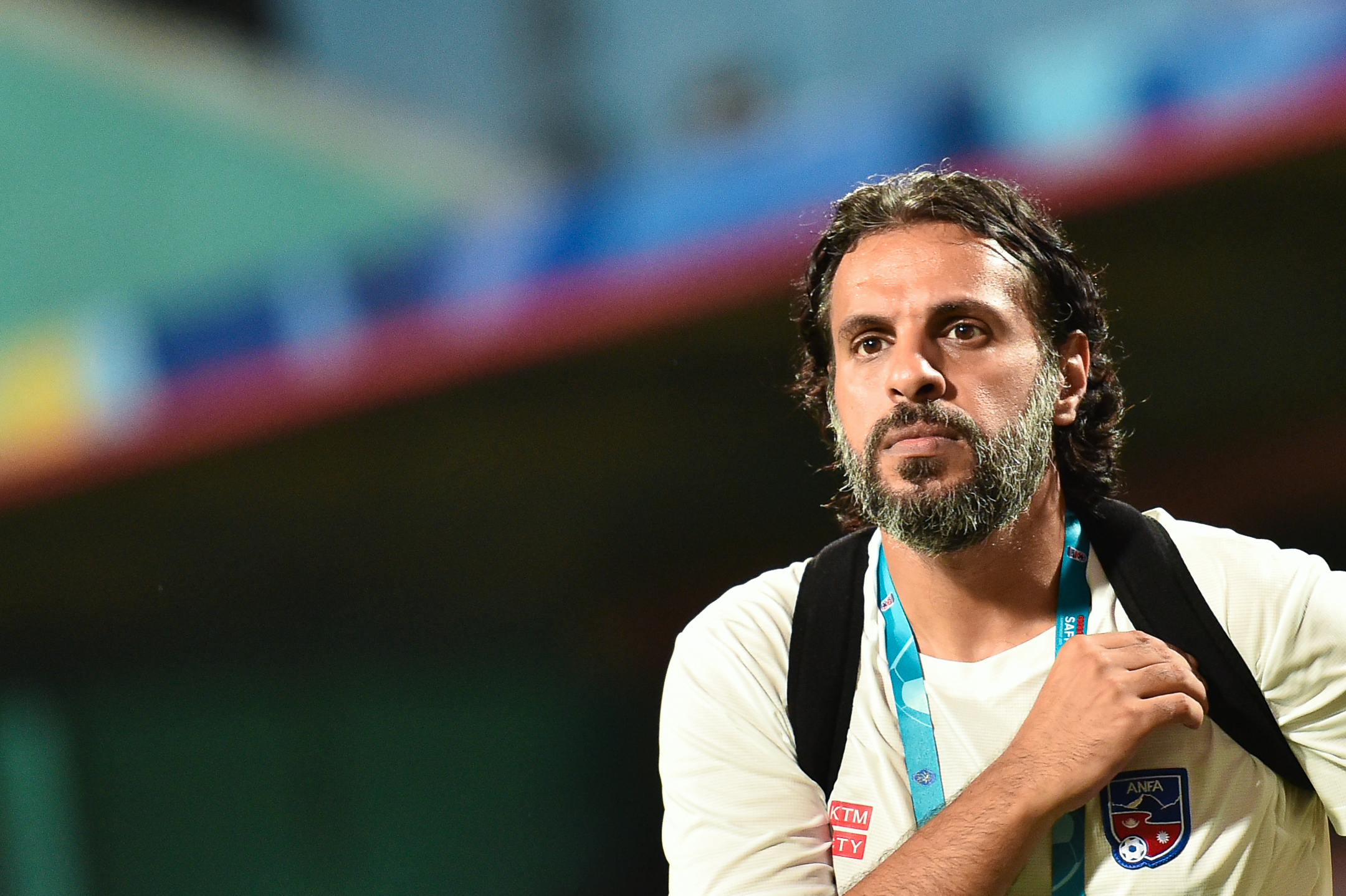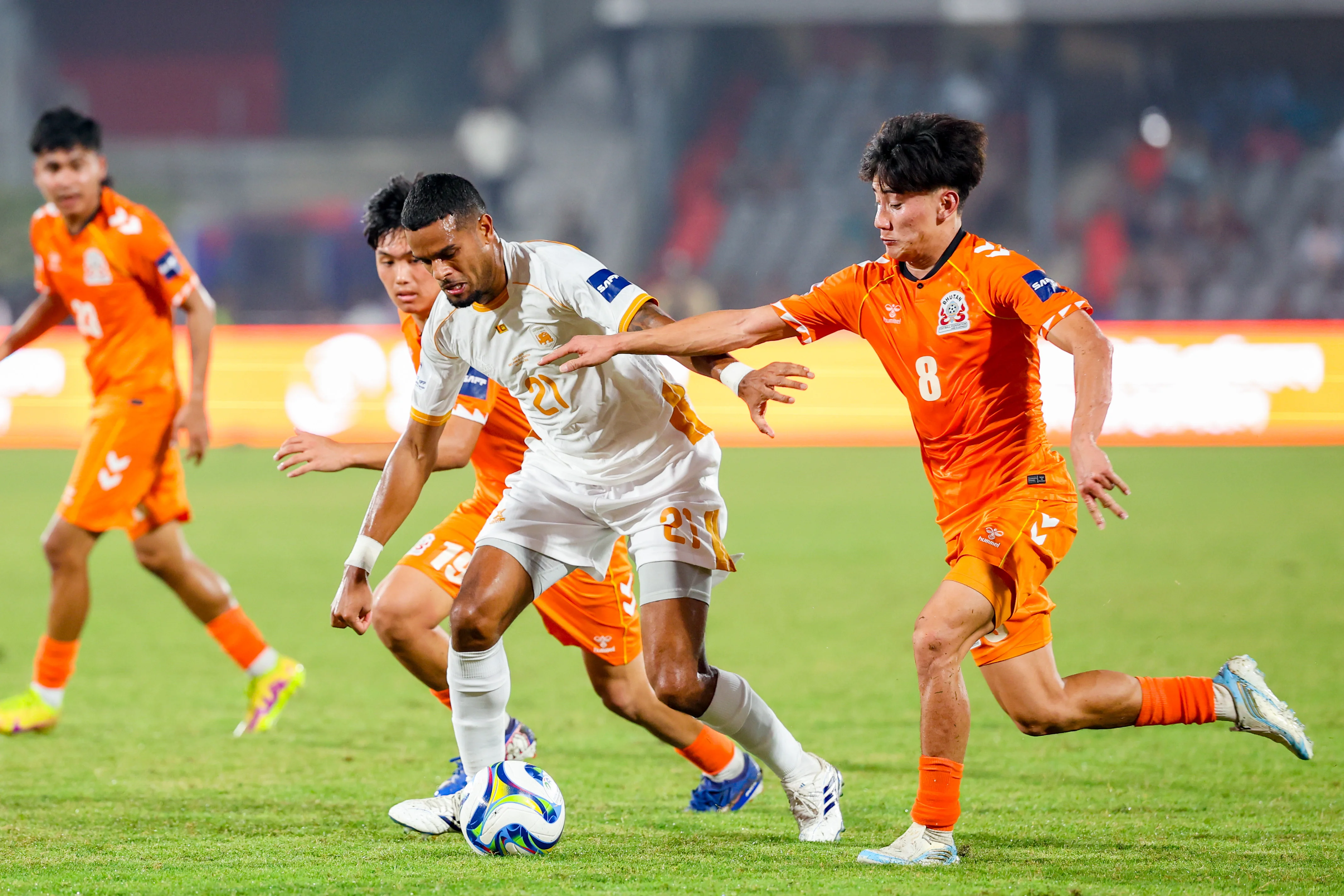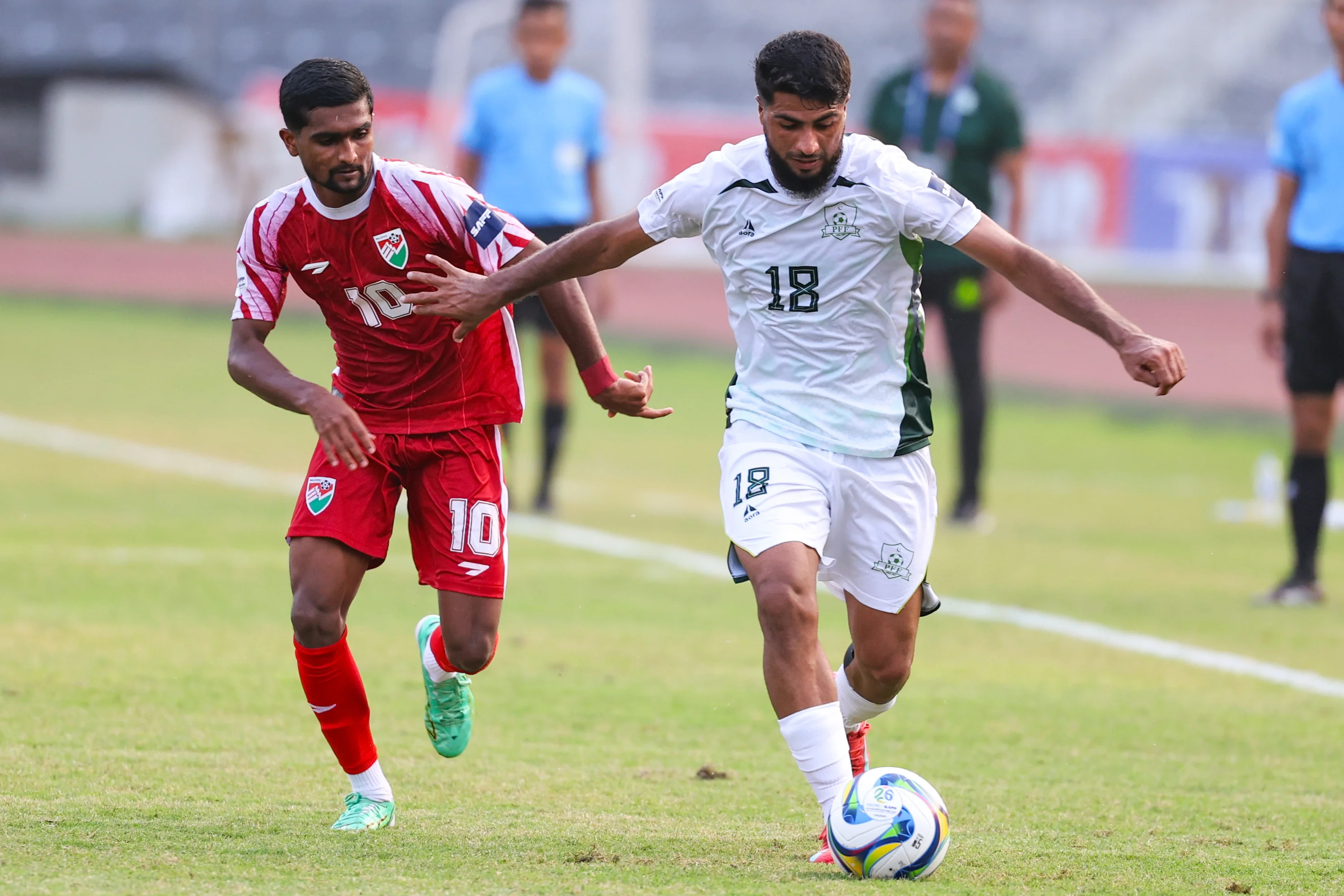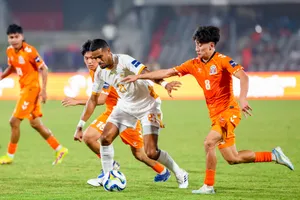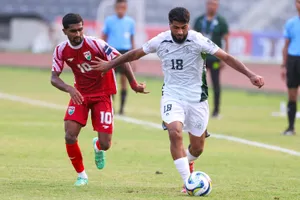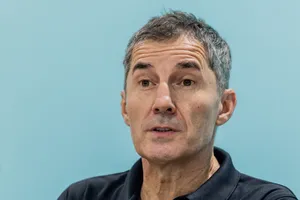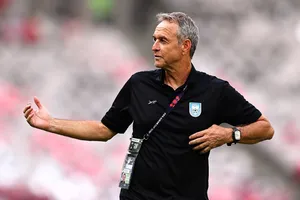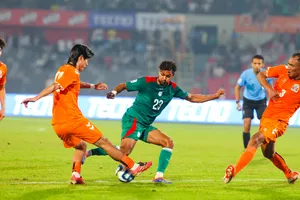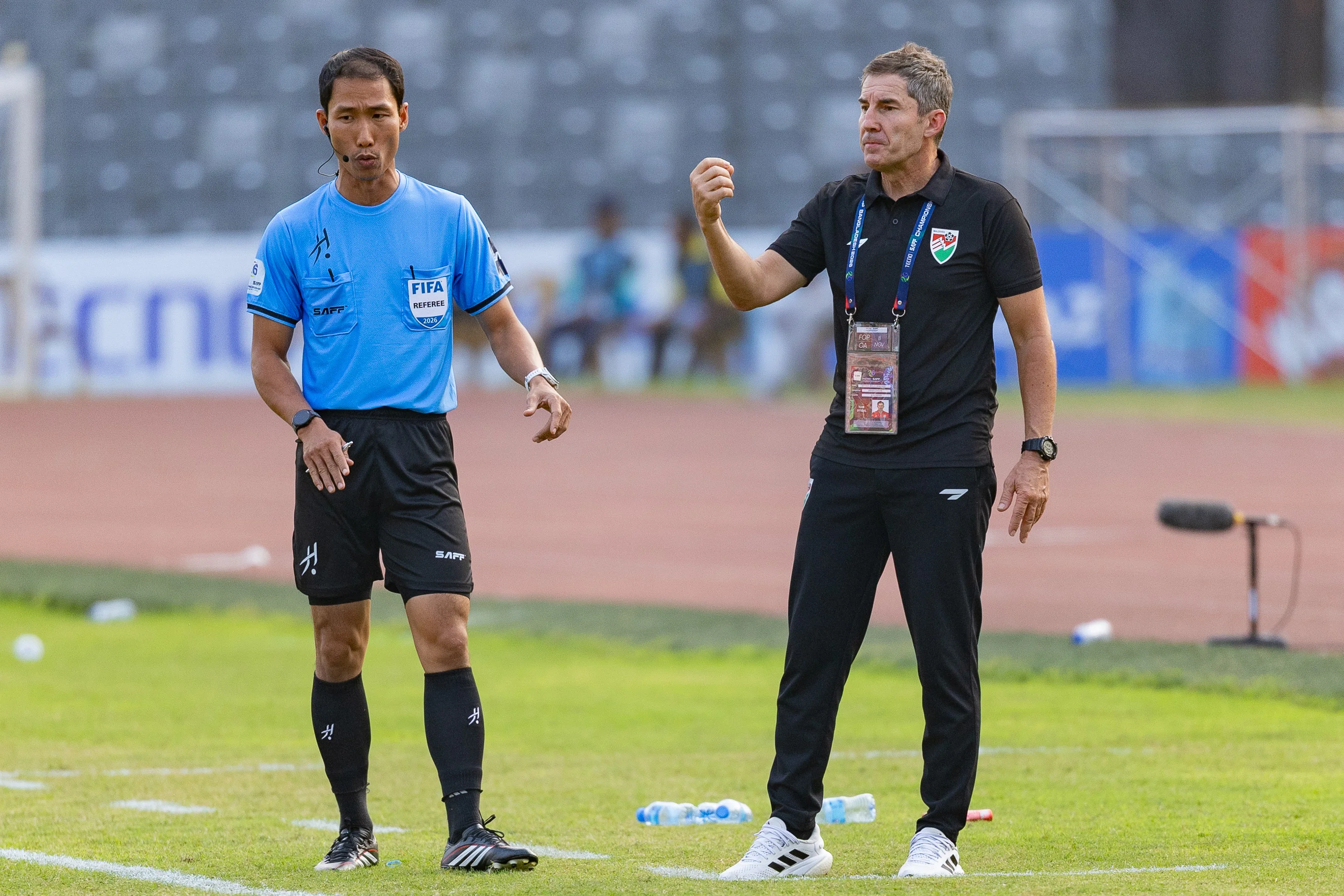
Maldives head coach István Urbányi has questioned the standard of refereeing at the TECNO SAFF Championship 2026 and called for greater institutional support for the national team, following his side’s 3–0 defeat to Pakistan in their Group B encounter at the National Stadium in Dhaka on Sunday.
Speaking at the post-match press conference, the Hungarian coach expressed particular frustration over the penalty awarded to Pakistan and the decision not to penalise an incident he believed involved a foul in the build-up to their third goal.
He also questioned why VAR was not being used at the tournament (at this stage), arguing that several difficult situations during the match could have benefited from video review.
Urbányi said the match had been challenging, but felt the Maldives had opportunities to change its course. Referring to Pakistan’s earlier 3–2 defeat to India, he noted how quickly the momentum of that match had shifted in its closing stages. He believed the Maldives had also been in a position to make an impact before conceding.
According to the coach, his side had opportunities to score twice within a two-minute period. However, the penalty decision that followed created a significant psychological setback. Pakistan midfielder Hayyaan Khattak was brought down inside the Maldives penalty area, allowing Mckeal Aroon Abdullah to convert from the spot in the fourth minute. Najeeb Ullah then scored twice, in the ninth and 24th minutes, to put Pakistan 3–0 ahead before half-time.
Urbányi described Pakistan’s third goal as particularly damaging, questioning the referee’s decision not to call a foul on a Maldives defender who had fallen while an opponent was behind him. He said conceding the goal made an already difficult task considerably harder, while stressing that every goal could prove important when the final group standings are determined.
Despite the first-half setback, the Maldives showed greater attacking intent after the break and created several opportunities. Pakistan also threatened, making the second half an open contest, according to Urbányi. However, neither side added to the scoreline.
The coach also identified injuries to several players, particularly in key positions, as a major factor affecting the team’s performance. He said the Maldives struggled physically in individual contests and estimated that his players won only around 20 to 30 per cent of their one-on-one duels. Urbányi said the coaching staff would review the physical performance using match statistics.
Beyond the defeat, much of the coach’s post-match assessment focused on the wider challenges facing Maldivian football and the preparation provided to the national team.
Urbányi, who returned to the Maldives earlier this year after a 12-year absence, was appointed as both Technical Director and senior national team head coach. He previously coached the Maldives at the 2009, 2011 and 2013 SAFF Championships. His first campaign ended with a place in the 2009 final, while the Maldives reached the semi-finals in 2011 and 2013, losing to India on both occasions.
He has also coached the Maldives Under-20 national team at the 2026 SAFF U20 Championship. Across his current senior and U20 assignments, Urbányi has recorded one victory, three draws and seven defeats in 11 matches.
Comparing the current national team with the sides he coached during his previous spells, Urbányi said the circumstances were very different. He recalled that players in those earlier teams competed regularly in a highly competitive Dhivehi Premier League, represented strong domestic clubs and gained international experience through AFC competitions.
The current situation, he explained, reflects a difficult period of transition for Maldivian football. He pointed out that the Dhivehi Premier League was only completed last year after the previous two years without a domestic football season, leaving significant gaps in the competitive structure.
Urbányi said expectations surrounding the national team’s participation in the SAFF Championship needed to take that background into account. He acknowledged that players wanted to improve and perform well, but argued that the team was coming from a difficult starting point in terms of regular competitive football.
The coach also raised concerns about the national team’s preparation, particularly the lack of adequate time and support for the squad. He clarified that the team’s trip to Indonesia was not a conventional training camp but a get-together intended to give the players time to regroup. The delegation had travelled for 18 hours and lost two nights during the journey, making recovery and team preparation more difficult.
He said the Maldives had also faced a demanding run of international fixtures against China, Kyrgyzstan and Lebanon before returning to domestic competition. Players were then required to represent their clubs in the Dhivehi League, adding to their workload ahead of the SAFF Championship.
Urbányi revealed that the coaching staff did not have a fitness coach because he had not received the necessary support or permission to appoint one. He added that some players joined the national team at the last minute, with uncertainty over whether they would be fit enough to play.
According to the coach, some injuries were also linked to the heavy workload created by the Dhivehi League schedule. He said a decision eventually had to be made about whether the priority was preparing the national team for the SAFF Championship or continuing to push the domestic league.
He was careful to describe these issues as facts rather than criticism of the authorities or organisers. However, he stressed that competing against increasingly strong opponents required the Maldives to provide better support for its players and coaching staff, including more effective scheduling and preparation.
The coach also highlighted uncertainty surrounding travel arrangements. He said the Indonesia trip had been rescheduled three times and that the team had not known until the final day when it would depart. The date of arrival in Bangladesh had also reportedly been changed three times.
Urbányi said that if the SAFF Championship was considered the most important competition of the year, the approach to preparation should reflect its importance. He emphasised that the national team needed a more structured build-up rather than arrangements being finalised at the last minute.
“I mentioned that as a fact, I didn't mention these as a criticism,” he said, reiterating that the Maldives needed to become stronger because every opponent in the competition was challenging. He added that expecting results without addressing the underlying issues would not reflect the reality of the transition taking place in Maldivian football.
Pakistan’s victory secured their place in the semi-finals and marked their first win over the Maldives in the history of the SAFF Championship. It also followed their 3–0 victory over the Maldives in June’s Diamond Jubilee International Tournament in Malé, ending a 35-year wait for a win against the island nation. Pakistan have now repeated the same scoreline in Dhaka, despite being without several key players who were not released by their clubs because the tournament falls outside the FIFA international window.
The Maldives, meanwhile, were also without important players due to injuries. Pakistan’s victory took them to three points from two matches, placing them above India on goal difference, while the Maldives remained without a point.
India and the Maldives were scheduled to meet on November 11 to decide the remaining semi-final place from Group B, with the top two teams from each group advancing to the last four.
Urbányi maintained that the Maldives still had to approach the remaining challenge with belief, insisting that there was no such thing as having no chance in football. However, his post-match comments made clear that he believes lasting progress will require more than results on the pitch: it will require stronger preparation, better support for players and a more consistent competitive structure.