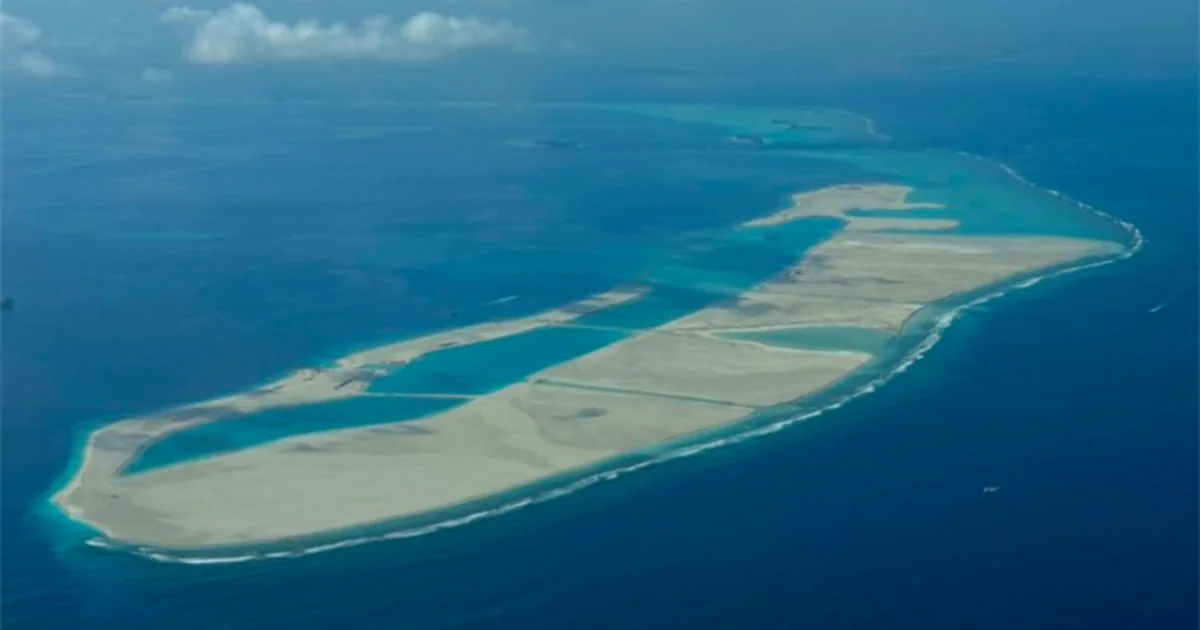
The Economic Council has deliberated on a proposal to sell a portion of Rasmalé—a massive land reclamation project designated for public housing—to Emaar, the largest real estate developer in the United Arab Emirates.
Reliable sources have informed Adhadhu that the government intends to develop an area within the Rasmalé tourism zone under a township model. This region is expected to be designated as a special tax zone, similar to the "Ayla" project currently being developed across Noonu Dhigufaru Falhu, Dhekenanfaru, and Kuramaadhoo.
While discussions between the government and Emaar are ongoing, sources confirm that no official agreement has been signed.
The negotiations reportedly center on granting a portion of Rasmalé to Emaar in exchange for the construction of social housing units and other infrastructure. A source familiar with the matter stated that the government’s objective is to reach an agreement that aligns with its broader strategic master plan for Rasmalé.
"A government team is traveling to Dubai to further discuss these projects," a senior official confirmed.
The reclamation of Fushidhiggaru Falhu to create Rasmalé commenced on December 18, 2023. The government announced that 1,153 hectares of land would be reclaimed within eight months, after which infrastructure development would begin.
Despite the ambitious timeline, the project remains unfinished as it nears its three-year mark this December. However, reclamation efforts have intensified since late last year, with approximately 70 percent of the planned area completed as of last month.
President Mohamed Muizzu later announced that his administration aims to conclude the entire land reclamation process for Rasmalé by the end of this year.
Five sites remain to be reclaimed, including "Site D," the project's largest area. Among these is "Site E," earmarked as the tourism zone. This area is expected to be allocated to Emaar.
The Rasmalé project, the flagship initiative of the current administration, is being promoted as the "total solution" to the housing crisis facing Maldivians. The government envisions the development as a modern, climate-resilient, and environmentally friendly "eco-city."