President Mohamed Muizzu has asserted that the judiciary lacked independence during the administration of former President Abdulla Yameen, a government in which Muizzu himself served as a cabinet minister.
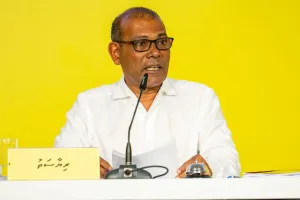
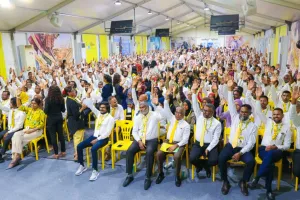
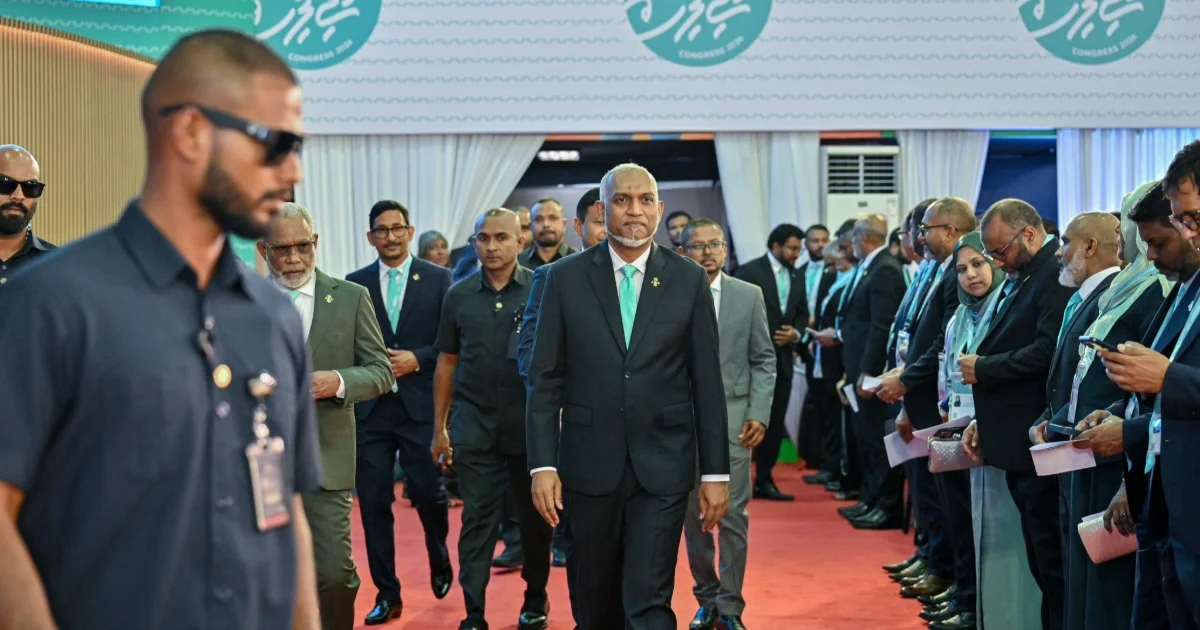
Speaking at a gathering held last night to conclude the People’s National Congress (PNC) Senate meeting, Muizzu levelled heavy criticism at the former administration without naming Yameen.
Muizzu highlighted the 2018 Supreme Court raid—where security forces removed roof tiles to gain entry—the arrest of Supreme Court justices, and the imprisonment of former President Maumoon Abdul Gayoom as evidence of judicial interference during that era.
The President recounted that he was instructed to visit the high-profile detainees while they were in custody to check on their well-being. However, he did not disclose who had issued those instructions.
"This is something I experienced firsthand; that was the extent of judicial independence back then," Muizzu remarked.
He stated that the detainees were being held in dire conditions at the time of his visit. Muizzu added that he had relayed the grievances and complaints expressed by the prisoners directly to Yameen.
"There was the leader who saved the nation during the November 3rd incident, an individual who had provided immense service to the country. Then there was a Supreme Court justice and another judge. These individuals were either in solitary confinement or living in very poor conditions," Muizzu said.
Muizzu claimed that his own government does not operate in such a manner.
He maintained that since taking his oath of office, he has not exerted any influence over the judiciary to this day.
Muizzu’s criticism of Yameen comes even though he rose to power largely by campaigning on Yameen’s legacy. His entire presidential campaign was built on the promise of freeing Yameen and the assurance that he would govern under the former president's guidance and counsel.