JSC can remove chief judges without citing reasons under new rules

Jul 14, 2026, 3:15 PM
The Judicial Service Commission office -- Photo: Adhadhu

The Judicial Service Commission office -- Photo: Adhadhu

The Judicial Service Commission (JSC) has enacted and implemented a new regulation granting itself the authority to remove chief judges of courts without citing any reasons.

The Regulation on the Appointment and Removal of Chief Judges to the Courts was published in the Government Gazette this afternoon. While the regulation outlines procedures for the appointment of chief judges, it grants the JSC broad discretionary power regarding their removal.

"The Judicial Service Commission shall have the power to remove a judge from the position of chief judge if the Commission determines that such removal is necessary to improve the administrative efficiency of the courts," Article 8 of the regulation states.

Under the new criteria, the appointment of chief judges will be based on their legal knowledge, social perspective, communication skills, self-confidence, work ethic, administrative capabilities, and problem-solving aptitude.

Eligibility for the position of Chief Judge of a Superior Court is restricted to judges currently serving within that court. Similarly, only magistrates serving within a particular judicial district may apply for the position of Chief Magistrate of that district.

The JSC’s introduction of this regulation comes at a time when the government maintains influence over the Commission's composition. The JSC previously played a key role in the removal of three Supreme Court justices, a move aligned with the government's objectives.

Comments

Read More

Latest News

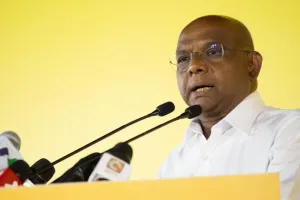
Abdulla Shahid arrested over alleged sexual assault

Former Maldivian Foreign Minister Abdulla Shahid was arrested following allegations of sexually assaulting an 18-year-old. Police took Shahid into custody after searching his residence in Hulhumale'. Shahid has denied the claims, calling them a baseless attempt at political character assassination.

MDP submits resolution for referendum over Rasmale' deal

The MDP has submitted a resolution to the Maldivian Parliament seeking a public referendum on the Rasmalé project. The vote would decide whether to grant land to a UAE-based firm for a development allowing foreign residency. The party argues that the long-term implications for national interests require direct public consultation.

Court orders Adhadhu to surrender passwords for seized devices

The Criminal Court has ordered Adhadhu newsroom to provide passwords for four seized MacBooks following a police raid over the "Aisha" documentary. Data extraction must occur before a media commission representative to protect legal privilege. The court emphasized that any evidence gathered must remain confidential and specific to the case.

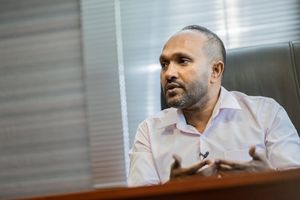
Rasmale' deal could end Maldivian identity: Jameel

Former VP Dr. Mohamed Jameel Ahmed warns that leasing Rasmalé land to a UAE firm for 99 years threatens the Maldives' identity. He claims international law will force the nation to allow religious freedom and temples for foreign residents, effectively ending the country's status as a sovereign entity defined by a single religion.

Former Chairman of Dhiraagu passes away

Rilwan Shareef, the former Chairman of Dhiraagu and a veteran state official, has passed away while receiving treatment at IGMH. Throughout his distinguished career, he served as a State Minister and held leadership roles at Villa Air and the Maldives Stock Exchange. Details regarding the cause of his death have not been disclosed.

Government workforce increased by 6500 in three years

The government workforce grew by 6,530 employees over the last three years, reaching a total of 55,466. This rapid recruitment has driven the national wage bill to a projected MVR 14.4 billion for next year. The current administration's hiring rate significantly outpaces the previous three-year period.

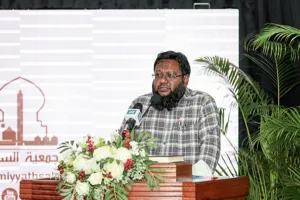
Rasmale' is an economic concept, says Salaf President

Sheikh Abdullah bin Mohamed Ibrahim, President of Jamiyyathul Salaf, clarified that the Rasmalé project is an economic concept rather than a plan to settle non-Muslims. He dismissed claims of religious concerns as political distortion, emphasizing that the area is intended for high-income residents with legal safeguards in place.

Newsletter

Get the latest news delivered straight to your inbox