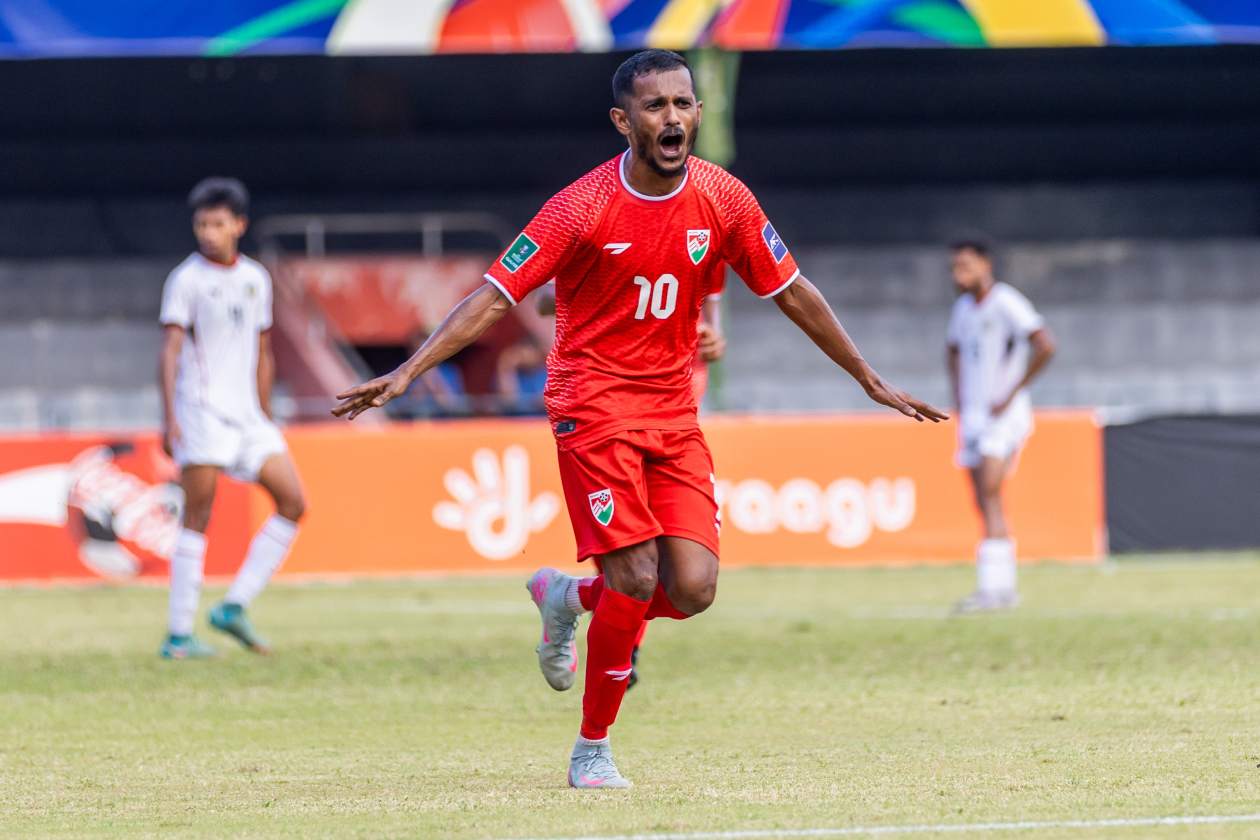
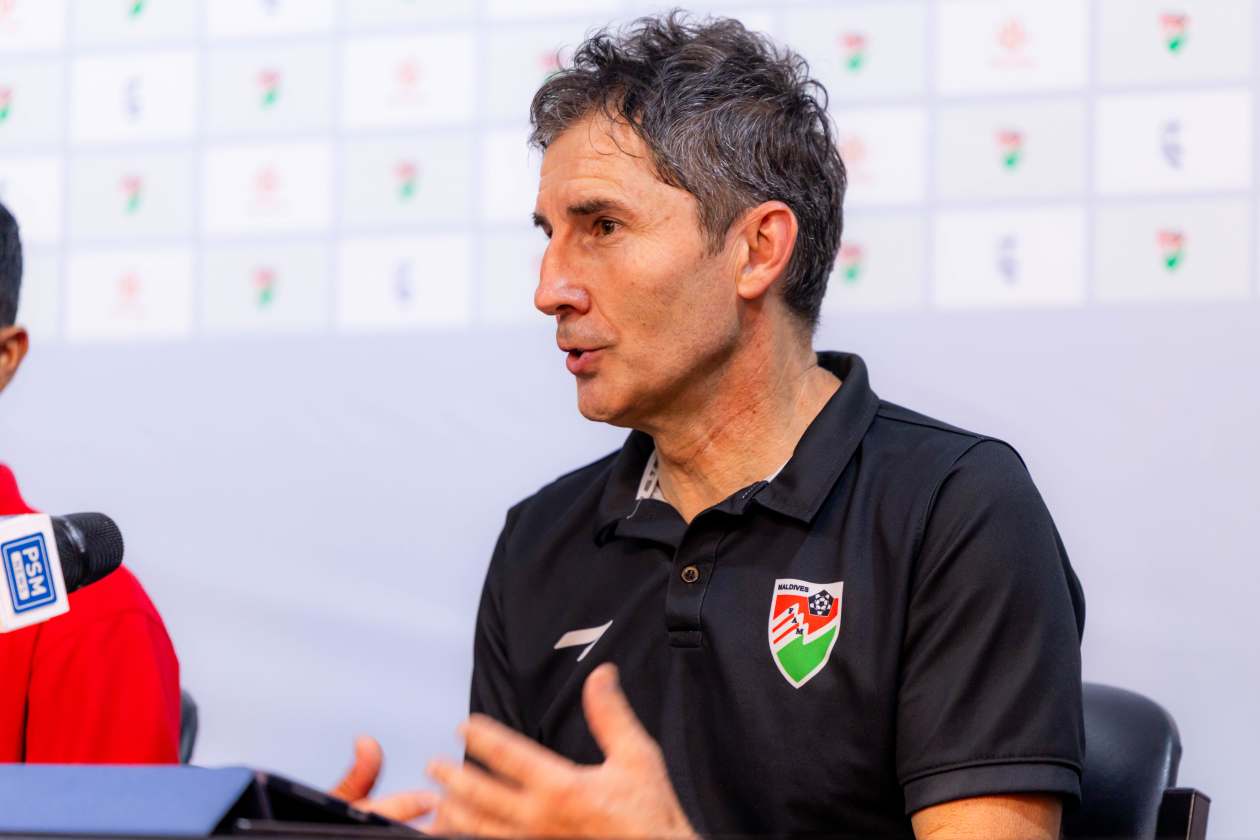
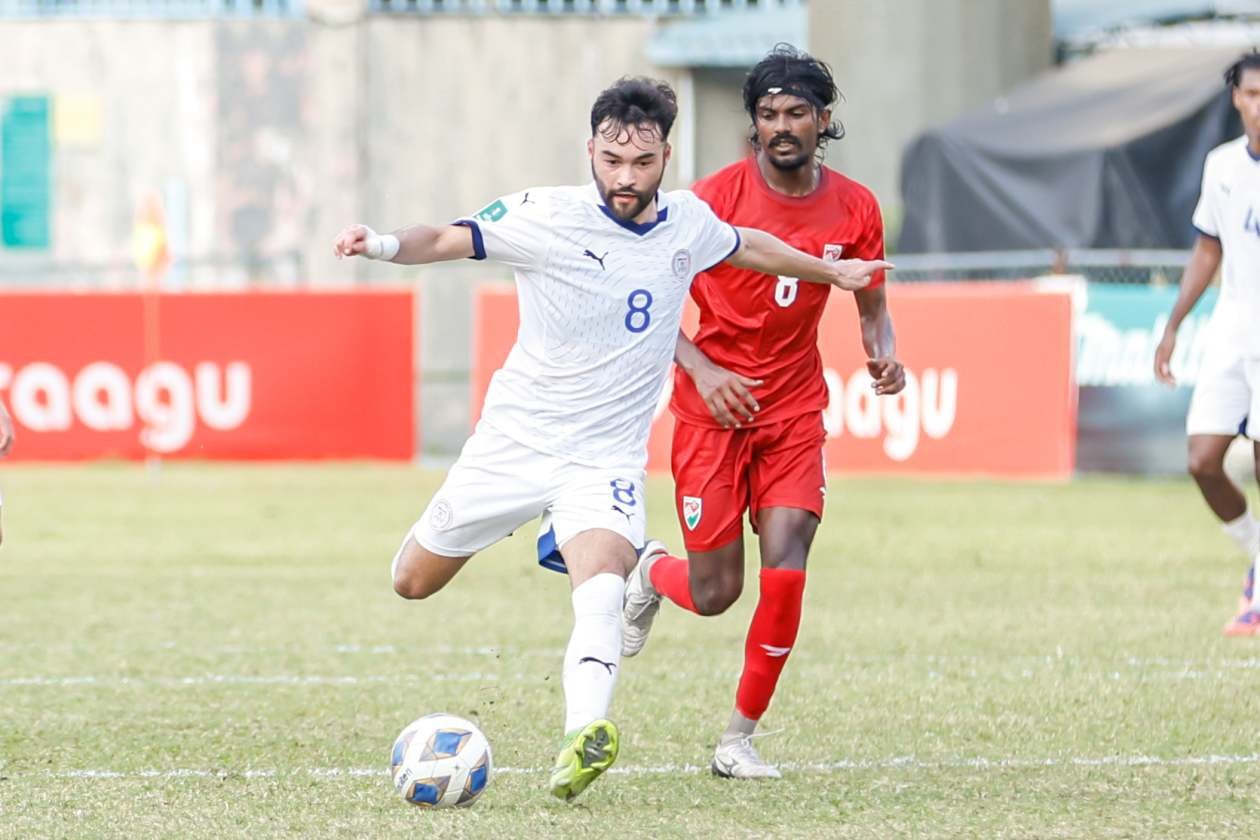
Male' Maldives: Maldives national football team head coach Istvan Urbanyi has called for patience, structure and greater international exposure as the Maldives prepares for the upcoming Diamond Jubilee International Tournament in Malé.
Speaking in an exclusive interview with Adhadhu Sport, the Hungarian tactician shared his assessment of the national team’s preparations, the challenges facing Maldivian football, and the importance of long-term development ahead of the FIFA Tier 1 competition scheduled from June 1 to 10.
The Maldives will face Afghanistan, Pakistan and Bangladesh in the tournament, with Urbanyi describing the event as an important opportunity for the team to measure itself against stronger regional opponents.
“Of course, this tournament is very important, not only to celebrate the 75 years of Maldives football, but because it gives us international matches against stronger and more competitive opponents,” Urbanyi said.
“For us, this tournament is not only about results, but also about understanding our real level and what we need to improve moving forward.”
The coach emphasized that regular international competition remains essential for the development of Maldivian football, recalling the Bahrain training camp during his first spell with the national team in 2009.
“We spent three weeks there with two or three sessions a day and played six matches against top Bahraini clubs. We lost every match, sometimes with more goals, but when we came back, we came back much stronger tactically, physically, mentally, and in our understanding of the game,” he explained.
“That is the reality of football development. You improve by competing regularly against stronger opponents and stronger football environments.”
Urbanyi admitted that preparations for the Diamond Jubilee Tournament have been far from ideal, particularly due to the absence of an overseas training camp and international friendly matches before the competition.
“Of course, ideally you want preparation with international matches and a longer camp before a tournament like this. This time, unfortunately, we did not have that,” he said.
He added that introducing a new football philosophy without sufficient competitive preparation has proven difficult, especially with a young squad still adapting to higher tactical demands.
“At this moment, I feel we may need to simplify certain things a little and take one step back first before we can consistently move forward with more complex ideas. This tournament is not going to be an easy ride.”
Discussing the players’ adaptation to his tactical approach, Urbanyi noted that building a football identity requires time and continuity.
“Changing football habits, decision-making, positioning, and collective understanding takes time,” he said.
“Football identity is not built in a few weeks. It requires repetition, continuity, and more importantly competitive matches.”
The Hungarian coach also addressed the expectations surrounding the national team, particularly from passionate Maldivian supporters who traditionally expect strong performances during home tournaments.
“There is no problem with expectations. Maldivian fans are very passionate, especially during home tournaments. But passion and reality must also meet somewhere in the middle,” Urbanyi stated.
“Everybody wants quick success, but sustainable football development is a longer process.”
He also highlighted the broader structural challenges facing Maldivian football, pointing to the women’s national team as an example of the difficulties smaller football nations face when competing against countries with long-established development systems.
“Football development needs time, structure, repetition, and commitment. There are no shortcuts,” he said.
Having returned to the Maldives after nearly 13 years, Urbanyi acknowledged that while some infrastructure issues remain, he has also seen several positive developments within the country’s football landscape.
“In football, championships are coming back, more and more kids are playing football, futsal is growing, academies are trying to work seriously, and there are many dedicated people who genuinely care about development,” he said.
“That part is encouraging because real football development usually starts from grassroots passion and committed people.”
Urbanyi also praised the football field projects taking place across local islands, while stressing the need for long-term planning and organizational consistency.
“Our football development cannot function only tournament by tournament. It needs a clear agenda, proper planning, continuity, and long-term protocols across all levels,” he added.
Beyond football, Urbanyi said he was impressed by the transformation of the Maldives since his previous stint, particularly developments such as the new airport, the bridge connection and the expansion of Hulhumale.