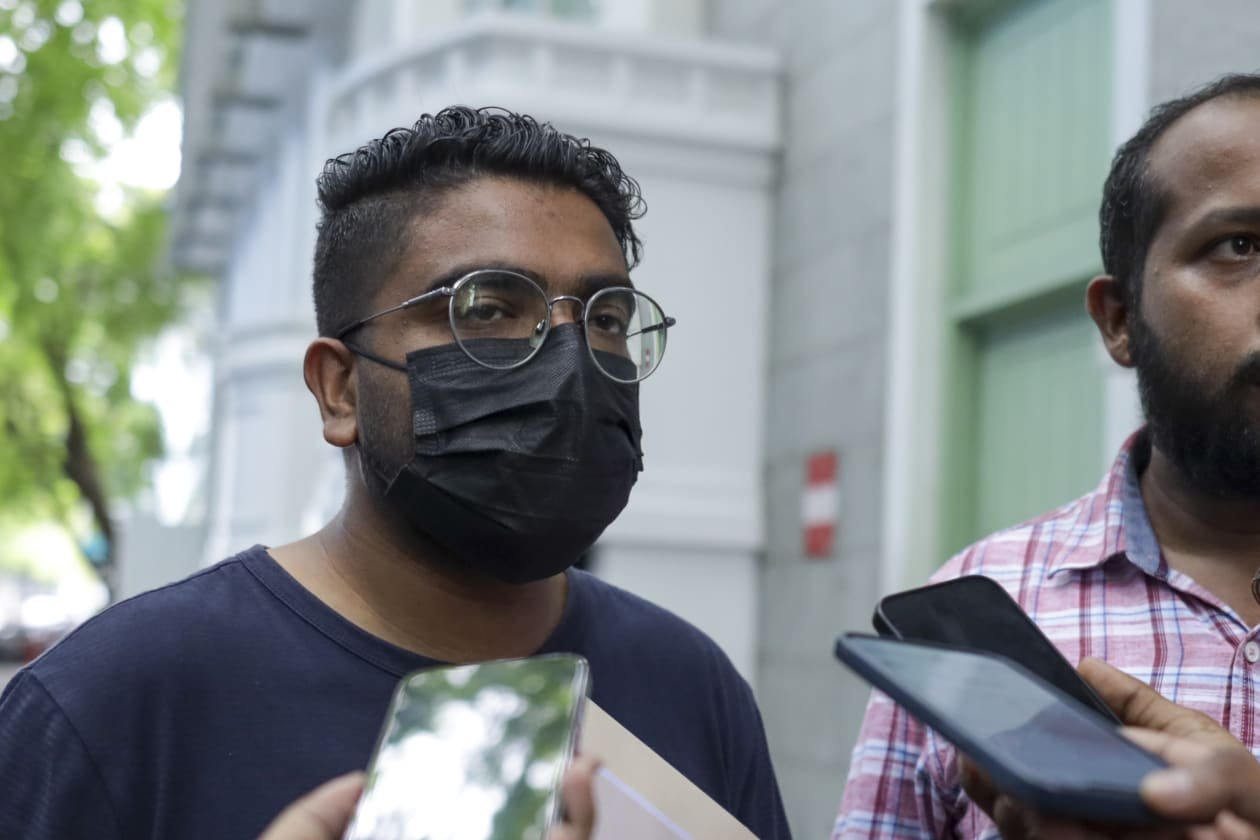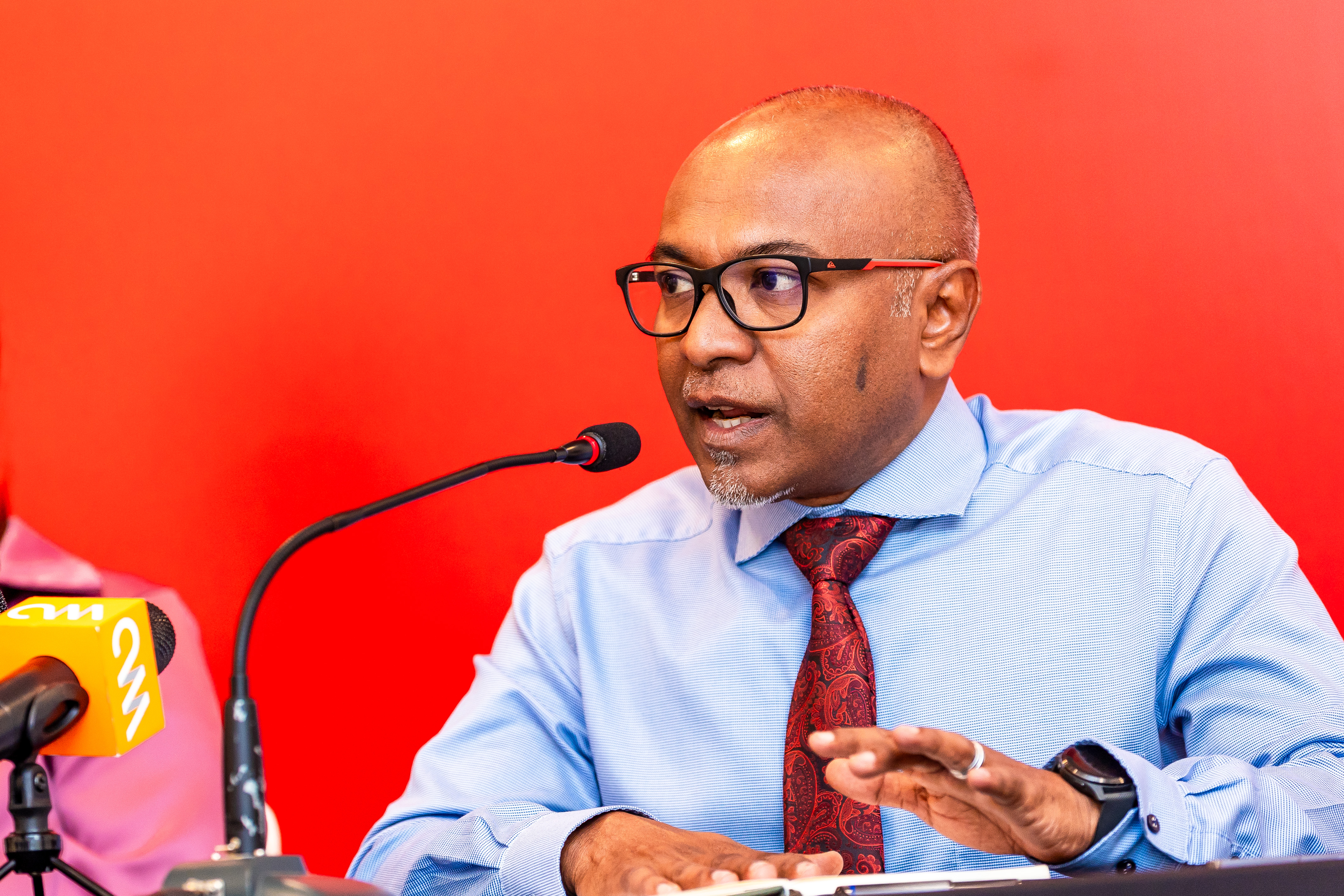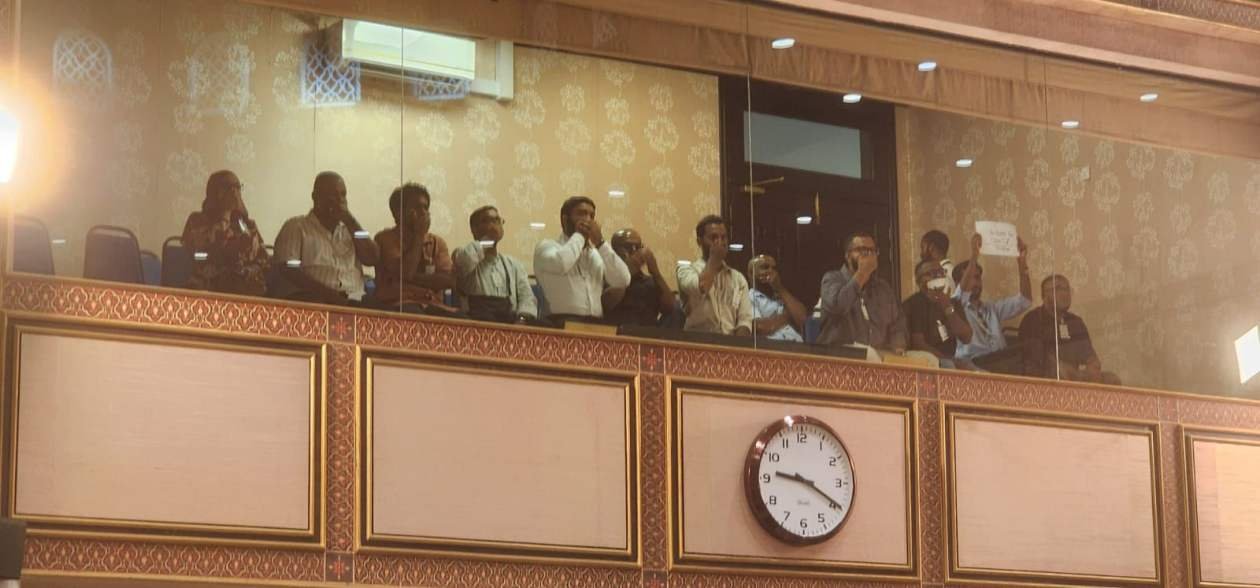
Journalists, including reporters from Adhadhu, Mihaaru and Dhauru have staged a silent protest at the People's Majlis against the bill to dismantle the free press.
Journalists gathered in the observation gallery of the parliament as the first reading of the bill was carried out by Thulhaadhoo MP Abdul Hannan Aboobakuru.
The bill aims to increase government control of media through fines and suspension of registrations.
Maldives Media Council (MMC) earlier called for the bill to be withdrawn.
“The bill completely dismantles the existing independent self-regulatory system and gives control of the entire media to the government and the party with the majority in parliament,” the MMC said.
Leaders from the opposition Maldivian Democratic Party (MDP) have also spoke against the bill.
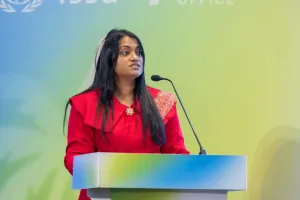
MDP President Abdulla Shahid said the government wants journalists to face constant fear and pressure.
“I call on all journalists and honorable MPs not to allow this government to take away the freedom of the Maldivian press, which reached this day with many sacrifices,” he said.
MDP Chairperson Fayyaz Ismail said the bill removes necessary protections from journalists and media platforms.
"The newly proposed media regulation bill is another poorly concealed attempt by Muizzu's administration to dismantle media freedom in the country," he said.
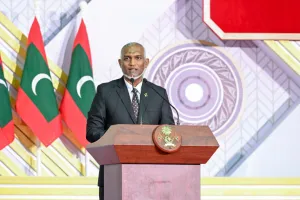
The new Maldives Media and Broadcasting Commission will be established if the bill is approved by the government-controlled People's Majlis and ratified by President Mohamed Muizzu.
This means the current Broadcasting Commission of the Maldives (Broadcom) and Maldives Media Council (MMC) will be abolished.
The Maldives Media and Broadcasting Commission will be made up of seven members, three of whom will be appointed by the President.
The other four members will be elected by the media. Media outlets that were registered less than five years ago will be barred from the election.
The bill does not explain why a commission to regulate the media needs members appointed by the President. It further states that the Chairperson of the commission will also be appointed by the President.
The bill gives the new commission substantial powers. These include fines of up to MVR 100,000 for media outlets and temporary cancellation of registration before a case is investigated. The commission can also go to court to revoke a registration.
The commission will also be empowered to issue orders to block a news website or stop a broadcast while it investigates a case.