President Dr. Mohamed Muizzu has defended the proposed legal changes to the Elections Commission (EC) and Anti Corruption (ACC) Acts after facing criticism because the changes allow him to influence the two independent institutions.
In a post on X on Tuesday night, Muizzu insisted that he would not influence independent institutions, but claimed that legal changes were needed to reform the independent institutions.
"I would like to note that the government will propose necessary amendments to the laws and regulations, to ensure such officials act in a just manner with fairness and equality without regard to any particular individual," he said.
The changes proposed by the government would allow President Muizzu to influence the two most important independent institutions in the Maldives.
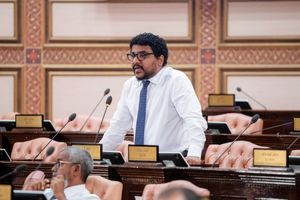
The Amendment Bill to the EC Act was moved by Kelaa MP Abdulla Shareef while the Amendment Bill to the ACC Act was moved by Felidhoo MP Adam Zahir. They are expected to be approved as the government controls Parliament supermajority.
Many opposition MPs who debated the bill, as well as the public, have been criticizing the government on social media, saying the proposed changes are a step back in democracy.
MDP and Dems against the amendments
The opposition Maldivian Democratic Party (MDP)'s Parliamentary Group Leader Hithadhoo Dhekunu MP Ibrahim Nazil believes the amendment was proposed as President Muizzu intends to stay in power for a long time.
"When there are doubts about the Elections Commission, it means there is no validity of the people's vote. Should we just stay and watch until the country reaches that point?" the minority leader told Adhadhu.
Meanwhile, Vice President of the Democrats Mohamed Shifaz accused President Muizzu of "acting like a dictator" by attempting to infringe on the people's rights that were won through sacrifice against oppression and fear.
Shifaz told Adhadhu that the President was trying to control all the state powers, but it cannot be done if the Attorney General does not approve.
"It is the responsibility of the Attorney General to ensure that the existing system remains the way it is. This cannot be done unless the Attorney General is the one who empowers the government to change the laws to take a step back," he said.
"So the Attorney General will be the one who gives the government the biggest power to destroy the system. This will not happen without the Attorney General and the President."
Some MPs of the ruling People's National Congress (PNC) have openly called for the President's influence over the three judiciary and legislative branches and the independent institutions of the state.
"These things should be directly in the hands of the President. The president must have the biggest authority in reforming the entire country. Even if the judiciary goes wrong, the power to correct it should also be in the hands of the President. Even if something goes wrong in this Parliament, the power to correct it should also be in the hands of the President," Eydhafushi MP Ahmed Saleem said during the debate on the proposed amendments.