The government has told the UN Human Rights Committee that the death penalty cannot be abolished in Maldives because it would be unconstitutional.
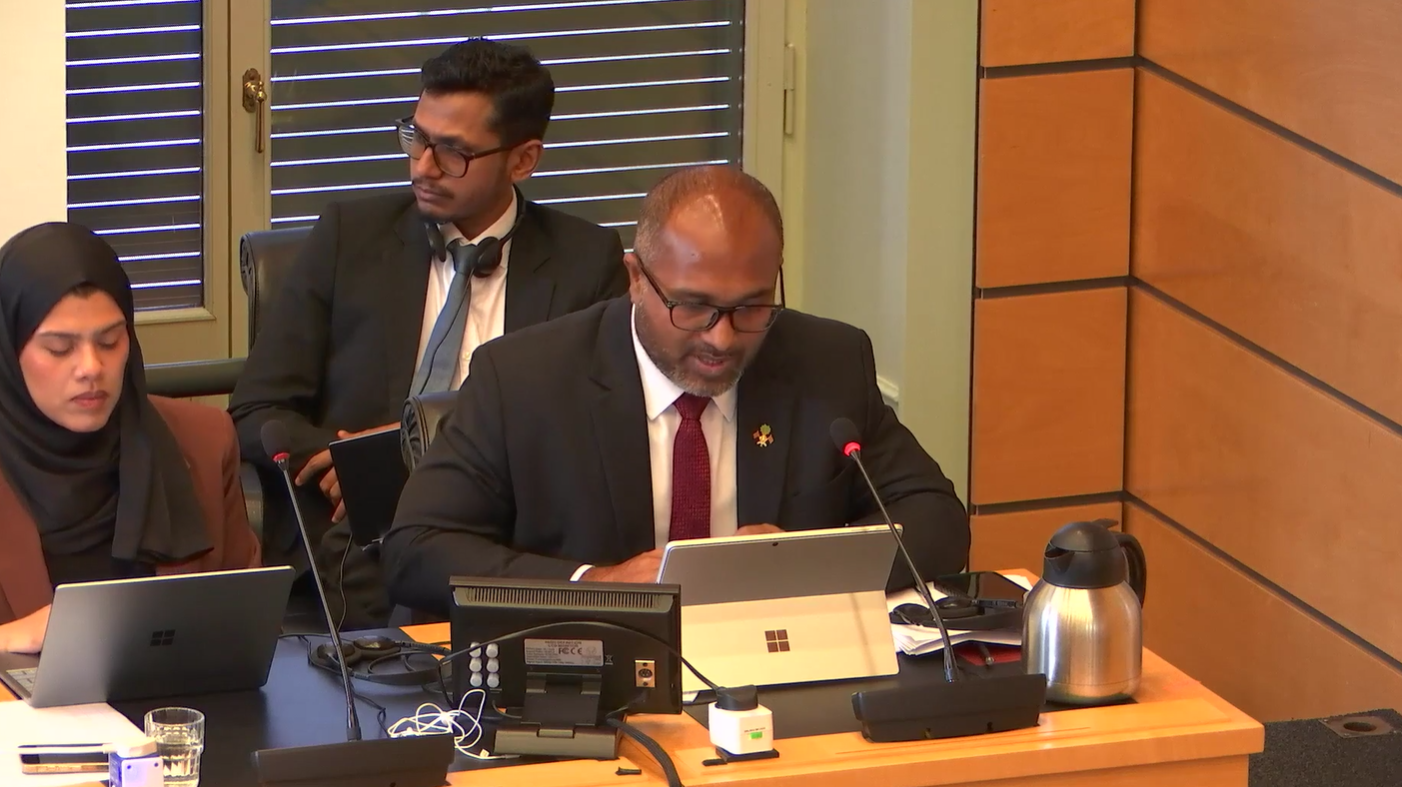
In response to a question by a UN expert at a review session in Geneva, Switzerland to present a report on the efforts made to ensure civil and political rights and freedoms in Maldives, Home Minister Ali Ihusan said strict procedures are followed when sentencing a person to death in the Maldives. He added that a person will be sentenced to death if he is convicted beyond a reasonable doubt.
Ihusan highlighted that the death penalty is given for the most serious offences mentioned in the laws of Maldives.
"The constitution of the Maldives states that Islam is the basis of all the laws in the country. There are only a few circumstances where a person can be sentenced to death under Maldivian laws. These laws have the approval of the people. Abolishing the death penalty will be in contravention of the constitution," he said.
The Human Rights Committee experts also raised questions about the facility set up in Maafushi jail to carry out the death penalty. In response, Ihusan said the facility should exist because the legal framework of Maldives allows the death penalty and the facility was established for that reason.
"However, no one has been executed at the facility so far," he said.
Noting that the death penalty has not been carried out in Maldives since 1954, Ihusan said that there are 16 people on death row in Maldives. He said that four of them have completed all the judicial stages.