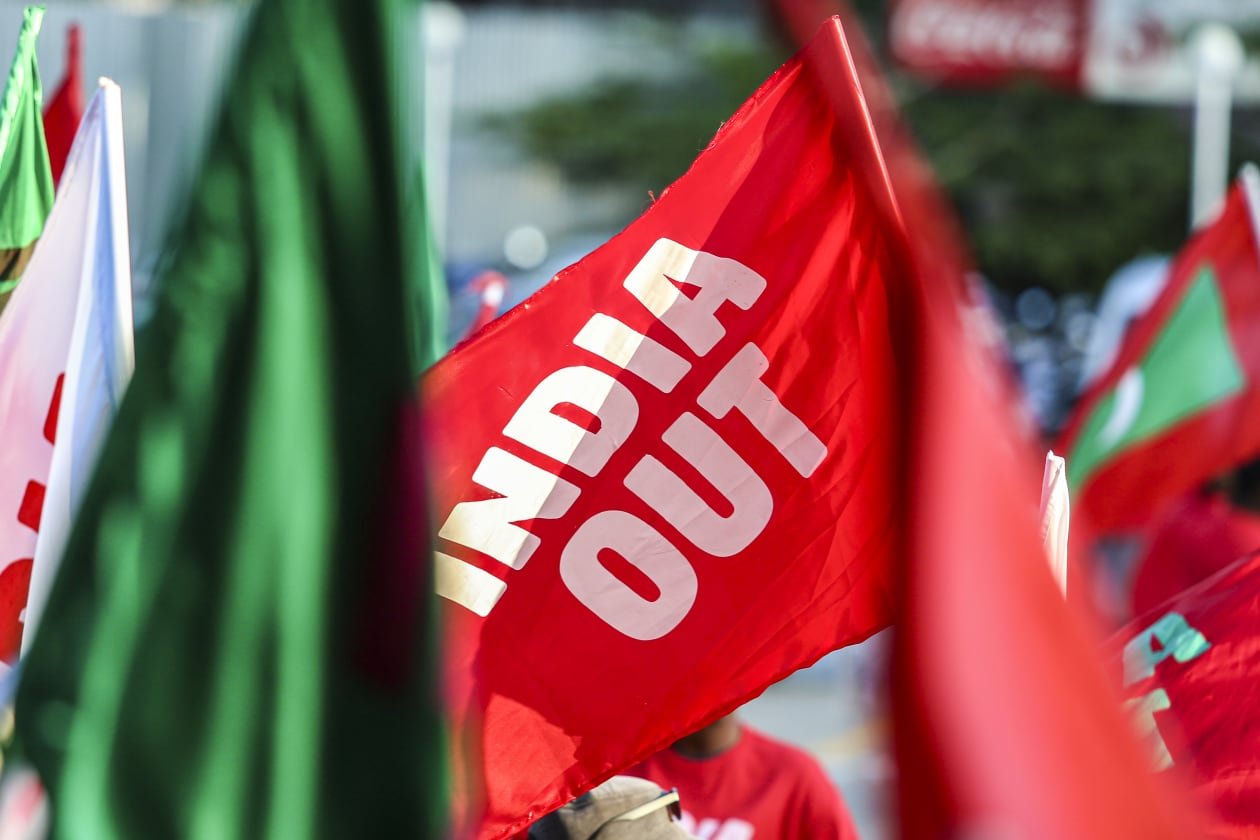
The Information Commissioner's Office (ICOM) decided not to disclose the number of Indian soldiers in the Maldives without properly assessing the purported threat to national security, the High Court ruled on Thursday.
Dhiyares journalist Ahmed Azaan sought details on the total number of Indian soldiers in the Maldives, including those who operate aircraft gifted by the Indian military, and the expenditure on them by the Maldivian state.
The Information Commissioner at the time was Adhadhu CEO Hussain Fiyaz Moosa.
The commission decided not to disclose the information and Azaan appealed the decision.
The three High Court judges who heard the case ruled unanimously that ICOM had determined that the details would endanger national security based solely on information provided by the Defense Ministry and the Maldives National Defense Force (MNDF).
ICOM has legal powers to follow procedures laid out in the law for determining information that poses a threat to national security, the judgment noted.
The powers include summoning officials, ordering institutions to send specific information, reviewing the information and entering state institutions to search for specific information.
ICOM cannot deem information to endanger national security without exercising any of the powers based only on information provided by the Defense Ministry and MNDF during a secret meeting, the High Court judgment stated.
Citing the right to information law and precedents set in similar cases in democratic countries, the High Court said ICOM should have clearly stated the danger to national security in its decision.
ICOM did not share the reasons for reaching its decision with sufficient detail to the person who requested the information, it added.
The High Court ruled that ICOM needs to make a fresh determination and ordered the office to complete procedures and look into it within 10 days if the case is resubmitted.
ICOM decided not to reveal the number of Indian soldiers with reference to three exceptions noted by the military from the right to information law.
One of the reasons for the ICOM's decision at the time was that the operations were being conducted under a "secret" agreement made with India.
It was deemed that disclosing information in such an agreement could adversely affect bilateral relations and pose dangers.
The Defense Ministry previously said that 75 Indian personnel were based in the Maldives as humanitarian service providers to operate the two helicopters and Dornier aircraft donated by the Indian military, which was 25 people per aircraft.
The government says there are no armed Indian soldiers in the Maldives.
One of the helicopters is in Laamu Kadhdhoo and other helicopters is in Addu City Gan. The Dornier aircraft is in Haa Dhaal Hanimaadhoo.
One of the helicopters were brought during former President Mohamed Nasheed's government and the other was brought during the government of former President Abdulla Yameen, who opposes the presence of Indian soldiers.
The Dornier aircraft was brought by the outgoing government of President Ibrahim Mohamed Solih.