Advertisement



It is a harmful decision to stop using the online expat system developed by the government to manage the details of foreign workers in the Maldives and hand over the work to a Malaysian private company. The company with a bad reputation, which has been accused of corruption, was awarded a task related to Maldives' security at a financial loss of billions of Rufiyaa.
Bestinet
Bestinet was registered in 2008 in Malaysia. The company was founded by Syed Azmi Alhabshi. The company's current Chief Executive Officer (CEO) is Amin Abdul Nor, a Bangladeshi-born Malaysian.
The company develops and operates systems related to immigration and foreign worker management. The company's largest market is Malaysia. The Foreign Worker Centralized Management System (FWCMS) accounts for the bulk of the company's revenue. This is the software used by Malaysian Immigration to manage the details related to all the workers hired from 15 countries.
The system is designed to manage visas, health screening, insurance and other matters of foreign workers in Malaysia.
Through the system, Bestinet earns revenue as fees collected by businesses and recruitment agencies, fees for health screenings, commissions on insurance fees, annual fees for maintaining records, fees to renew work permits and visas and data retention. The company posted a profit of USD 18 million in 2022.
Major allegations of corruption
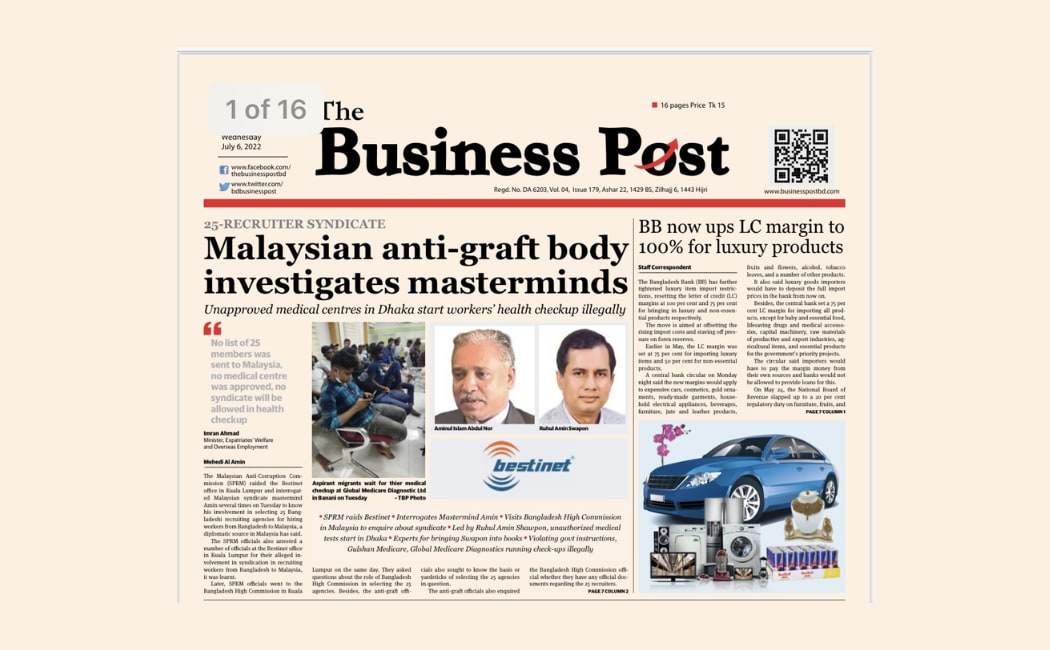
Bestinet faces serious allegations of corruption, fraud and deception. The company has faced these accusations in Malaysia, Bangladesh and Nepal and some investigations are currently underway. Independent probes have revealed that Bestinet has links to the country's royal family, powerful politicians and businessmen.
The FWCMS was launched during the administration of former Malaysian Prime Minister Najib Razak, who was convicted of embezzling millions of dollars. Former Home Minister of Malaysia Azmi Khalid and a Director of Malaysia's Labor Department were members of Bestinet's board of directors when the company first submitted a bid for FWCMS in 2015.
The Malaysian government reacted by suspending Bestinet for one year. However, due to pressure from the company's associates, the decision was changed and the permit was re-authorized within a year.
According to the report prepared by the Public Accounts Committee of the Malaysian Parliament, a formal contract was not signed but a letter had been provided to carry out the project. The agreement did not allow the government to cancel the project. It can only be cancelled with the agreement of both the government and Bestinet.
The system was used for six years in violation of the country's laws. Prime Minister Anwar Ibrahim's government tried to cancel the agreement but faced a lot of pressure from the royal family and politically influential people, according to the Malaysian press. Finally, the government was forced to allow Bestinet to manage the system for three more years.
A police investigation is already underway as 24 unauthorized people had been allowed to access the backend of the system to process applications.
It was also revealed that Bestinet took more than USD 42 million between 2012-2018 in the guise of hiring workers from Nepal. The governments of Malaysia and Nepal signed an agreement to resolve the issue.
In July 2022, the Malaysian Anti-Corruption Commission raided Bestinet's office. It was in connection to allegations of corruption and abuse of power in appointing 25 agencies to hire Bangladeshi workers.
It has come to light that Bangladeshi workers spend nearly USD 5000 to get a job in Malaysia while the amount required is USD 1400.
The company is being investigated for allegedly extorting large sums of money by operating recruitment agencies that bring in foreign workers.
Bestinet and Maldives
When Adhadhu reported about the agreement signed with Bestinet, Home Minister Ali Ihusan met the press that same day and announced, for the first time, that a deal had been reached with the company. Before that, the government had not mentioned anything about this deal.
Bestinet first arrived in the Maldives during the government of former President Abdulla Yameen. The government signed a 15-year agreement with Bestinet in October 2016 through the influence of powerful government officials. Mohamed Anwar was the Controller of Immigration at the time and matters related to foreign workers were under the Immigration.
Ihusan said it was an agreement to complete "one process regarding foreign workers." Bangladeshi workers were specifically targeted. The agreement was not reported in the news, but from November 6, 2016, Immigration suspended hiring Bangladeshi workers.
While the matters related to foreign workers were conducted in secret, there were no documents on the communication established between Bestinet and the government at the time. In November 2018, the Maldivian Democratic Party (MDP) government transferred matters related to foreign workers to the Economic Ministry.
The MDP government stopped issuing permits to hire Bangladeshi workers on September 18, 2019. Ihusan said the agreement with Bestinet came to a halt from that date. He claimed that the company had been trying to figure out a way forward since then.
Former Economic Minister Fayyaz Ismail told Adhadhu that the MDP government decided not to proceed with the Bestinet deal after consulting the President's Office as the agreement was costly and harmful. The President's Office established all communications with Bestinet.
Fayyaz said the ministry had decided to develop software to manage the affairs of foreigners and run and maintain the system. A team of Maldivians developed and launched the Expat System under the supervision of the Economic Ministry.
No demands for compensation
The government claims they were forced to come to a deal with Bestinet because of the company's demands for compensation. The government says the company demands MVR 210 million or USD 13.7 million in damages for cancelling the agreement signed during the Yameen administration.
"One of the responses given to the company at the time mentions providing compensation to the company through a settlement agreement implemented by the government," Ihusan said.
But Fayyaz denied that the company had demanded compensation.
"They did not communicate with us. Why did they [Bestinet] not pursue this matter all this time? Why didn't they take the matter to the court?" he said.
Former Under Secretary of Legal Affairs at the President’s Office Ahmed Mauroof said that the company had not filed for damages during the previous government.
"There has been no claim for damages in any way. No lawsuit has been filed. No complaint has been filed with any government agency. Then now suddenly this government's decision raises questions," he said.
On November 28, 2022, during the previous administration, the Rules on the Resolution of Disputes Relating to Business Transactions between the Government and the Private Sector was published in the government gazette and 30 days were given to file complaints.
"At the request of the ACC, with a resolution of the Parliament, a letter to the President directed that the compensation process be conducted in a transparent manner. A rule was formulated and gazetted and a deadline was given to submit complaints. This company did not submit any complaints. So the government is not obliged to go to a settlement in this matter. Why don't they decide through a court or arbitration?" Mauroof explained.
He raised serious legal questions over the government's decision.
"Who determined that the company 'should' be compensated? How much compensation was it? What kind of calculations were it based on? Have those who said providing compensation without a court ruling is wrong begun implementing a new rule on compensating?"
MVR 460 million per year, MVR 6.8 billion in 15 years
The government earns MVR 6200 per foreign worker each year. That is MVR 2000 for the quota fee and a work permit fee of MVR 4200 at the rate of MVR 350 each month.
According to the agreement with Bestinet, the government will pay USD 100 or MVR 1542 to the company as the fees for each foreign worker every year. The employee will have to pay USD 50 (MVR 771) per person for medical insurance. These are the only facts known about the agreement so far.
Currently, there are 221,231 active work permits registered in the Expat System out of which 50 percent pay regularly. Annually, MVR 685 million comes from foreign worker fees. Ihusan said the state loses MVR 685 million annually due to inadequate efforts by governments to collect fees from foreigners.
The agreement is set up so that money paid by foreign workers goes to Bestinet. The government estimates that the number of payers will be increased to 90 percent which is 199,108 work permits.
The government will receive MVR 1.2 billion annually as work permit fees. MVR 303 million should be given to Bestinet That is a revenue of USD 4.5 billion over 15 years. With medical insurance fees, Bestinet will generate revenue of MVR 6.9 billion over 15 years.
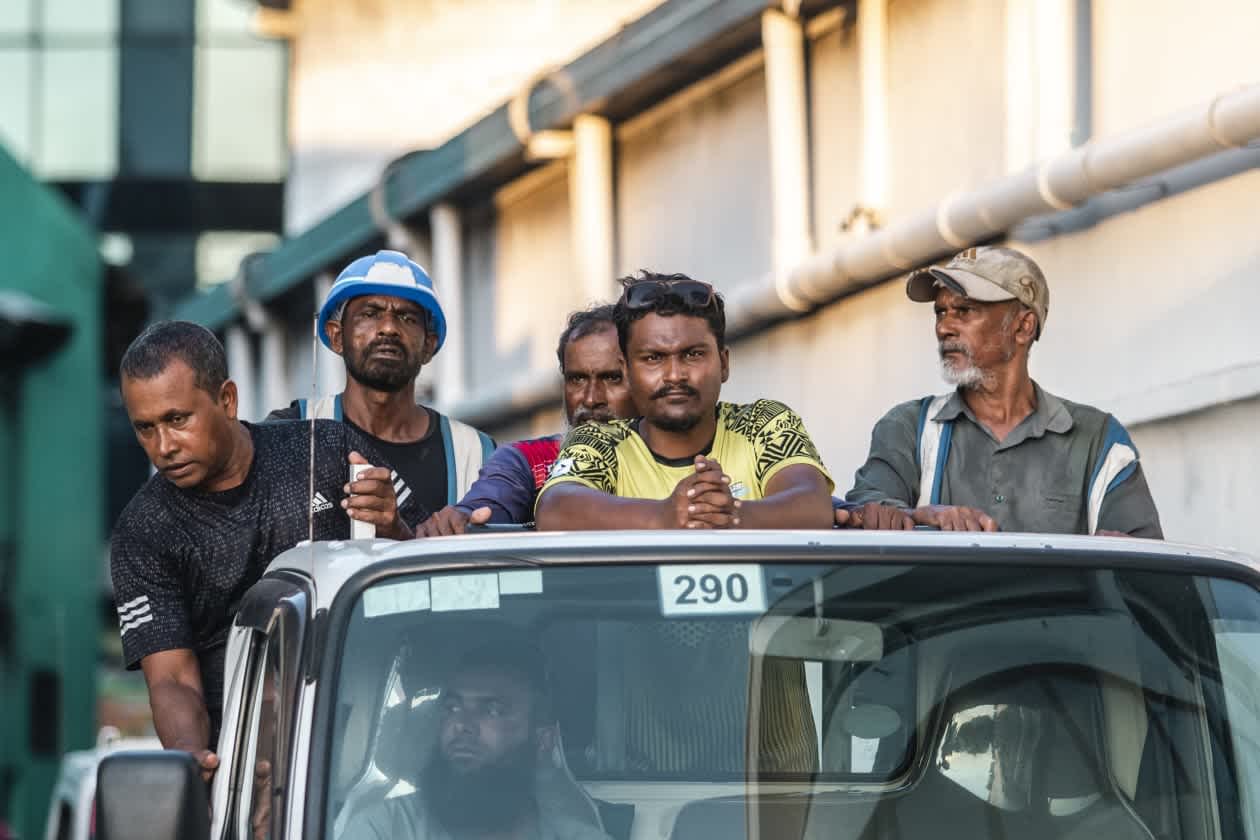
Foreign workers. -- Photo: Adhadhu
Can't Maldivians find a quick solution?
The current Expat system was designed and developed by Maldivians after nearly two years of hard work and expenses. This is the system that issues quotas, pays deposit fees and issues refunds and employment permits.
Ihusan said a team of Maldivians will take time to bring the expat system to the level he wants and that is the reason why Bestinet got this work.
"The enforcement of the current system is not so effective for us. This is not a system that can send notifications to individuals and automatically blacklist places. We don't have such a system at the moment. It will take time to develop this system," Ihusan told reporters.
But this is an excuse. The current system was designed by the previous government by hiring Maldivian developers to solve the problems that Maldives faces and in a way that can be upgraded. It is not clear whether an independent audit of the current expat system was conducted. The government also couldn't point out any major issues in the system that cannot be fixed.
One issue highlighted by Ihusan was that the current system notifies when a foreign worker runs away from his employer, but there is no way to declare when authorities find him. But Fayyaz has a different opinion. He said the current system is designed to be upgraded.
"The technical people in Maldives, the people who created the system and the software, can they not upgrade it? Is it only Malaysians who can do it? No, Maldivian can fix this. This is about prioritising. Our team worked towards what we prioritised back then. So if the minister finds fault with the missing report, the whole team must put the effort to fix it. There is nothing in that system that cannot be changed," Fayyaz said.
He added that work permits which took months to be issued before can now be issued within 48 hours through the system. Although previous governments claim to have used an online system, communications were carried out through email, he said.
"It is a very well-developed system that took us a lot of time to perfect. Maldivians have done it. A lot of consultations with the relevant authorities, employers, employment agencies and agents and various consultations were held to ensure it fits the state's expat labour policy. The system is now very easy," Fayyaz stated.
"There's no need to pay another party to work more on it. There's still work to be done to make it easier. There's still work to be done to automate it. There is a strong and experienced team that knows how to do it."
Fayyaz said the employers and employment agencies can talk more about the conveniences of the expat system.

No major issues with the expat system, created conveniences
Adhadhu spoke to some local companies and foreign recruitment agencies.
A head of a Maldivian agency that hires foreigners said there were no major problems that could not be solved in the current expat system.
"There are some things that need to be fixed. But they are not big problems. There will always be a need for change. It is difficult to believe that [the government] thinks there are issues with the system. That is because we are the ones who use it. We don't face problems in it," a businessman who campaigned for President Dr. Mohamed Muizzu said.
Another businessman said the current expat system has provided many conveniences. He said everything that used to be done on paper has become online and the days of long queues were now over. He noted that the system can be changed with the changes in technology.
"It is not something that must be done, to hand over such a system to foreigners."
A person involved in the tech sector in the Maldives said that an expat system can be designed and developed for MVR 5 million. He believes that the online system that manages foreign workers in Maldives should not be left to a foreign company at a high price.
Serious implications from handing over to a foreign company
The state does not earn the revenue to its fullest from foreign workers because of collection issues. This is due to issues in enforcement. The government blames this on the expat system designed by Maldivians.
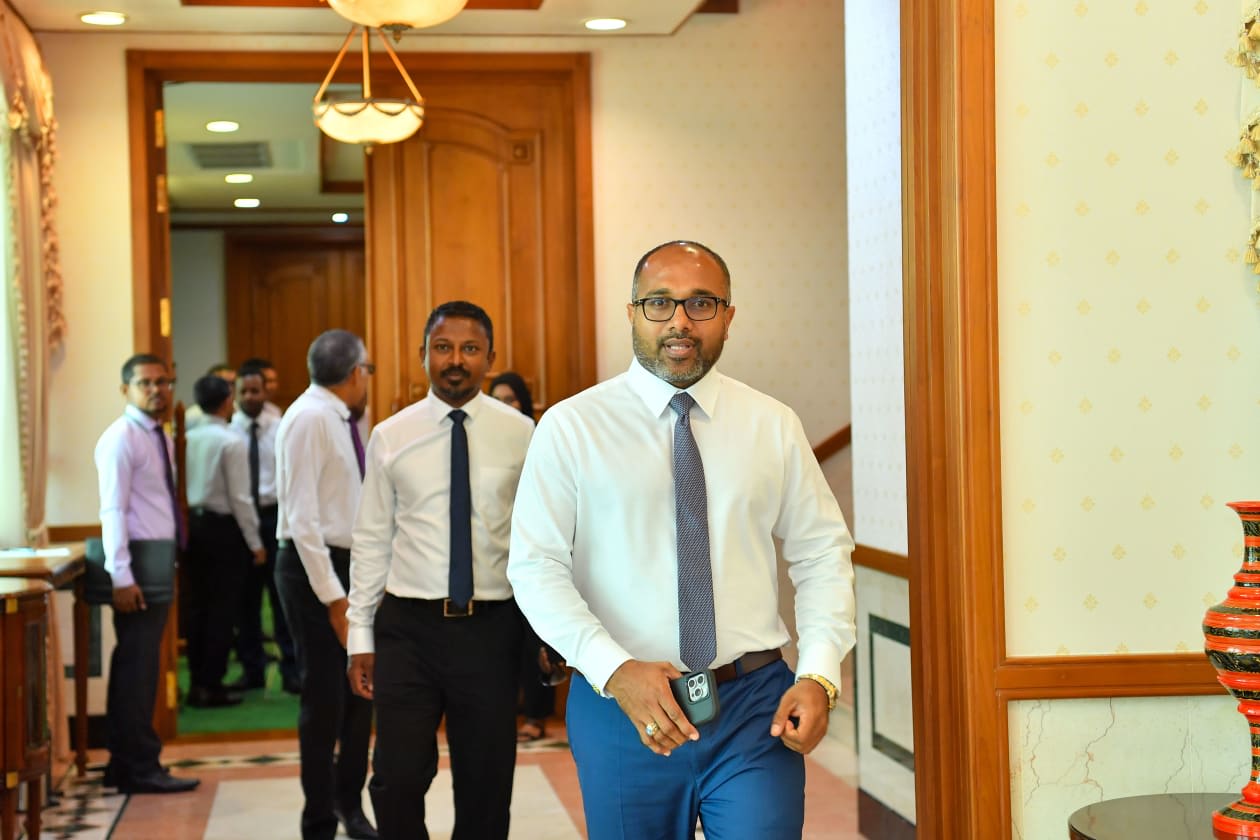
Minister Ali Ihusan. -- Photo: President's Office
It may take time, but this is not a task that cannot be undertaken by Maldivian developers. It would be better for a government team to make the necessary changes to the expat system. Fayyaz, who is also the Chairperson of the main opposition party, believes that the expat system should not be left in the hands of foreign parties.
"Most of that work is done. Then there is no reason to give a percentage of the revenue to foreigners. We have the technology. We have the skills. Maldivians will know how to do it best," Fayyaz said.
He added that it is better to compensate the company now than paying MVR 460 million a year over the 15-year term of the contract. He further noted that the amount due to Bestinet will increase when the economy gets stronger.
Bestinet is accused of corruption in various countries. Sri Lanka has a bad history in hiring foreign workers and there have been rumours that various companies have offered bribes to previous governments to set up such systems. The MDP government introduced the expat system through One.Gov to put an end to the allegations.
The damage to the state from the current agreement is much greater than the USD 13 million in compensation. The fact that Bestinet has not done anything required to seek compensation for the past five years must be considered and the government should not take an immediate decision to reach a deal with the company. It does not appear that any compensation should be paid to the company.
This article was first produced in Dhivehi by Saaif Shiyad.
Comment