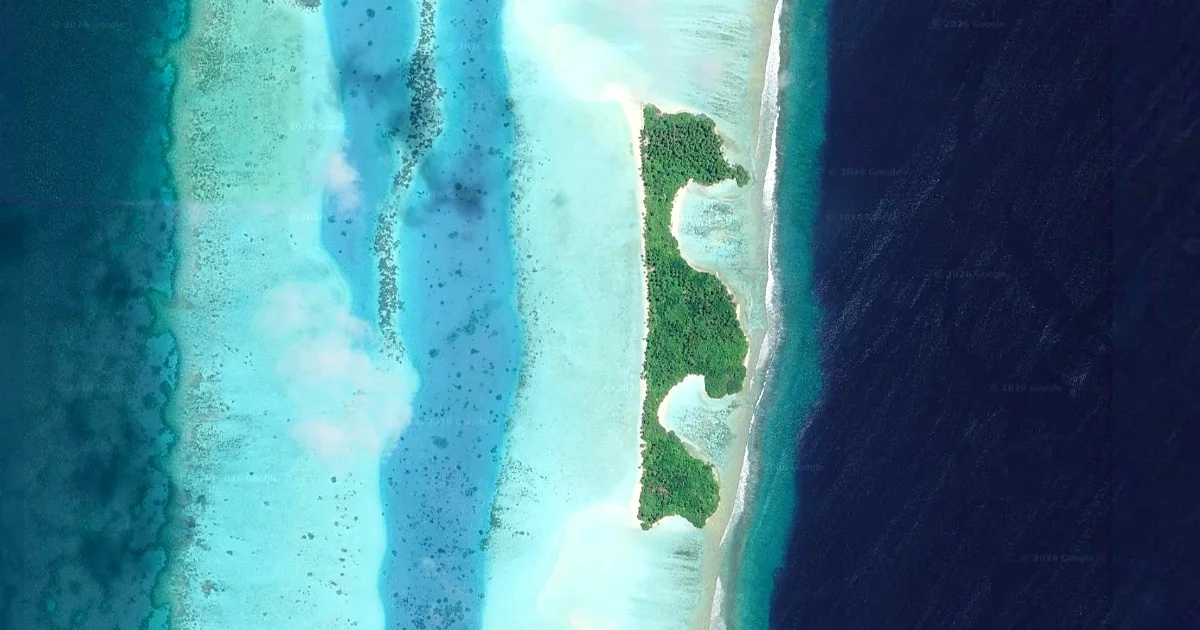
A proposal to establish a commercial farm for grouper, sea cucumber, lobster, and seaweed on the island of Dhaal Thinhuraa has been submitted to the Environmental Regulatory Authority (ERA).
The proposal, submitted by a Maldivian company named Megaton, outlines a plan to establish facilities within one year and operate the farm for a period of five years or more. The project is currently in the Environmental Impact Assessment (EIA) stage, and official permission to commence physical works has not yet been granted.
According to the proposal, the project will utilise the entire 5.5-hectare landmass of Thinhuraa, along with a designated area of the island's lagoon. Land-based facilities will include a hatchery, processing unit, and cold storage, as well as staff accommodation, offices, and a training centre. Planned lagoon infrastructure includes grouper cages, lobster raceways, and sea cucumber pens.
The farm intends to cultivate grouper for live export and sandfish (a species of sea cucumber) which matures within 12 to 18 months. The sea cucumber is targeted for export to markets such as China, Hong Kong, and Singapore. Additionally, the proposal includes the cultivation of lobsters, which reach maturity in 90 to 120 days, and seaweed for use in food and cosmetics.
The project’s five-year plan specifies that the first year will focus on obtaining environmental permits, establishing infrastructure, and training 30 youth and women. The second year will see the completion of the hatchery and the establishment of a dedicated processing unit for women. The proposal aims to bring the first products to market in the third year, double production and install a solar energy system in the fourth year, and transition into a full-scale commercial enterprise in collaboration with research centres by the fifth year.
Megaton, the company behind the proposal, is headed by Managing Director Mohamed Adam, with Abdulla Ali serving as a director and shareholder. While the company registered the business name "Thinhuraa" earlier this year, its other business activities remain largely unknown, though it has previously purchased three plots of land in Thilafushi.
Despite the availability of certain project details, the total investment value and the terms under which the island was leased or allocated to the company remain unclear.
The mariculture industry in the Maldives is currently in its early stages. However, successive administrations, including the current government, have formulated policies to develop the sector as a key pillar of economic diversification.
To expand mariculture as a distinct industry, the government has designated 13 zones across the Maldives, including two areas in Dhaal Atoll. Efforts are underway to open these zones to foreign investment. Furthermore, a 73-hectare reef area in South Male’ Atoll has been designated for commercial-scale grouper farming.
In addition to infrastructure development, the government is also conducting specialised training programs to build local human resource capacity within the mariculture sector.