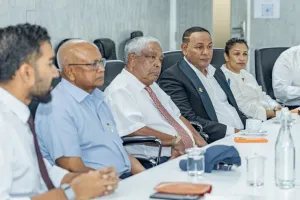
A meeting of the Maldives Association of Tourism Industry (MATI) grew heated as both foreign investors and local resort owners voiced strong concerns over the new requirement to mandatory exchange 40 percent of resort foreign currency revenue.
Adhadhu understands that approximately 150 representatives from MATI’s membership attended the meeting held on Wednesday.
Attendees included prominent local figures such as Champa Hussain Afeef of Crown & Champa Resorts, representatives from the Universal family, Mohamed Haleel of Pulse Hotels & Resorts, and the Sun Siyam Group. International investors were also represented, including delegates from Soneva, Emerald Resorts, and Baglioni.
More than 80 percent of the participants expressed serious reservations regarding the mandatory exchange requirements. Foreign investors noted that their businesses would be unable to sustain operations under the stipulated rates.
The majority of participants urged MATI to advocate on their behalf, with some investors arguing that the changes are unconstitutional.
"Funds remaining after taxes are considered private property. The state cannot seize them. Such action can only be taken through a court ruling and with the provision of fair compensation," one participant stated.
Investors argued that the mandatory dollar exchange violates Article 40 of the Constitution, which guarantees the right to acquire and hold property.
Clause (b) of that article stipulates that private property shall not be confiscated. It further states that property may only be taken for public benefit if expressly authorized by law, mandated by a court order, and upon payment of fair compensation as determined by the court.
The meeting saw a particularly heated exchange between Afeef and Haleel. During the confrontation, Afeef questioned why Haleel, in his capacity as a tourism advisor, had not stood up against these measures. In response, Haleel stated that he had resigned from his position because the government refused to listen to his counsel.
Despite the mounting concerns from tourism investors regarding the increased exchange requirements, the government maintains that the policy will not cause any financial distress. President Mohamed Muizzu has previously claimed that the decision was finalized following comprehensive research and necessary assessments.