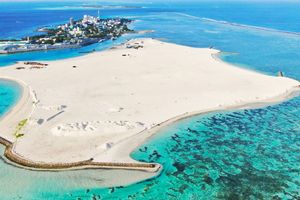
A new study has revealed that the Rasfannu swimming area on the western coast of Male' faces a severe risk of water contamination.
The research, conducted by Marine Biology students at the Maldives National University (MNU), indicates that the water quality in the area has deteriorated to levels that pose a significant threat to public health.
According to the findings, concentrations of bacteria such as E. coli and fecal coliform in the Rasfannu waters far exceed safety standards.
As these bacteria are typically associated with untreated sewage discharged from waste pipes, the results suggest heavy fecal contamination in the area. Exposure to these pathogens increases the risk of infections and illnesses for swimmers.
The study identifies the proximity of Male's primary sewage outfalls as a major factor contributing to the pollution. Furthermore, the research notes that due to local current patterns and poor water circulation, discharged waste tends to settle in the area rather than being flushed out to the open ocean—an issue that has persisted since Rasfannu first opened.
Under Maldivian environmental regulations, tourist resorts are mandated to treat sewage thoroughly before discharging it into the sea. However, the situation in inhabited islands is different. In the densely populated capital, Male', as well as in islands with large hotels and guesthouses, sewage is often pumped directly into the ocean without any treatment system in place.
The study highlights that proceeding with such coastal projects without establishing proper sewage treatment infrastructure in inhabited islands poses a grave danger to both the environment and public health. Experts emphasize that the exposure of a designated public swimming area in a congested city like Male' requires urgent intervention from the relevant authorities.
To achieve a permanent solution, experts recommend upgrading Male’s sewerage system to ensure that waste is treated before being discharged into the sea.
Although the government recently reopened Rasfannu last week following redevelopment, the Male' City Council has since closed the area after oil sludge from outside the lagoon drifted into the swimming area.
Renovations at Rasfannu began on April 9, focusing on repairing seating areas and other public amenities.
The biggest structural change introduced by the current administration involved installing canals in the outer breakwater to enhance water flow. This modification aimed to resolve the accumulation of silt on the seabed, a recurring issue that has led to the closure of Rasfannu on previous occasions.