Male': Maldives national team head coach István Urbányi has reiterated that the country's football revival remains a long-term rebuilding project after the national team was eliminated from the Diamond Jubilee International Football Tournament following a 3-0 defeat to Pakistan on Thursday.
The result not only ended Maldives' hopes of reaching the final but also saw Pakistan register their first international victory in 961 days. Pakistan's previous win had come against Cambodia in a FIFA World Cup qualifier in October 2023, while Thursday's victory was also their first win over Maldives since the 1991 SAFF Games and their first-ever away victory against the island nation.

Maldives Eliminated as Pakistan Secure Historic Victory
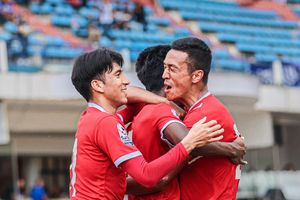
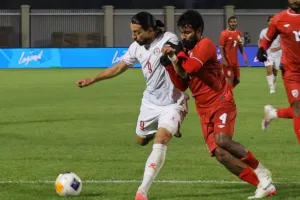
Pakistan secured a historic 3-0 win over the Maldives, marking their first away victory against the hosts and ending a long winless streak. The result keeps Pakistan's tournament final hopes alive while officially eliminating the Maldives. Umar Nawaz scored his first international goal to spark the dominant second-half performance.
Maldives entered the match needing a positive result after suffering a narrow 1-0 defeat to Afghanistan in their tournament opener. With Afghanistan drawing 0-0 against Bangladesh and Bangladesh also holding Pakistan to a goalless draw in the opening match, all three visiting nations remain in contention for a place in the final, while Maldives have been mathematically eliminated.
Despite the final scoreline, Urbányi felt his side had controlled large portions of the contest and were punished for failing to convert their chances.
"We controlled the game for 60 to 70 minutes," Urbányi said after the match. "But if you don't execute your chances, it becomes very difficult against teams at this level."
After a scoreless first half, Pakistan broke the deadlock in the 54th minute through Umar Nawaz, who scored his first international goal in only his second appearance for the national team and on his first international start. Pakistan sealed the result late in the game when Abdul Samad Arshad doubled the lead in the 84th minute before Harun Hamid added a third goal three minutes later.
Urbányi pointed to the contrast between Maldives' inability to finish opportunities and Pakistan's efficiency in front of goal.
"We created enough chances, especially in the opening 10 to 15 minutes of the second half," he said.
"Then the goal taught the team how to play. We missed our chances, Pakistan scored, gained confidence, brought on fresh legs and started enjoying the game while we came under pressure."
The Hungarian coach, who returned to lead Maldives earlier this year, stressed that the tournament has reinforced challenges he had already identified before taking charge. He noted that many of Maldives' regional rivals have continued to develop their football structures and player pools while the Maldives are still attempting to rebuild.
"This is a rebuilding programme. Nothing has changed before, during or after this tournament," Urbányi said.
"We knew these teams had advantages in many areas. What we proved is that we can be organised and we can control the ball at times. But goalscoring quality is a different story."
According to Urbányi, finding players capable of consistently converting chances must become a priority if Maldives are to compete at a higher level.
"We have to identify players who can be more effective in goalscoring situations," he said. "Systems and tactics are important, but at the end of the day you need players who can score goals."
The coach also highlighted the challenges facing Maldivian football beyond the national team setup, describing the rebuilding process as one that extends from grassroots development to administration and competitions.
"You have to rebuild the federation, rebuild departments, rebuild competitions," Urbányi explained.
"What has been missing for years cannot be fixed in weeks or months. It's like the human body. If you neglect it for years, you cannot suddenly recover everything by going to the gym for a few weeks."
He emphasized the importance of increasing participation, strengthening grassroots programmes and ensuring football and futsal work together rather than compete for resources and players.
While acknowledging the disappointment of another defeat, Urbányi insisted international competition remains the fastest route to improvement.
"If we could play another tournament next week and lose three games again, I would still say let's play," he said.
"Then play another three matches after that. Progress comes through international competition. If these players only play domestic league matches, it remains a local competition. That is not criticism, it is a fact."
The coach also referenced the upcoming AFC Under-20 qualifiers later this year, expressing concern about limited preparation time due to domestic scheduling constraints. He argued that young players require extended camps and regular international matches to accelerate their development.
Maldives will conclude their Diamond Jubilee International Tournament campaign against Bangladesh. Although a place in the final is no longer possible, Urbányi believes the remaining fixture presents another valuable opportunity in the team's rebuilding journey.
The Diamond Jubilee International Tournament was organised to celebrate the 75th anniversary of Maldivian football and has brought together Maldives, Afghanistan, Pakistan and Bangladesh for a week-long competition at the National Stadium in Malé.